
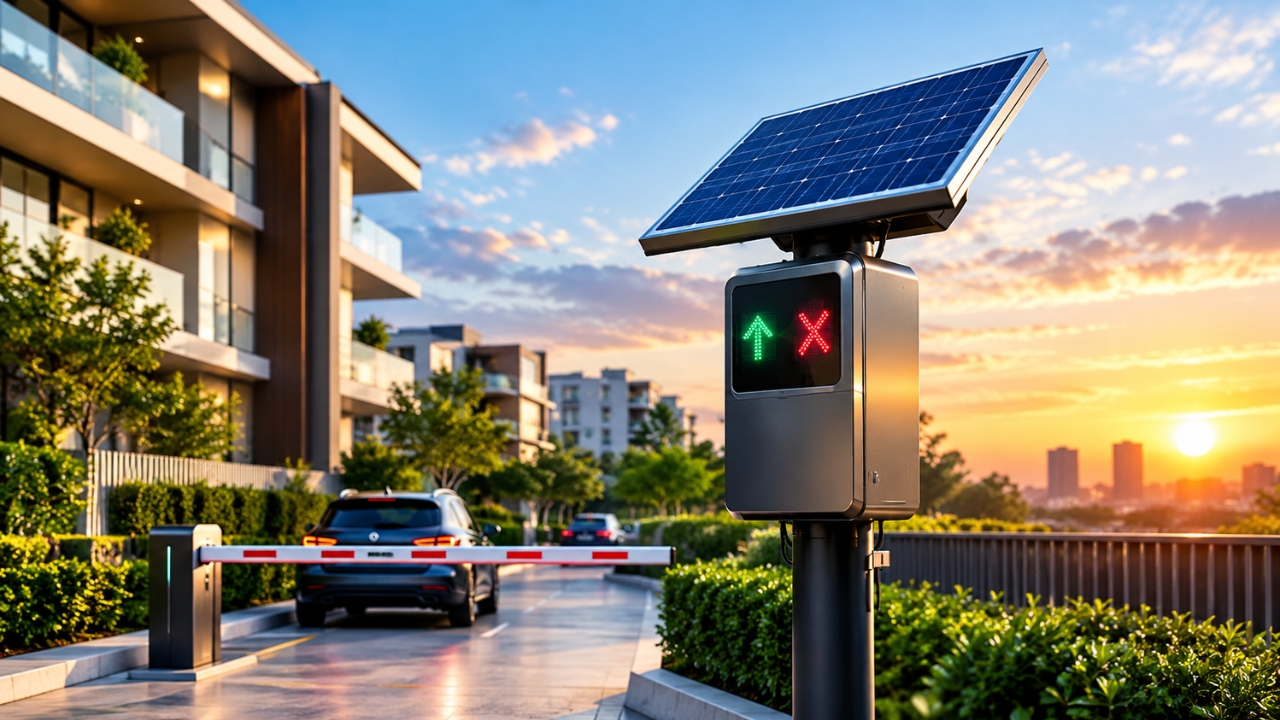
For years, rooftop solar has felt like a privilege of people who own a house with a sunny roof. Millions of Australians living in apartments watched panels spread across suburbs while their own building’s roof sat unused or powered only the lifts and car park lights. That is why the news from the 2026 Australian Good Design Awards stands out. A Melbourne company’s apartment solar sharing technology, SolShare by Allume Energy, was named the Australian Good Design Award of the Year and also took the Sustainability award. It is a rare case of a quiet piece of electrical hardware beating flashy buildings and big public projects.
What Is Apartment Solar Sharing and Why Was It Hard Until Now?
The core problem is simple to describe and awkward to solve. A single solar array on a shared roof produces power, but a typical apartment block has one main connection and many separate electricity accounts. Splitting the output fairly between households, in real time, has traditionally meant complicated metering, strata disputes and arrangements that rarely made financial sense for residents.
Apartment solar sharing aims to remove that barrier. Instead of the solar power going into common property only, it is distributed to individual dwellings so that each household benefits directly on its own bill. The idea is not new, but making it practical, affordable and fair inside an existing building is where most earlier attempts stalled.
How the Solar “Traffic Controller” Works
Think of SolShare as a traffic controller for electrons. It directs the electricity produced by a shared solar system to each apartment according to what that apartment needs at that moment. A household running an oven and a heater draws a bigger share, while a unit that is empty during the day takes less, and the unused portion flows to neighbours who can use it. According to the awards organisers, this dynamic approach is what makes shared rooftop solar workable for multi-residential buildings, and it aims to distribute the solar output equitably between dwellings.
The practical upshot for residents is that they keep their existing retailer and accounts, while the solar power they use reduces what they draw from the grid. Anyone considering this for a building should still ask an accredited installer how it connects to their specific switchboard and metering setup, because older buildings differ widely.
By the Numbers: What the Results Show
The figures reported around the award give a sense of scale. They come from the company and the awards announcement, so treat savings as typical results rather than guarantees.
| Detail | What was reported |
|---|---|
| Developer | Allume Energy, Melbourne |
| Technology | SolShare, a shared rooftop solar distribution system |
| Main honours | 2026 Australian Good Design Award of the Year and Award for Sustainability |
| Additional recognition | Joint winner, Best in Discipline for Product Design |
| Apartments connected | More than 10,000 across three continents |
| Solar energy delivered | Around 23 GWh globally |
| Average resident bill savings | Roughly 30 to 40 per cent |
| Awards scope | 13 design disciplines and more than 30 categories |
Why the Judges and the Industry Are Paying Attention
Design awards usually reward how something looks. This one rewarded how something works, and who it works for. A few reasons stand out:
- It targets a big gap. Apartment residents have had limited access to the benefits of rooftop solar, even though they make up a large share of households.
- It is already proven at scale. Thousands of connected apartments mean it is no longer just a pilot idea.
- It is practical rather than theoretical. The design solves a fairness problem, not just a technical one.
- It supports lower household costs. Reported savings of 30 to 40 per cent on electricity bills matter during a period when many people are watching energy costs closely.
The win also sits alongside other recognised work in the same awards, from policy and communication design to engineering and marine conservation, which shows how wide the field was.
What It Could Mean for Renters, Owners and Strata Committees
If you live in an apartment, the award is a useful prompt to ask questions rather than a promise your building can switch overnight. Owners’ corporations typically need to agree to roof use, and installation involves electrical work that must be done by licensed professionals. Renters will usually need their landlord and the body corporate on board.
A sensible starting checklist for a strata committee:
- Check how much usable roof space and sun exposure the building has.
- Review the building’s electrical and metering arrangement with a qualified installer.
- Ask for real bill-saving data from comparable buildings, not just averages.
- Understand the ownership, maintenance and warranty terms before voting.
The bigger takeaway is cultural. Good design is being recognised not for decoration but for opening up a benefit that many people had been locked out of.
Frequently Asked Questions
What is SolShare?
SolShare is an apartment solar sharing system from Melbourne’s Allume Energy. It directs electricity from a shared rooftop solar array to individual apartments based on their instantaneous needs.
What award did it win?
It won the 2026 Australian Good Design Award of the Year and the Australian Good Design Award for Sustainability. It was also named joint winner of the Best in Discipline Award for Product Design.
How much can residents save?
The company and awards announcement report that residents have saved an average of 30 to 40 per cent on electricity bills. Individual results vary with building size, sunlight and usage.
Can any apartment building install it?
Not automatically. Roof space, electrical setup and owners’ corporation approval all matter, so a licensed installer should assess the building first.
Environment Design Guide Explained: Australia’s Library of Climate-Smart Building Notes!