
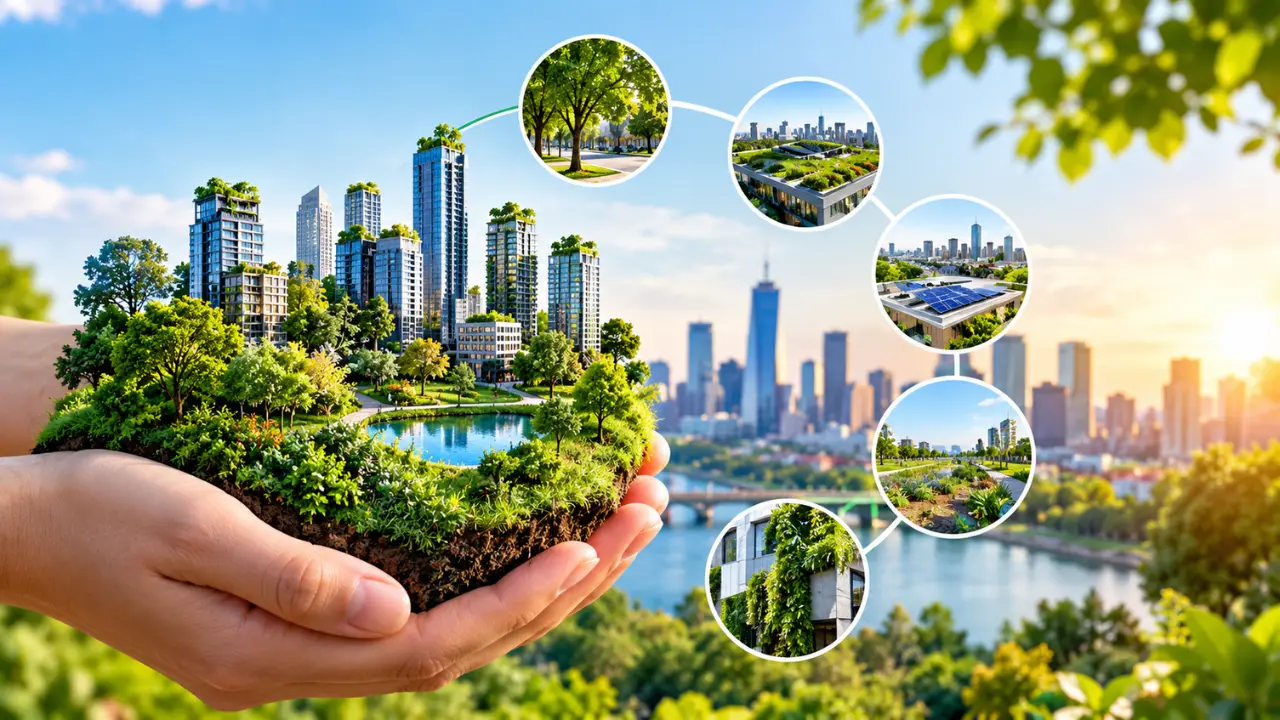
Not long ago, planting trees was seen as a nice extra, something a city did to look attractive. Today it’s closer to public health infrastructure. As heatwaves get hotter and longer, from Paris to Medellín to Singapore, cities are treating tree canopy as one of the most practical tools they have.
The logic is simple, and the evidence is growing. Here’s why trees are suddenly at the centre of urban planning, what cities are actually doing, and why even the most enthusiastic supporters say trees alone won’t be enough.
The Problem: Cities Trap Heat
Concrete, asphalt and dark roofs absorb sunlight all day and release it slowly after dark. The result is the urban heat island effect: cities are hotter than their surroundings, and nights offer less relief. For people without air conditioning, older residents and anyone with a health condition, that extra heat can be dangerous.
The scale of the risk is clear in Europe. Heatwaves killed tens of thousands of people in Europe’s cities in a recent summer, and Paris saw temperatures above 40°C in late June. A 2023 study of 854 European cities found Paris had the highest heat-related mortality relative risk of any of them.
Why Trees Work
Trees cool cities in two main ways. They provide shade, which keeps hard surfaces from absorbing heat to start with, and they release water vapour through their leaves, which cools the air around them. Researchers in Paris found that trees are significantly more effective than lawns at reducing the risk of death during heatwaves, thanks to both shade and that evaporative effect.
The health evidence is striking. A 2023 study published in The Lancet concluded that if European cities had had 30% more trees in 2015, roughly 40% of the 6,700 heat-related deaths in the summer studied could have been prevented. A separate analysis for Paris found that the greenest districts have the lowest risk of heat-related death, and that increasing green cover could reduce heat-related deaths by up to a third. These are modelling studies, so they show potential and not guaranteed results, but they’ve been influential.
What Cities Are Doing
Different cities have taken different routes, but the common thread is ambition and targeting.
| City | Approach | Key details |
|---|---|---|
| Medellín, Colombia | A network of 30 “green corridors” along roads and waterways | About 2.5 million plants and roughly 880,000 trees, with reported average temperature falling by about 2°C by 2023 |
| Paris, France | Tree planting, “cool islands” and school streets | A plan for 170,000 trees by 2026, with cool spaces reported to be 2 to 4°C cooler than surrounding streets |
| Singapore | “City in a garden” planning | A goal that every resident lives within a 10-minute walk of a park by the end of the decade, plus one million new trees and vertical greenery on buildings |
| Milan, Italy | Forestami initiative | A target of 3 million trees by 2030 across the metropolitan area, involving around 70 municipalities |
| Canberra, Australia | Urban Forest Strategy | A target of 30% tree canopy or equivalent living infrastructure by 2045 |
Medellín is often held up as the model. Its green corridors were created partly in response to extreme heat and were built with a mix of native trees, palms, bamboo and tropical plants along sidewalks, parks and busy traffic routes. Other Colombian cities, including Bogotá and Barranquilla, have adopted similar plans. Paris reports that it has planted well over 100,000 trees since 2020, according to one recent analysis, and it’s increasingly adding greenery to school streets, so children’s routes and playgrounds are shaded.
Putting Trees Where People Actually Live
A recent analysis of European cities highlights a catch: it isn’t enough to plant trees somewhere. They need to be near homes. The study found that in London, Paris and Madrid, more than 90% of buildings did not have enough surrounding shade to counter the urban heat island effect, and even better-performing cities had a majority of residents without adequate protection, including Hamburg (56% unprotected) and Barcelona (70%).
That’s why many cities are moving toward data-driven planting, using heat maps and vulnerability data to decide where trees should go first.
The Paris research also revealed something unexpected. Inequality showed up inside the city, and, contrary to popular belief, the wealthiest districts of Paris were on average more vulnerable to heat-related deaths than others. That’s a reminder that vulnerability depends on several factors, including building types, age and green cover, not just income. Either way, planning that targets the hottest, least-shaded areas tends to deliver the biggest benefits.
The Bigger Picture: Evidence Keeps Growing
Research is catching up to what planners have long suspected. A large meta-analysis published in Nature Communications in May 2026, covering 8,919 large urban areas worldwide, examined the effect of urban trees on heat. One outlet summarising it reported that around 914 million people already benefit from measurable cooling thanks to existing urban forests. Treat that number with some caution, since I’ve seen it only in a secondary summary, but it fits with a broad pattern: where trees are plentiful, the heat is easier to bear.
Trees also bring side benefits that make them politically popular. They improve air quality, support biodiversity, make streets more pleasant for walking and cycling, and, in Singapore’s case, can reduce the energy buildings need for cooling when planted as vertical greenery, with one report citing savings of 10 to 30%.
The Challenges
If trees were the whole answer, every city would already be cool. Several issues stand in the way.
- Time. A new tree takes years to deliver meaningful shade, so the benefits of today’s planting won’t be fully felt for a decade or more.
- Survival. Young trees need water, and hotter, drier conditions can kill them. Planting the right species in the right place matters as much as planting more of them.
- Space. Dense neighbourhoods have narrow footpaths, underground utilities and overhead wires.
- Private land. Much of a city’s canopy is in backyards and on private property, so planning rules and incentives matter.
- Ambition versus delivery. Large targets are easy to announce and harder to meet. Maintenance budgets and long-term care are often the weak point.
- Fairness. Without careful planning, new green space can raise property values and push out the people it was meant to protect.
Trees Plus Everything Else
Almost every expert says the same thing: trees are essential but not a silver bullet. The strongest strategies combine canopy with other measures, such as:
- Cool or reflective roofs and pavements
- Water features, wetlands and rain gardens
- Green roofs and walls where there’s no room for trees
- Shaded bus stops, playgrounds and walkways
- Cooling centres and heat-health warning systems
Singapore, for example, mixes greenery with architectural and technological cooling, and Paris pairs trees with “cool islands” and school street conversions. The goal is to protect people on the hottest days, not simply to hit a canopy percentage.
What You Can Do
Individuals can help, too, especially since so much greenery sits on private land.
- Plant a suitable, preferably native, tree or shrubs near walls and windows that get strong sun.
- Choose permeable, light-coloured surfaces over dark paving where possible.
- Look after existing trees, since mature canopy is far harder to replace than to protect.
- Take part in local planting days and community greening programs.
- Ask your council or local representatives about shade near schools, bus stops and homes for older people.
- Check on vulnerable neighbours during heatwaves.
The challenge now is following through: planting the right trees in the right places, keeping them alive, and making sure the shade reaches the people who need it most. A tree planted today is a small investment in a cooler, safer street twenty years from now, and many cities have decided that’s an investment worth making.
Frequently Asked Questions
Do trees really reduce extreme heat in cities?
Yes. Trees provide shade and cool the air through evaporation. Studies in several cities link more tree cover with lower temperatures and lower heat-related health risks, though the size of the effect varies by location and tree type.
How much cooler can a city get from planting trees?
It depends. Medellín reports an average temperature drop of about 2°C after its green corridor program, and Paris’s cool spaces are reported to be 2 to 4°C cooler than nearby streets. Results vary with design, species and surroundings.
Why not just use air conditioning?
Air conditioning helps individuals but uses a lot of energy and releases waste heat outdoors. It’s also not available or affordable for everyone. Trees cool entire streets and neighbourhoods and help during power outages.
Are trees better than lawns for cooling?
Researchers in Paris found trees were significantly more effective than lawns at reducing heat-related mortality, thanks to shade and evaporation. Lawns still help, but shade makes the biggest difference.
How long does it take for new trees to cool a street?
Young trees offer little shade at first. It can take years, sometimes a decade or more, for them to grow a canopy large enough to make a noticeable difference, which is why early planting and tree protection matter.
1 thought on “A Greener Future: How Cities Are Using Trees to Combat Extreme Heat”
Comments are closed.