
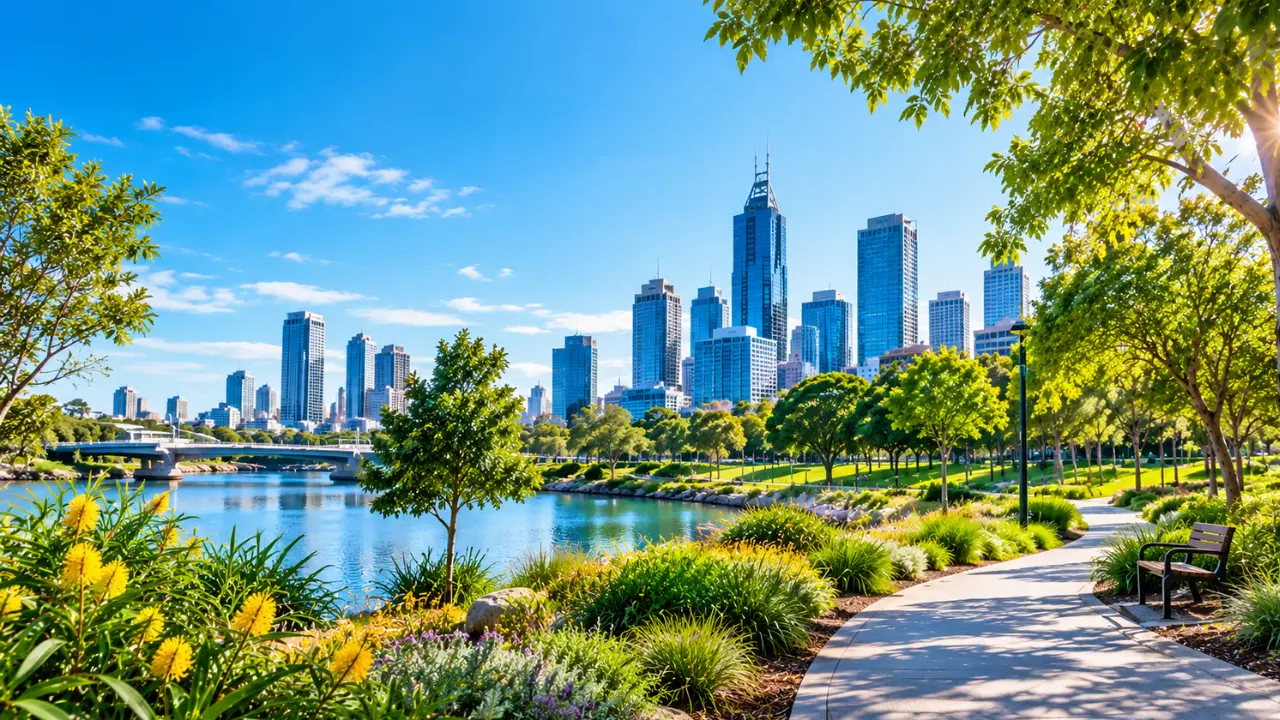
Anyone who has walked down a treeless suburban street in an Australian summer knows the feeling: the pavement radiates heat, the air feels thick, and the nearest patch of shade is a long way off. Now picture the same street lined with mature trees. The temperature difference isn’t just a feeling. It’s measurable, and it’s why cities across Australia are making green space a core part of how they plan for hotter summers.
With the southern summer approaching, urban heat is once again a practical concern, not an abstract policy debate. Here’s why planners, councils and state governments are leaning on trees, parks and living infrastructure, what they’re actually doing, and where the challenges lie.
What Is the Urban Heat Island Effect?
Cities are hotter than the land around them. Roads, roofs, car parks and buildings soak up sunlight during the day and release it slowly at night, so urban areas store more heat for longer. Researchers call this the urban heat island effect, and it’s a big part of why city nights can stay uncomfortably warm during a heatwave.
Part of the problem is materials. As one researcher told the ABC, new building materials tend to absorb heat, trap radiation and have no way of holding moisture for cooling. Another part is design. Large new houses on small blocks leave little room for trees, so a typical new suburb can have very little canopy. Greening Australia notes that heat islands are reduced in suburbs with good canopy cover and bigger backyards.
The stakes go beyond comfort. Cooler cities mean less pressure on air conditioning, lower energy bills and less risk to vulnerable people during extreme heat.
Why Greenery Is the Go-To Solution
Trees and green spaces cool cities in two main ways. First, shade: leaves block sunlight from reaching hard surfaces, so pavements and roofs absorb less heat to begin with. Second, evapotranspiration: plants release water vapour, which cools the surrounding air in a way similar to sweat.
An analysis by RMIT researchers, reported by the ABC, found that removing tree canopy can make cities 4 to 10 degrees hotter than surrounding areas. Researchers have also pointed out that vegetation can deliver several degrees of cooling when it’s placed smartly, and that the canopy doesn’t always have to be clumped together to work.
Greenery is also relatively cheap and does more than one job. Trees support wildlife, improve air quality, help manage stormwater and make streets more pleasant to walk and cycle along. That combination of benefits is a big reason councils prefer it to purely engineered solutions.
What Australian Cities Are Doing
Different cities have taken different approaches, but the common thread is canopy targets and mapping.
| Place | Approach | Key detail |
|---|---|---|
| Canberra (ACT) | Living Infrastructure Plan: Cooling the City, plus the Urban Forest Strategy 2021 to 2045 | Target of 30% tree canopy cover or equivalent living infrastructure, with planning reforms in 2023 |
| Melbourne and Victoria | Plan for Victoria (Action 12), urban cooling and greening programs | Protecting and expanding canopy trees, and updating canopy, vegetation and heat mapping, with a focus on heat-vulnerable areas |
| Sydney (NSW) | City of Sydney Urban Forest Strategy, NSW Cooler Places resource | Minimum 27% canopy cover by 2050 for the City of Sydney, with state guidance on greening, cool materials and design |
| Camden Council (NSW) | Urban Forest Strategy 2023 | Uses heat vulnerability data to prioritise low-canopy, high-risk areas |
| Waverley (NSW) | Urban Greening and Cooling Strategy 2023 | Local targets for public and private canopy and permeability |
| Darwin (NT) | Heat Mitigation Program | Combines street shading, cool roofs and pavements, greenery and evaporative cooling |
Many of these plans share a data-driven approach. Melbourne’s mapping update aims to give a clearer picture of where canopy is thin and heat risk is highest, and councils like Camden are using heat vulnerability data to decide where to plant first. The idea is to put trees where they’ll help the most people, not just where there’s space.
It’s Not Just Trees
Green space is the star of the show, but cities are combining it with other tools, because trees alone aren’t a silver bullet.
- Water and “blue-green” infrastructure. NSW planning guidance notes that combining green and blue spaces, such as trees alongside ponds, wetlands or rain gardens, tends to give the greatest cooling effect. Researchers quoted by the ABC also say water features can lower nearby temperatures.
- Water-sensitive urban design. Stormwater harvesting and rain gardens help keep trees watered during hot, dry spells, so they continue to cool when it matters most.
- Green roofs and walls. Where there’s no room for ground-level trees, rooftops and building facades can add vegetation and reduce heat entering buildings.
- Cool materials. Lighter, reflective roofs, pavements and roads absorb less heat.
- Better layout and shade. Streets designed for airflow and shade, plus shade structures in playgrounds and bus stops, reduce exposure.
Canberra’s plan explicitly counts green roofs, shrub beds, wetlands and rain gardens alongside trees towards its 30% target, which reflects this broader view.
The Challenges
If planting trees were easy, every city would already be cool. A few obstacles keep slowing progress.
- Canopy has been shrinking. Data reported by the ABC has shown canopy coverage declining in almost every state, driven partly by development and larger homes on smaller lots.
- Space is limited. Dense areas have narrow footpaths, underground services and overhead wires.
- Private land matters. Much of a city’s canopy sits in backyards, so planning rules and incentives for private property are as important as public planting.
- Water and climate. Young trees need water to survive, and hotter, drier summers make that harder. Choosing species that cope with extreme conditions is increasingly important.
- Maintenance. A tree isn’t an instant fix. It can take years to deliver real shade, and it needs ongoing care.
- Fairness. Hotter suburbs are often those with less money and less canopy, which is why many strategies now prioritise heat-vulnerable communities.
What Residents Can Do
You don’t have to wait for the council. Individual choices add up, especially since so much canopy is on private land.
- Plant a tree or shrubs, ideally native species suited to your local climate, in a spot that shades walls, paving or windows.
- Keep your garden permeable. Soil and plants stay cooler than concrete and help absorb rainwater.
- Choose lighter colours for roofs, driveways and paving where possible.
- Add a green wall or planter boxes if you have a courtyard or balcony.
- Look after existing trees. Mature canopy is much harder to replace than it is to protect.
- Join local planting events, such as community programs and National Tree Day.
- Speak up about street trees and shade in your area, particularly near schools, bus stops and playgrounds.
If you rent or have little space, even a few large pots with shade-giving plants can make a small difference around a doorway or window.
Final Thoughts
Australian cities aren’t turning to green space because it’s fashionable. They’re doing it because the evidence points to canopy as one of the most effective, affordable and multi-purpose ways to cool hot places. Targets like Canberra’s 30% by 2045 and Sydney’s 27% by 2050 show how seriously planners are taking the idea, and the new focus on mapping and heat-vulnerable neighbourhoods suggests they’re getting more strategic about where to act.
But trees take time, and the summers are already here. The best results will come from a mix of canopy, water, cool materials and smart design, plus a lot of local effort. As one researcher put it, tree cover is important but it isn’t a silver bullet. Still, a shady street is one of the simplest things a city can offer, and it’s a good place to start.
Frequently Asked Questions
What is the urban heat island effect?
It’s the tendency of cities to be hotter than nearby rural areas, because hard surfaces like roads, roofs and car parks absorb and re-release heat, while there are fewer plants to provide shade and evaporative cooling.
How much can trees cool a city?
It depends on the species, size, location and surroundings. Research cited by the ABC suggests tree canopy loss can make cities several degrees hotter, and vegetation placed strategically can bring cooling of several degrees. Exact results vary from street to street.
Why are canopy targets different in each city?
Each council or state sets goals based on local climate, existing tree cover, available space and planning rules. Canberra aims for 30% by 2045, the City of Sydney for 27% by 2050, and some Victorian strategies set targets around 40% over the coming decades.
Are green roofs and walls as effective as trees?
They help, particularly where there’s no ground space, but they work best as a complement to tree canopy and not a replacement.
Can individuals really make a difference?
Yes. A large share of a city’s greenery is on private property, so backyard trees, permeable surfaces and shaded paving all add up across a neighbourhood.