
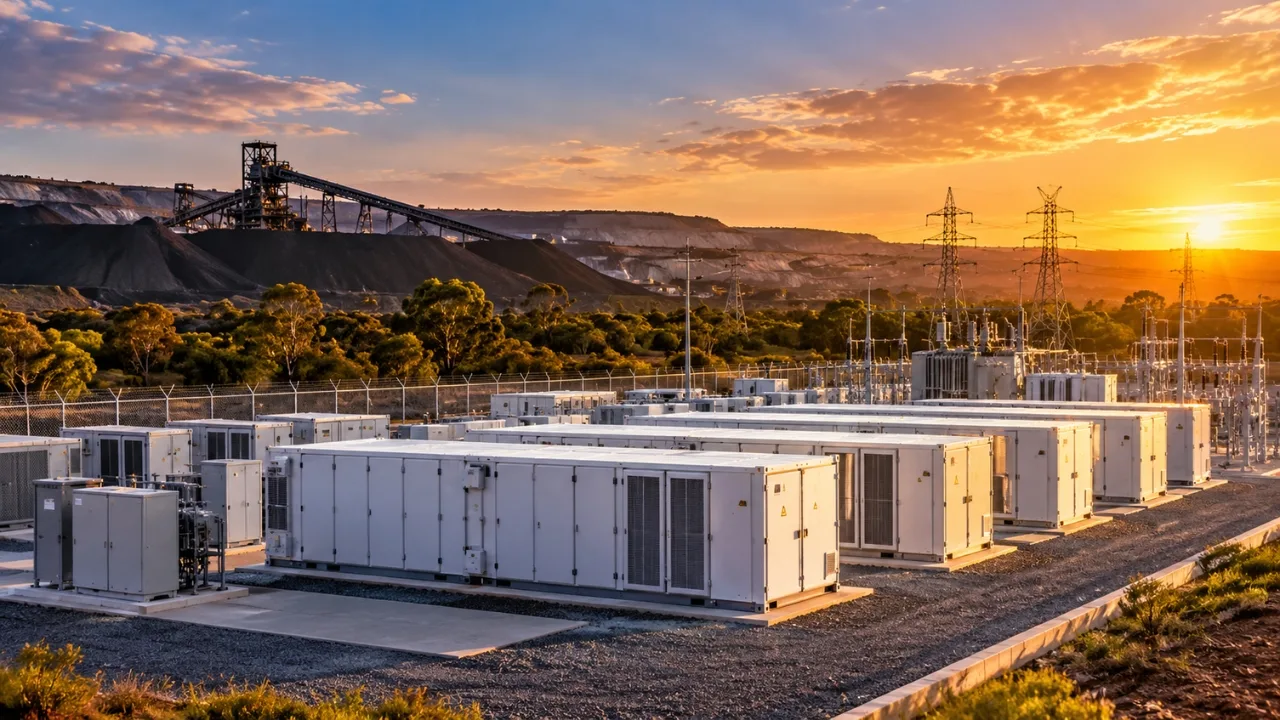
The Darnum battery project is one of the most debated energy proposals in Victoria right now. A 200 MW, four-hour battery planned for dairy country near Warragul has moved into the federal environmental approval queue, and the public has until 26 October to comment. The proposal sits where two things many Victorians care about meet: a more reliable, renewable grid, and protecting productive farmland. Whatever your view, the review is worth understanding because it is a public process anyone can take part in.
What Is the Darnum Battery Project?
The Darnum Battery Energy Storage System (BESS) is being developed by Samsung C&T Renewable Energy Australia. It would have a capacity of 200 megawatts and 800 megawatt-hours, meaning it could discharge at full power for about four hours. The site is roughly 100 kilometres south-east of Melbourne, on land that has recently been used for dairy farming and sits on the traditional lands of the Brataualung People.
The developer plans to install 196 battery modules on a single privately owned freehold parcel, along with an on-site substation and supporting equipment. An existing dwelling, shed and cattle yard would stay, and three rows of planted cypress trees would be largely kept to screen the site. The battery would connect to the National Electricity Market through a 220 kV transmission line that runs along the southern boundary.
Why the Project Has Become So Contentious
Local opposition has been strong and public. The Baw Baw Shire Council and local state MPs have argued that good agricultural land should be kept for farming. A community group, Friends of Gippsland, has formed to oppose the project and has circulated guidance on how to lodge objections. A petition against this battery and another proposed in the region reportedly gathered around 6,000 signatures earlier this year.
Some of the language used has been blunt. One state MP’s remarks in parliament about the developer drew attention, and roadside signs near the freeway to Gippsland have carried similarly angry messages. Strong feeling is understandable when people worry about their landscape, but the planning process is designed to weigh concerns on evidence, so specific, well-reasoned submissions tend to carry more weight than slogans.
The developer’s own community engagement found that the most common worries were:
- Visual impact and the change to the area’s sense of place
- Reduced public safety, particularly fire risk
- Loss of land from agricultural use
Residents also raised benefits, though less often: stronger energy security at peak times, better use of renewable power, and community and economic development opportunities.
The Grid Case: Why Batteries Like This Are Proposed
Batteries do not generate electricity. They store it when supply is plentiful and release it when demand is high. The developer says Darnum would provide firming and strength services, the kind of grid support needed as more wind and solar come online. It points to the Gippsland Renewable Energy Zone and the Gippsland Offshore Zone, estimated at about 1.1 GW and 9 GW respectively, as the generation that storage like this would help connect.
The location also matters for a practical reason. Large batteries need to be close to high-voltage lines, and this site sits beside one. That helps explain why a fairly specific stretch of farmland has attracted attention, though it does not settle whether it is the right place.
Key Facts at a Glance
| Detail | Information |
|---|---|
| Project name | Darnum Battery Energy Storage System (BESS) |
| Developer | Samsung C&T Renewable Energy Australia |
| Capacity | 200 MW / 800 MWh (four-hour duration) |
| Location | Near Warragul, about 100 km south-east of Melbourne |
| Current land use | Dairy farming |
| Grid connection | AusNet 220 kV transmission line |
| Equipment | 196 battery modules, on-site substation |
| Federal status | Entered EPBC Act assessment; public comment open until 26 October |
| Jobs estimated | About 80 during construction, 3 ongoing |
| Earliest construction | 2027, running roughly 18 months |
What Happens Next and How to Have Your Say
Entering the federal Environment Protection and Biodiversity Conservation (EPBC) Act process is not an approval. It is the stage where the government decides whether the project needs formal assessment for its effect on matters of national environmental significance, and the public can comment along the way. Separate state planning approvals are also required, and construction is only expected to begin in 2027 if every permit is secured.
If you live nearby or have a stake in the outcome, a useful submission usually:
- Focuses on specific impacts, such as fire risk management, visual screening, drainage or the loss of farmland
- Explains how the issue affects you or your community
- Suggests practical changes, such as different siting, buffers or emergency planning
- Is lodged before the 26 October deadline
For readers outside the region, the case is a useful example of a wider challenge: how Australia builds the storage its grid needs while keeping communities involved and respecting land that already supports local livelihoods.
Frequently Asked Questions
What is the Darnum battery project?
It is a proposed 200 MW, 800 MWh grid battery near Warragul in Victoria’s south-east, developed by Samsung C&T Renewable Energy Australia.
Has the project been approved?
No. It has only entered the federal EPBC assessment queue, and it still needs state planning approval and other permits.
When does public comment close?
The federal public comment period runs until 26 October.
When could construction start?
If all approvals are secured, the developer expects construction to begin in 2027 and take about 18 months.
Designing with Country: How Seasonal Calendars Can Shape Respectful Site Planning!