
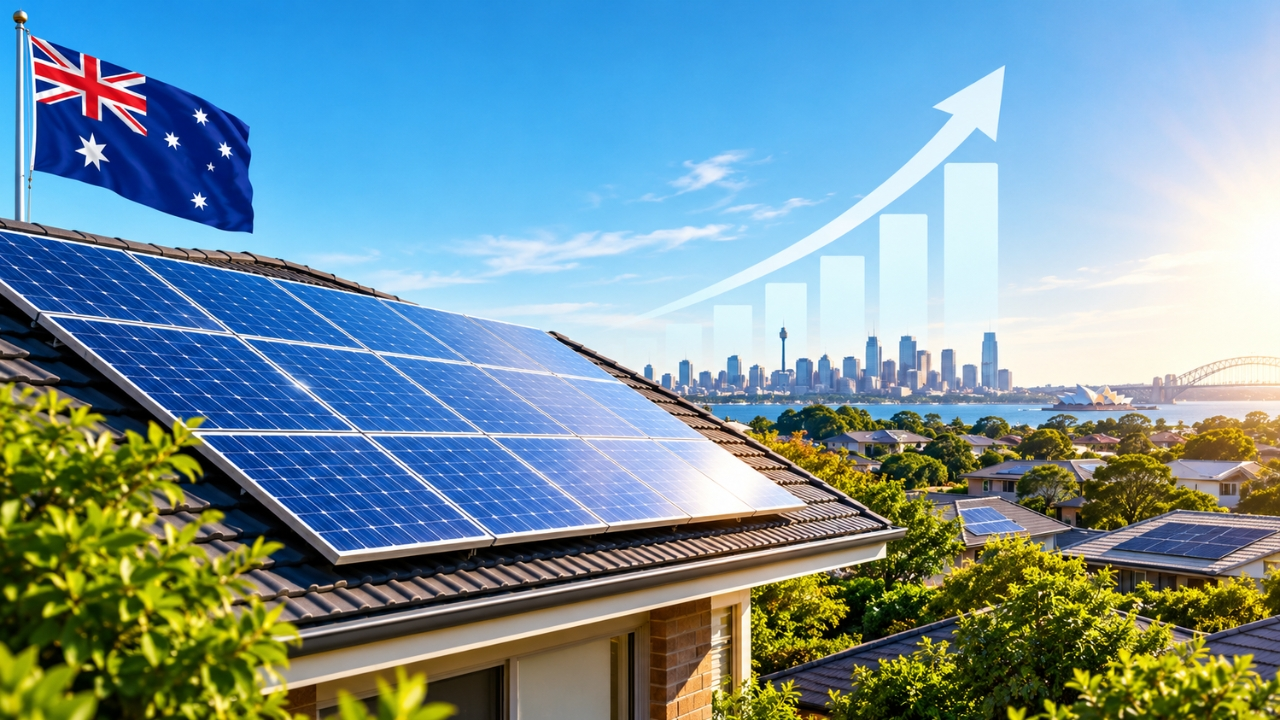
Drive through almost any Australian suburb and the roofs tell the story. Australia’s solar panel uptake has become one of the most remarkable household energy shifts anywhere in the world, with roughly 4 million homes and small businesses now generating their own power. Yet the surprising part is that growth is speeding up again rather than levelling off. Here’s where the numbers stand and where they could go next.
How Far Has Australia’s Solar Panel Uptake Come?
Roughly one in 2.5 Australian homes now has rooftop solar, and total installed rooftop capacity sits at around 22 GW. That is more than the combined capacity of the coal-fired power stations still operating in the country. In the first half of 2026, 180,878 new systems went in, a 35% jump on the same period in 2025 and the strongest six months since 2021. The June quarter alone set a record, with 102,234 installations.
The grid is feeling it. In October, rooftop solar output across the National Electricity Market peaked at 17,488 MW around midday, almost 16% higher than the same time last year. At that moment, rooftop and large-scale solar together supplied a record 72% of demand. For households, the practical effect is that midday power is often abundant and cheap, which changes how and when people choose to use electricity.
What Is Driving the Latest Surge?
Batteries are the new engine. In the first half of 2026, Australians installed 276,011 home batteries, up 52% on the previous six months, helped by the federal Cheaper Home Batteries rebate. For every 100 new solar systems, there were about 153 battery installations, which means many existing solar owners are adding storage to roofs they already have. One in seven homes now has a battery.
Several other forces sit behind the trend:
- Bill pressure: Households want to cut exposure to rising retail electricity prices.
- Storage economics: A battery lets you use your own midday power in the evening instead of exporting it for a small feed-in payment.
- Bigger systems: People buying batteries tend to choose larger solar arrays to keep them charged.
- Proven technology: Panels have been on Australian roofs for over a decade, so trust in the product is high.
The Numbers at a Glance
| Measure | Latest figure |
|---|---|
| Homes and small businesses with rooftop solar | About 4 million |
| Installed rooftop capacity | Around 22 GW |
| Systems installed, first half of 2026 | 180,878 (up 35% year on year) |
| Record quarterly installs (June 2026) | 102,234 systems |
| Home batteries installed, first half of 2026 | 276,011 (up 52% on prior six months) |
| Households with solar / with a battery | One in 2.5 / one in seven |
| Record rooftop output, national grid | 17,488 MW |
| Projected rooftop capacity by 2029–30 | 40.3 GW |
How Much Higher Could It Get?
Current projections suggest rooftop solar on the main grid could reach about 40.3 GW by 2029–30. That is roughly 13% above the central forecast used by the market operator, meaning the real-world boom is running ahead of official planning. Installations are on track to pass 300,000 again this year, and newer capacity per system is climbing as homes pair panels with batteries.
Growth is not guaranteed to be effortless, though. Renters and apartment residents still have limited access to rooftop solar. Network operators also have to manage a flood of midday power, which is why batteries, smarter tariffs and even vehicle-to-grid chargers (the first were approved in 2026) matter so much. The next phase is less about adding panels and more about making every kilowatt-hour useful.
What Should You Check Before Installing Solar?
Whether you’re adding panels or a battery, a few practical checks go a long way:
- Compare at least three quotes from installers accredited by the Clean Energy Council.
- Size the system to your daytime and evening usage, not just your roof space.
- Ask whether your inverter is battery-ready if you may add storage later.
- Check current state and federal rebates, as incentives change.
- Review warranties on panels, inverters and batteries, and ask who handles claims.
FAQs
What percentage of Australian homes have solar panels?
About one in 2.5 homes, or roughly 40%, has rooftop solar, which is among the highest rates in the world.
Is solar panel installation still growing in Australia?
Yes. The first half of 2026 saw 35% more installations than the same period in 2025, and the year is on track for more than 300,000 systems.
Are home batteries worth adding to solar panels?
They can be, especially if you export a lot of midday power for a low feed-in payment. A battery lets you use that energy in the evening. Payback depends on your usage, system size and available rebates, so get a tailored quote.
Can renters or apartment residents benefit from solar?
Access is more limited, but community solar, shared building systems and landlord-installed solar are growing options. Ask your landlord or owners corporation what’s possible.
Smart Windows That Tint on Demand: A Cooler Way to Cut Summer Cooling Costs!
1 thought on “Australia Solar Panel Uptake: Why the Rooftop Boom Still Has Room to Grow…”
Comments are closed.