
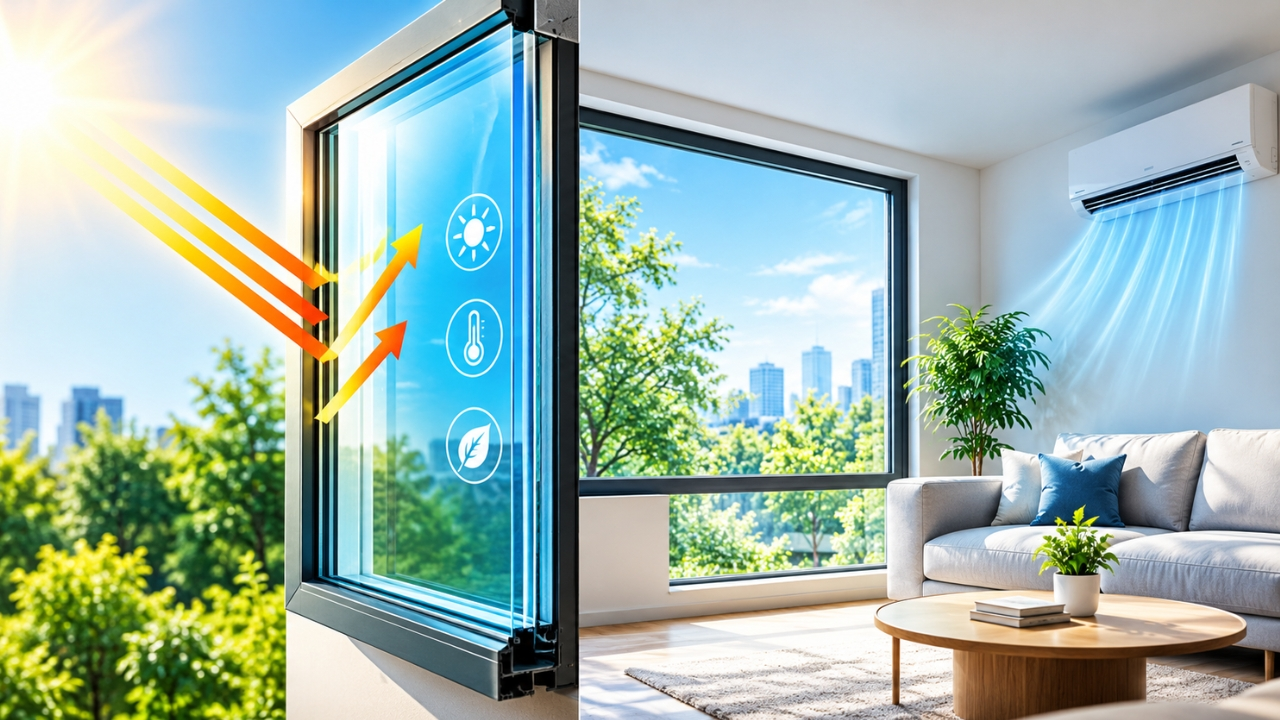
Anyone who has sat near a sun-facing window on a July afternoon knows how much heat glass lets into a room. The air conditioner then works overtime to push that heat back out, and the bill shows it. Smart windows are designed to fix this by darkening when the sun is strong and clearing when you want light. One Stanford prototype can switch from transparent to dark in under a minute and could save up to 20 percent on heating and cooling costs. Here is how smart windows could help reduce summer cooling costs, and what is realistic today.
Why Windows Drive Up Summer Cooling Costs
Glass is the weakest link in a building’s thermal envelope. Sunlight passes through it and turns into heat once it hits your floor, furniture and walls. Your AC then has to remove that extra heat. The effect is strongest in west- and south-facing rooms, where afternoon sun can make a space noticeably warmer than the rest of the home.
Curtains and blinds help, but they come with a trade-off. Close them and you lose daylight and the view, so you switch on lights, which adds a little heat of its own. Smart windows aim to control the sunlight without that compromise.
How Smart Windows Work
Smart windows, often called electrochromic or dynamic glass, change how much light and heat they let through when a small electrical signal is applied. You can control them with a switch, an app, or an automated sensor.
The Stanford prototype takes a different route from most existing designs. Instead of using materials that change color when charged, it uses a small electrical current to move a copper solution across conductive glass plates, and that movement blocks the light. According to the researchers, this approach avoids the blue tint seen in many current smart windows, does not wear down over time, and costs less to make.
Stanford’s Smart Window Prototype: What Makes It Different
The prototype is small, about 4 inches square, and it was developed by a team led by Stanford materials scientist Michael McGehee. The results were published in the journal Joule. Its main advantages over earlier self-tinting glass are speed and appearance.
| Feature | Many Existing Self-Tinting Windows | Stanford Prototype |
|---|---|---|
| Time to darken | Can take 20+ minutes | Under one minute |
| Color when tinted | Often a blue cast | Avoids the blue tint |
| Durability | Can lose effectiveness over time | Does not degrade, per researchers |
| Manufacturing cost | Typically expensive | Cheaper to make |
| Reported energy savings | Varies by product | Up to 20% on heating and cooling |
| Current stage | Commercially available | Prototype, scaling up |
The last row matters. This is a promising prototype, not a product you can order today. The team has said it is working to enlarge the glass area and bring manufacturing costs down, and it has been in talks with manufacturers about commercialization.
How Much Could You Actually Save?
The “up to 20 percent” figure refers to heating and cooling costs combined, and it is a best-case number. Real savings depend on several things:
- Climate: Hot, sunny regions gain the most from controlling solar heat.
- Window orientation: West- and south-facing glass usually has the biggest effect.
- Window area: Homes with large glass walls have more to gain than those with small windows.
- Existing insulation and shading: A well-shaded, well-insulated home has less to save.
- How the windows are controlled: Automated tinting that responds to sunlight usually beats manual use.
Smart windows are one part of an efficient home, not a replacement for good insulation, sealed gaps or a well-maintained AC unit.
What You Can Do Today While You Wait
Dynamic glass will take time to become affordable for ordinary homes. These measures can lower summer cooling costs now:
- Fit solar-control or low-emissivity window films on the hottest windows.
- Use blackout or reflective-backed curtains on west-facing rooms in the afternoon.
- Add exterior shading such as awnings, shutters or shade trees, which stop heat before it reaches the glass.
- Seal gaps around frames with weatherstripping or caulk.
- Raise the thermostat a degree or two and use ceiling fans to feel cooler.
If you are replacing windows anyway, ask about low-E coatings and the solar heat gain rating, and check whether electrochromic options are available in your area.
SOURCE
Carbon Zero Homes: How to Design an Energy-Efficient House That Slashes Power Bills!
1 thought on “Smart Windows That Tint on Demand: A Cooler Way to Cut Summer Cooling Costs!”
Comments are closed.