
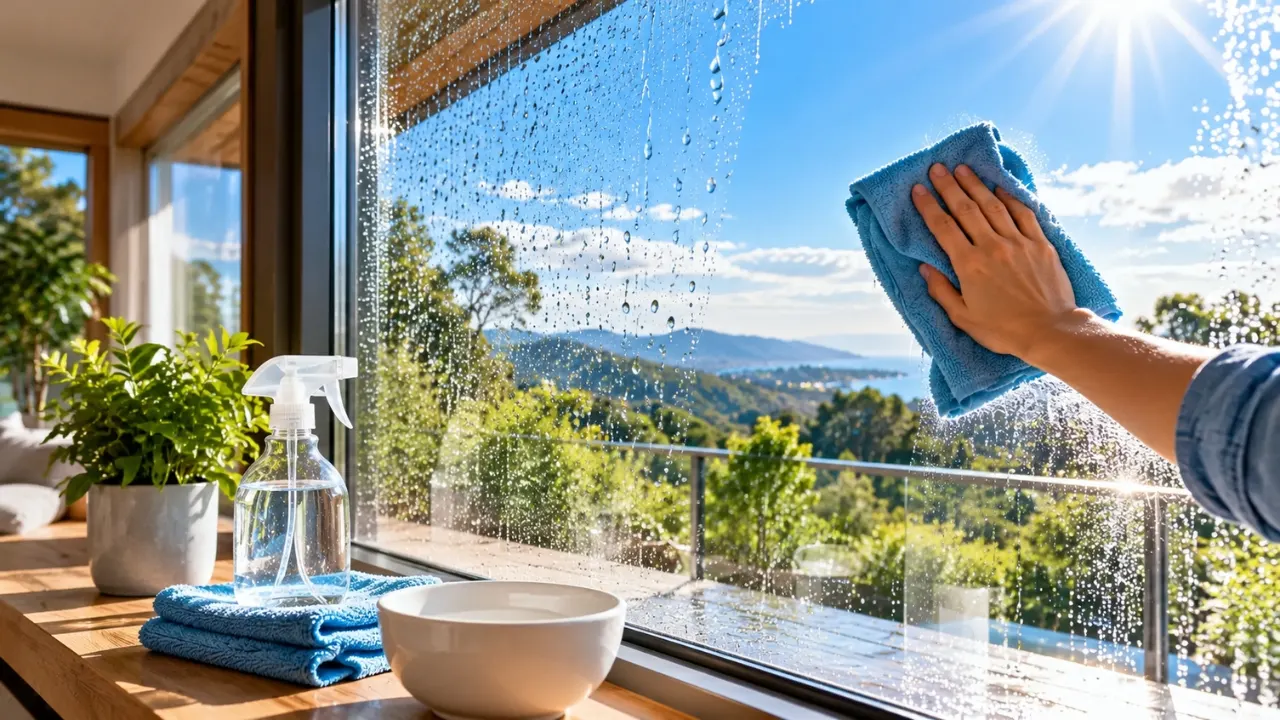
Anyone who has watched a storm pass and then noticed their windows covered in grey speckles knows the frustration. Rain looks clean, but it isn’t. Falling water picks up dust, pollen, soot and other airborne particles on the way down, then dries on the glass and leaves those familiar dotted marks. Learning how to clean windows after rain is less about strong products and more about technique, timing and a few simple household items. This guide walks through a chemical-free routine that works on most standard household glass.
Why Windows Look Worse After Rain
Rainwater isn’t pure. It collects particles from the air and from the surfaces it runs across, including roofs, gutters and window frames. When a drop evaporates, the water leaves, but the dirt stays behind as a small ring or spot. If your area has hard water from sprinklers or a garden hose, minerals can add a chalky film to the mix.
There’s a practical reason to deal with it sooner rather than later. Light dust and spotting wipe off easily within a few days, but if grime sits through repeated wet and dry cycles, it bonds more firmly to the glass and takes more effort to remove.
What You Need for Chemical-Free Window Cleaning
You don’t need a cupboard full of products. A short kit does the job:
- Two spray bottles, one for the cleaning solution and one for plain water
- White distilled vinegar
- Warm water
- A squeegee with a clean rubber blade
- Two or three microfibre cloths (one for scrubbing, one for drying and polishing)
- A soft brush or an old, clean paintbrush for frames and corners
- A bucket, plus a small amount of mild dish soap for heavily soiled glass
Use distilled water if your tap water is hard. It leaves fewer mineral marks as it dries, which matters most on large panes.
Step-by-Step: How to Clean Windows After Rain
1. Dry-dust first. Brush off loose dirt from the frame, sill and track with a soft brush or dry cloth. Skipping this step turns dust into muddy streaks once water touches it.
2. Mix a simple solution. A common household ratio is equal parts white vinegar and warm water. Vinegar helps cut through light residue and mineral spotting. For very dirty glass, add a drop or two of mild dish soap to a bucket of warm water and wash first.
3. Wash from the top down. Spray or wipe the glass, then work in one direction so drips fall onto areas you haven’t cleaned yet.
4. Use a squeegee in overlapping strokes. Start at the top corner, pull across or down in a single smooth stroke, and wipe the blade with a cloth after each pass. A dirty blade is the most common cause of new streaks.
5. Polish the edges. Wipe the perimeter and corners with a dry microfibre cloth to catch the last drops of water.
A quick caution: Vinegar is acidic. Keep it away from natural stone sills, such as marble, and avoid prolonged contact with metal frames or rubber seals. If your windows have special coatings or tinted film, check the manufacturer’s care instructions before using anything other than mild soapy water.
Best Time and Conditions for Cleaning Glass
Timing makes a bigger difference than most people expect. Wait until the glass has dried naturally after the rain, then choose a cloudy, mild day or work in shade. Direct sun dries the solution before you can wipe it off, which is the main reason people end up with streaks even after careful work.
| Situation | Best approach | Why it works |
|---|---|---|
| Light rain spots | Vinegar and water, microfibre cloth | Dissolves mild residue and polishes without lint |
| Heavy grime or pollen | Soapy water wash, then squeegee | Soap loosens dirt before it’s pulled off |
| Hard-water chalky film | Vinegar solution, left on for a minute | Mild acid helps break down mineral deposits |
| Large or tall windows | Squeegee with a long handle | Gives even coverage and fewer streaks |
| Textured or frosted glass | Soft brush and microfibre cloth | A squeegee can skip on uneven surfaces |
| Sunny, windy day | Postpone cleaning | Fast drying causes streaks and spotting |
Common Mistakes That Cause Streaks
Most streaks come from habits rather than products. Watch out for these:
- Cleaning in direct sunlight
- Using too much solution, which leaves a film
- Using paper towels, which can leave lint behind
- Reusing a dirty cloth or squeegee blade
- Forgetting to clean the frame, so dirty water runs back onto clean glass
- Skipping the final dry polish
If a streak appears anyway, spray lightly with plain water and buff it out with a clean, dry microfibre cloth. It’s usually faster than starting over.
Keeping Windows Cleaner for Longer
You can’t stop it raining, but you can reduce how often you need to clean. Wipe frames and sills regularly so dirt doesn’t wash onto the glass. Keep gutters clear so overflow doesn’t streak the windows below. Trim back nearby plants that drop pollen or sap. A quick wipe-down once the glass is dry after each major storm is much easier than an annual deep clean.
Frequently Asked Questions
Should I clean windows while it’s still raining or right after?
It’s better to wait until the glass is fully dry. Cleaning wet glass in damp conditions means new dirt sticks and streaks form as it dries unevenly.
Is vinegar safe for all windows?
It’s fine for standard glass, but avoid contact with natural stone, certain metal finishes and rubber seals. Always check manufacturer guidance for coated or tinted windows.
Why do my windows still streak after cleaning?
The usual causes are cleaning in direct sun, using too much solution, or working with a dirty cloth or blade. Try a lighter spray, shade or overcast conditions, and a fresh microfibre cloth.
How often should I clean windows in rainy seasons?
A light wipe after heavy storms and a fuller clean every one to two months usually keeps glass clear, depending on how much dust, pollen or pollution your area gets.
Indoor Plants and Air Quality: What Actually Works at Home (And What’s Just Décor)