
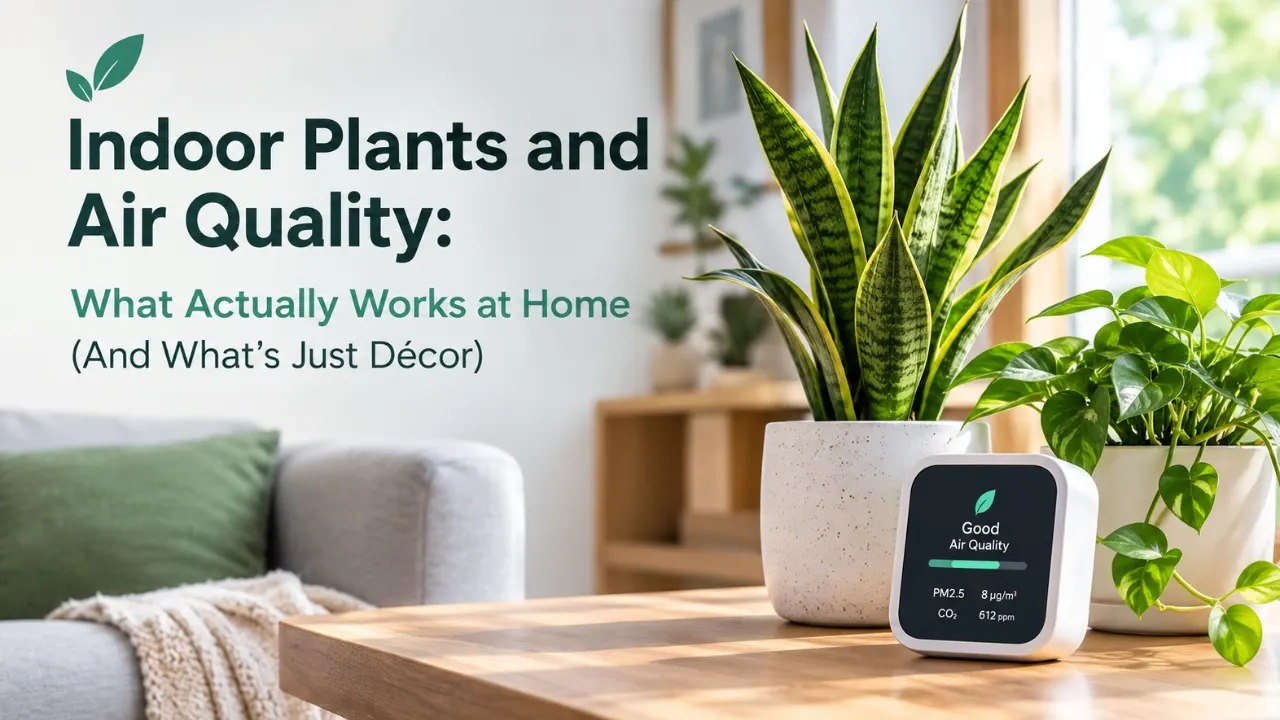
Walk into almost any home-décor store and you’ll see a pothos or snake plant sold as a “natural air purifier.” It’s an appealing idea: a few leafy pots on the shelf, and the air in your living room gets cleaner. The reality is more modest. Indoor plants and air quality are linked in laboratory settings, but in a real home, with open doors, cooking fumes, dust and daily foot traffic, the effect of a few houseplants on the air you breathe is very small.
That doesn’t make plants pointless. It means they should be judged for what they do well, and the job of cleaning indoor air should go to tools that are built for it.
Where the “Plants Purify Air” Idea Came From
The belief traces back to a well-known late-1980s NASA experiment. Researchers placed plants inside small, sealed chambers and found they reduced certain volatile organic compounds (VOCs) over time. The results were real, but the conditions were not like a home. A sealed box has no fresh air coming in, no open windows and no HVAC system.
Later reviews of the research have put the findings into perspective. Plants do take up some compounds, but the rate is far too slow to compete with the air exchange that happens in an ordinary house. Studies that tried to translate the lab numbers to real rooms found you would need an impractical number of plants, many per square metre of floor space, to match even basic ventilation. This is why agencies like the US EPA say houseplants alone are unlikely to remove significant pollutants from indoor air.
What Really Cleans Indoor Air: A Practical Comparison
If air quality is your goal, it helps to compare options honestly. Plants have a place, but they sit at the bottom of the list for pollutant removal.
| Approach | What it helps with | How effective for air cleaning | Notes |
|---|---|---|---|
| Source control (low-VOC paints, no smoking indoors, careful cleaning products) | VOCs, smoke, fragrances | High | Stopping pollution at the source beats removing it later |
| Ventilation (opening windows, kitchen and bathroom exhaust fans) | CO₂, moisture, cooking fumes, VOCs | High | Works best when outdoor air is clean |
| HVAC filter upgrades (higher MERV, well-fitted) | Dust, pollen, pet dander | Moderate to high | Must suit your system; replace on schedule |
| Portable HEPA air purifier | Fine particles, smoke, allergens | High for particles | Size it to the room; does little for gases without carbon media |
| Houseplants | Mood, humidity, appearance | Very low for pollutants | Valuable for wellbeing, not as a purifier |
Ventilation Is the Quiet Hero
Fresh air exchange is the most underrated part of indoor air quality. Everyday activities, such as cooking, showering, using cleaning sprays and even breathing, release moisture, carbon dioxide and chemicals into the room. Without a steady supply of outdoor air, these build up.
Simple habits make a visible difference:
- Run the range hood while cooking, ideally one vented outside rather than recirculating.
- Use the bathroom fan during and after showers to limit moisture and mould risk.
- Open windows for a few minutes when outdoor air is reasonably clean, such as after rain or outside rush hour.
- Keep HVAC filters fresh and make sure vents aren’t blocked by furniture.
- Avoid burning candles or incense in closed rooms for long stretches.
Pair this with a properly sized HEPA purifier if you live near traffic, have pets, or deal with seasonal allergies, and you’ve covered far more than any shelf of plants could.
So Why Keep Plants Indoors? The Real Benefits
Plants earn their place for reasons that have little to do with filtering air. Many people find greenery calming, and tending to a plant can be a small, steady routine that makes a space feel lived in. Plants also add a bit of moisture and can make a room feel more inviting, which matters for how you experience your home.
There are a few cautions worth knowing. Overwatered soil can grow mould, which is the opposite of what you want if anyone in the house has allergies or asthma. Some common houseplants, such as pothos, philodendron and peace lily, are toxic to cats and dogs if chewed, so check before you buy if you have pets. And dusty leaves don’t help anyone, so wipe them occasionally with a damp cloth. Choose plants because you enjoy them, water them sensibly, and treat any air benefit as a bonus rather than a promise.
Frequently Asked Questions
Do indoor plants improve air quality in a real home?
Only to a very small degree. The studies showing pollutant removal were done in sealed chambers. In a normal home, air exchange and filtration remove pollutants far faster than plants can.
Which houseplant is best for cleaning the air?
No single plant has been shown to make a meaningful difference in a typical room. Snake plants, spider plants and pothos are popular and easy to care for, but choose them for looks and low maintenance rather than purification.
What is the best way to improve indoor air quality?
Start with source control and ventilation, then add proper filtration, such as a good HVAC filter or a HEPA purifier sized to the room. Plants can be an addition, not the main solution.
Can houseplants make air quality worse?
They can if soil stays constantly wet and grows mould, or if pollen from flowering plants bothers allergic family members. Water only when needed and keep leaves and soil tidy.
Green Star Buildings vs NABERS: How to Tell Which Rating Your Client Really Wants!
1 thought on “Indoor Plants and Air Quality: What Actually Works at Home (And What’s Just Décor)”
Comments are closed.