
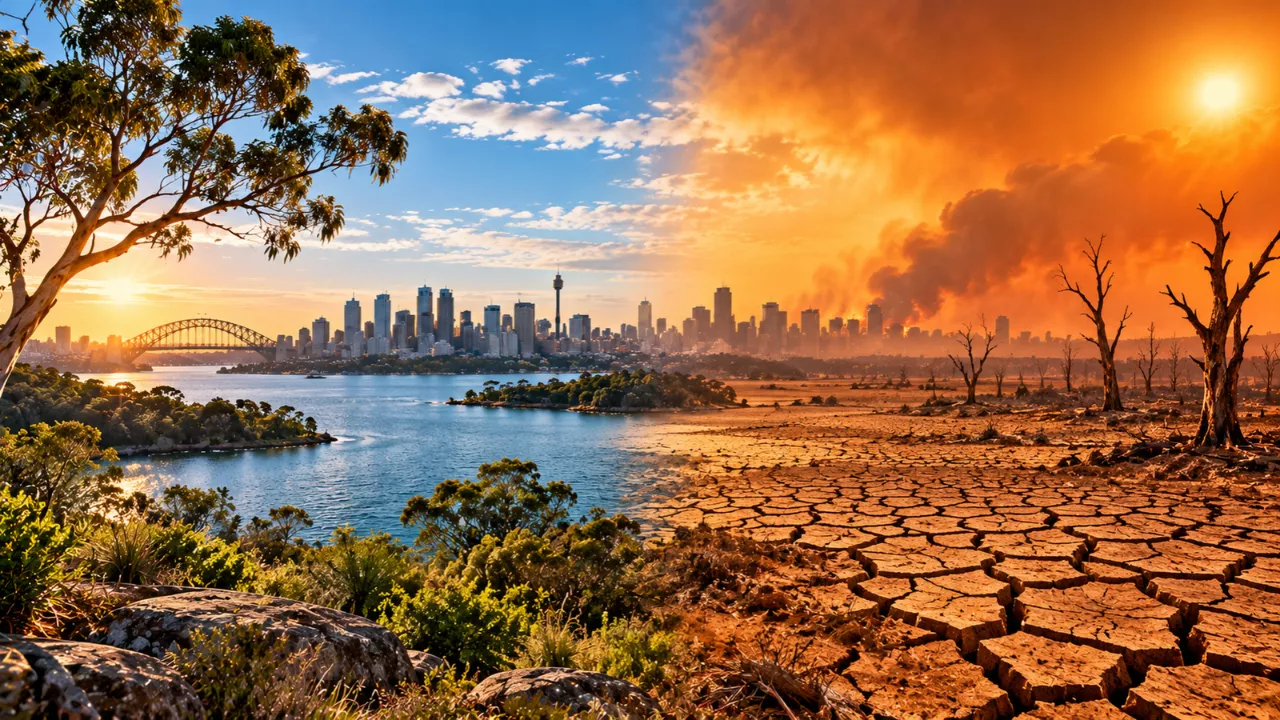
Some of the most candid climate warnings rarely come from press conferences. They come from internal meetings where scientists speak freely. This week, a livestreamed internal workshop at Australia’s national science agency put CSIRO climate impacts back in the spotlight. Senior researchers asked whether the country is being blunt enough about what a hotter world could mean, and whether waiting until the risks are “obvious” would simply leave it too late to prepare.
What CSIRO Scientists Said About Climate Impacts
The remarks came during a multi-day internal CSIRO workshop in Adelaide, where staff discussed how research would be reprioritised after deep job cuts. Responding to a colleague’s question, Dan Metcalf, who leads the agency’s environment research unit, agreed that CSIRO’s advice may not have been direct enough. He described being asked by a government department to model ecosystem collapse and ways to keep some functions running, because government and the community were not yet ready to confront it publicly.
Metcalf argued that researchers should treat this as an open conversation rather than a quiet technical exercise. His point was practical: once a crisis becomes undeniable, the window for planning has usually closed. He suggested scientists should map “alternative futures” and the coping options available, even if they cannot restore the climate of the past.
CSIRO’s response added important context. A spokesperson said Metcalf was answering a hypothetical, scenario-based question, and that his comments reflected the broader challenge facing the community rather than a formal forecast. Both framings matter when reading the story.
Why Northern Australia and the Great Barrier Reef Are in Focus
Two examples stood out. Metcalf raised the prospect of studying what the depopulation of northern Australia might look like if conditions became too hot, too dry and too fire-prone to sustain communities. He also asked what happens if the northern Great Barrier Reef corals bleach white and never recover.
These are not isolated worries. Australia’s first National Climate Risk Assessment, released in September 2025, pointed in a similar direction, including the possibility that outdoor life in the north could become unliveable for much of the year because of heat and humidity. Researchers have also noted that the assessment identified many knowledge gaps and that no follow-up assessments have been announced.
Key concerns raised in the discussion:
- Rising heat and humidity limiting outdoor life in the north
- Long-term coral bleaching on the northern Reef
- More frequent bushfires and drought
- Compounding events that strike in quick succession
CSIRO Climate Impacts at a Glance
| Topic | What was reported |
|---|---|
| Setting | Internal, multi-day CSIRO workshop in Adelaide, livestreamed to staff |
| Main speaker | Dan Metcalf, head of CSIRO’s environment research unit |
| Core message | Hold an open conversation on climate risks before it is too late |
| Scenarios raised | Depopulation of northern Australia; permanent coral bleaching in the northern Reef |
| Staffing context | Up to one in four environment researchers cut, including at least a third of climate modellers |
| CSIRO’s position | Remarks were a response to a hypothetical question; focus is shifting to adaptation and resilience |
| Public concern | Climate ranked 11th among Australians’ top issues in the September 2026 Ipsos Issues Monitor |
Research Cuts and the Funding Question
The timing is awkward. The workshop followed a round of staff cuts that reportedly removed as many as one in four environment researchers, including at least one third of CSIRO’s climate modellers. Scientists also described the merger of several research groups into a single Nature Research Area as a “grab-bag” that could make focus harder, and noted that piecemeal government funding and weak coordination add to the problem.
CSIRO says its strengthened focus on adaptation and resilience will deliver practical science for managing climate risk, including compounding events. The agency also pointed to the low public ranking of climate as an issue as part of the challenge. That ranking suggests the open conversation Metcalf called for faces real hurdles in public attention.
Calls for Action From Politicians
Crossbench politicians used the story to press for change:
- David Pocock called for permanent, indexed funding for CSIRO and urged the release of the Office of National Intelligence’s climate and security risk assessment, which he says has been withheld for nearly four years.
- Zali Steggall is pushing for legislated national climate risk assessments and a National Climate Risk Commission to coordinate adaptation, drawing on the UK’s approach of combining climate science with national security expertise.
What This Means for Everyday Australians
For most people, the lesson is not panic but preparedness. Honest, early public discussion of climate risk helps communities, insurers, councils and employers plan for heat, fire and flooding before emergencies force their hand. Following your local council’s adaptation planning, checking your region’s heat and fire preparedness resources, and paying attention to how research funding is handled are practical ways to stay informed.
Why Glacier Ice Cliffs Collapse in Fits and Starts, According to Satellite Data!