
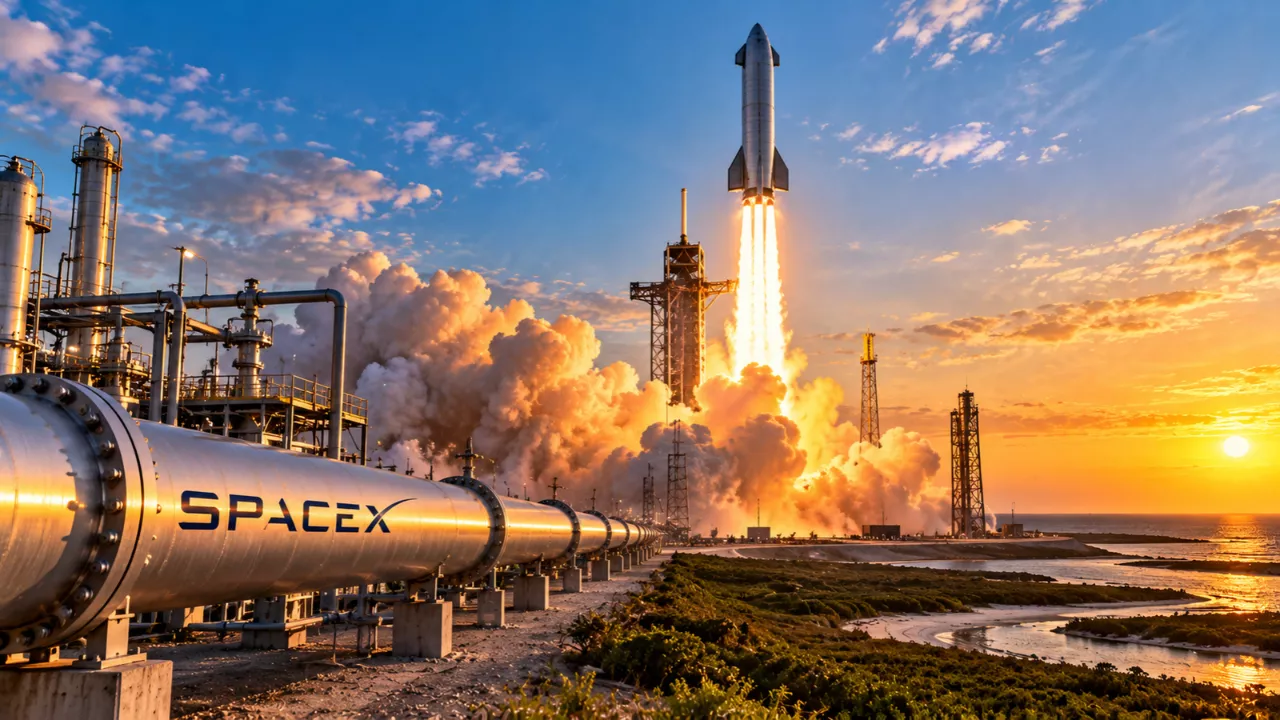
When most people think of Elon Musk’s energy legacy, they think of electric cars and batteries. The Starpipe SpaceX project points the other way. Starpipe is a dedicated natural gas pipeline now taking shape in South Texas, built to keep Starship rockets supplied with fuel. On its own it is a modest piece of infrastructure. But analysts say it signals how much gas SpaceX expects to need if its launch ambitions come true.
What Is the Starpipe SpaceX Pipeline?
Starpipe is an approximately 8-mile (13 km), 16-inch natural gas pipeline that will run to Starbase, SpaceX’s company town on the Texas Gulf Coast. County and regulatory filings show it starting at an 83-acre site SpaceX is leasing at the Port of Brownsville. The filings point to service starting around early 2027. Plans lodged with the U.S. Army Corps of Engineers also describe a liquefaction facility at Starbase, which would chill the piped gas into liquid methane.
A few details help put the project in context:
- Capacity: The pipe’s diameter suggests it could supply far more than the 25 Starbase launches a year the FAA currently authorizes.
- Supply chain control: SpaceX has signed over 100 oil and gas leases in Texas since 2023, according to land records reviewed by Reuters. That hints at an interest in producing its own gas, though an industry consultant noted this would be difficult for a company with no drilling background.
- Truck replacement: A pipeline reduces the need for fuel to arrive by road.
Why Does Starship Burn Methane?
Starship runs on liquid methane and liquid oxygen, not the liquid hydrogen used by many traditional launch vehicles. Wood Mackenzie’s analysis says LNG is easier to manage than hydrogen, which is a big part of why SpaceX favors it. Methane is denser and easier to store than hydrogen, and it can be sourced from the same gas supply that serves power plants and industry. That last point matters for anyone planning very high launch rates. A single Starship launch is reported to use roughly 630,000 gallons of liquid methane, so fuel logistics become a bottleneck long before the rocket does.
The 11 Million Tonne Math
The headline figure comes from Wood Mackenzie, which estimates that each Starship launch uses about 1,000 tons of LNG, equal to roughly 48 million cubic feet of gas. Musk has said SpaceX is targeting more than 30 launches a day by 2030. Multiply the two and you get about 11 million tons of LNG a year, comparable to the output of some large Gulf Coast export plants. Analyst Ed Crooks says that would be around 1.7% of total U.S. gas consumption.
| Metric | Figure | Context |
|---|---|---|
| Pipeline length and size | ~8 miles (13 km), 16-inch | Port of Brownsville to Starbase |
| FAA-approved Starbase launches | 25 per year | Current authorization |
| Methane per launch | ~630,000 gallons | Reported estimate |
| LNG per launch | ~1,000 tons (~48 mmcf) | Wood Mackenzie estimate |
| Musk’s stated target | 30+ launches per day by 2030 | Ambition, not approved |
| Implied annual LNG demand | ~11 million tons | About 1.7% of U.S. gas use |
| CO2e from 48 mmcf of gas | ~2,631 tonnes | Using the EPA’s equivalency calculator |
| Implied annual CO2e at 30 per day | ~28 million tonnes | Roughly 7 million petrol cars |
What It Means for Emissions
Burning methane produces carbon dioxide and water vapor, so the emissions scale directly with launch cadence. Scaling the EPA’s conversion to 30 launches a day gives roughly 28 million tonnes of CO2e a year. That is comparable to the annual emissions of nearly 7 million petrol cars.
Some context is needed. The 30-a-day figure is a target Musk has stated, not something regulators have approved, and it is a long way from the 25 launches a year currently allowed at Starbase. The numbers above are estimates from Wood Mackenzie and EPA conversion factors rather than measured emissions. They also cover only the gas consumed, not upstream methane leakage, which could raise the climate impact further. Today’s demand is small, but the projected demand is large enough to explain why SpaceX is securing supply early.
What to Watch Next
- Construction and commissioning: Whether Starpipe and the Starbase liquefaction plant stay on the reported timeline.
- Regulatory approvals: Any increase in the FAA’s launch cap, and permits for new facilities.
- Upstream moves: Whether SpaceX actually drills for its own gas, or relies on pipelines such as the nearby Enbridge expansion that an industry consultant suggested it could tap.
- Other sites: SpaceX has secured approval for a 51 km pipeline to its Cape Canaveral site and announced plans for a second Starbase in Louisiana.
FAQs
What is Starpipe?
Starpipe is a planned 8-mile natural gas pipeline that will deliver gas to SpaceX’s Starbase facility in Texas, where it would be liquefied into methane for Starship.
How much gas could SpaceX use?
Wood Mackenzie estimates about 1,000 tons of LNG per Starship launch. At 30 launches a day, that would be roughly 11 million tons a year, or about 1.7% of U.S. gas consumption.
Does Starship have to use natural gas?
Starship’s Raptor engines are designed to run on liquid methane and liquid oxygen. Methane is the main component of natural gas, which is why SpaceX is investing in gas supply.
Is 30 launches a day approved?
No. It is a stated company goal for 2030. The FAA currently approves up to 25 Starship launches a year from Starbase.
Sources: Reuters reporting on Starpipe; Wood Mackenzie analysis; RenewEconomy; Gizmodo; The Next Web; Pipeline Journal; Underground Infrastructure; EPA greenhouse gas equivalencies calculator.
1 thought on “Starpipe SpaceX: Why Musk’s Gas Pipeline Could Mean 11 Million Tonnes of LNG a Year!”
Comments are closed.