
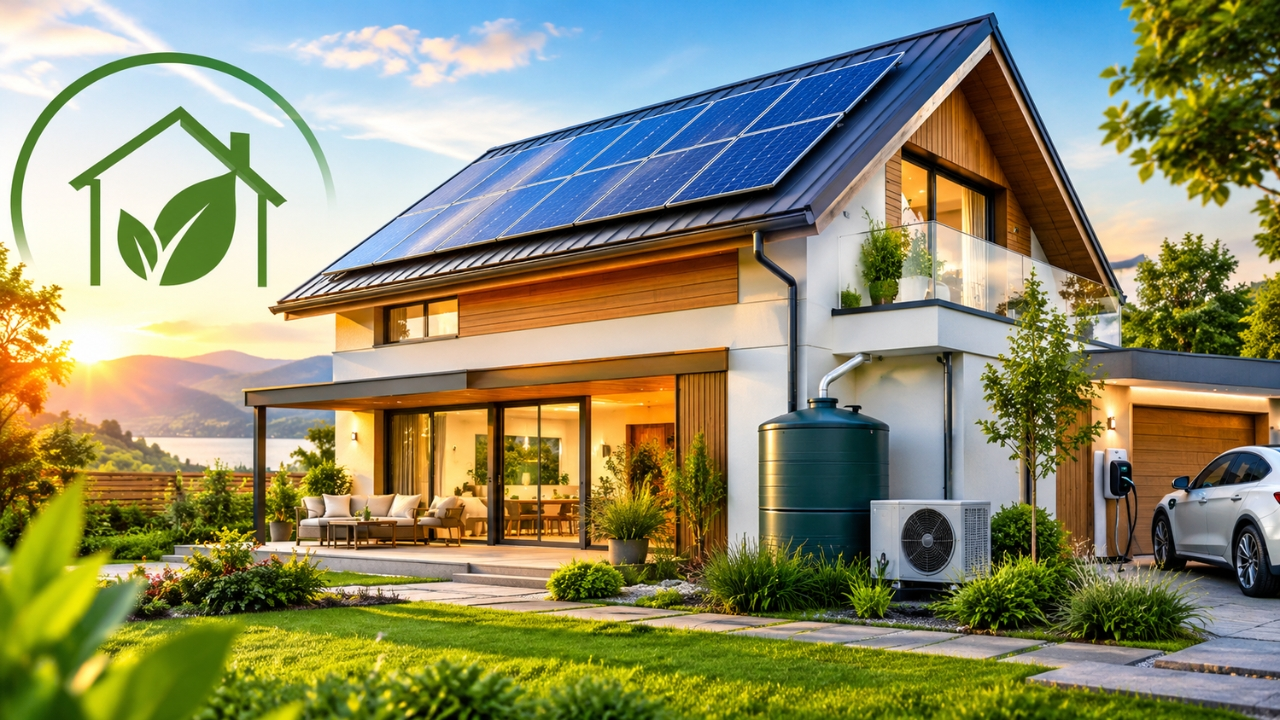
Most people think a carbon zero home means a big pile of solar panels on the roof. In practice, the homes that perform best are designed to need very little energy in the first place, and panels simply cover what’s left. That order matters. Get the design right and the panels can be smaller, the battery can be smaller, and the bills shrink without any daily effort from the people living there.
Carbon zero homes are now being built at community scale. Housing estates in Victoria, Australia, such as The Cape at Cape Paterson, have shown that all-electric, solar-powered homes can be practical for ordinary families rather than just showpiece projects. The lessons from those estates apply almost anywhere, whether you’re building new or planning a serious renovation.
What Does “Carbon Zero Home” Actually Mean?
A carbon zero home produces no net greenhouse gas emissions from its day-to-day energy use. It gets there by cutting demand first, then running entirely on electricity, then generating clean power on site, often with renewable electricity from the grid filling any gaps. An “energy-positive” home goes one step further and exports more electricity than it draws over a year.
The term is easy to misuse, so ask anyone selling you a “zero carbon” home what is included. Does the claim cover only operational energy, or also the materials used to build it? Is it based on modelled performance or on measured bills? A good designer will answer plainly.
Start With Passive Solar Design
Passive solar design uses the sun, the building’s shape and its materials to keep the house comfortable with minimal heating or cooling. It costs little or nothing extra when planned from day one, but it is very hard to fix later.
- Orientation: Place the main living areas and largest windows to face the winter sun. In the southern hemisphere that means north; in the northern hemisphere, south.
- Eaves and shading: Properly sized overhangs let low winter sun in while blocking the high summer sun.
- Thermal mass: A concrete slab or similar dense material inside the insulated envelope absorbs heat during the day and releases it slowly at night.
- Cross-ventilation: Windows placed to catch breezes let you cool the home naturally on mild evenings.
- Compact shape: Fewer corners and a simpler footprint mean less surface area to lose heat through.
The Building Envelope: Insulation, Glazing and Airtightness
Think of the envelope as the home’s coat. If it leaks, every heater and air conditioner works harder than it should. Quality insulation in the walls, roof and floor, combined with well-sealed joins, does more for comfort than almost any gadget you can buy later.
Windows deserve real attention because they are the weakest thermal point of most houses. Double or triple glazing with thermally broken frames reduces heat loss in winter and heat gain in summer. Airtightness is equally important: sealing gaps around doors, windows and service penetrations stops drafts, but it means you should plan for controlled ventilation, such as a heat-recovery system, so indoor air stays fresh.
Go All-Electric and Add Solar Plus Battery
Once demand is low, switch every major appliance to electric and power them from the sun. Removing gas also removes the fixed daily supply charge in many regions, which adds to the savings.
| Home Element | Efficient Choice | Why It Helps |
|---|---|---|
| Space heating and cooling | Reverse-cycle heat pump | Moves heat rather than creating it, so it uses far less electricity than resistance heating |
| Hot water | Heat pump hot water system | Often several times more efficient than conventional electric storage |
| Cooking | Induction cooktop | Fast, efficient and removes combustion gases from indoor air |
| Lighting | LED throughout | Uses a fraction of the energy of older bulbs and lasts far longer |
| Power generation | Rooftop solar sized to annual use | Produces daytime power and can export surplus |
| Storage | Home battery | Stores solar energy for evening use and can provide backup power |
| Vehicle charging | Home EV charger on solar | Lets you fuel the car with your own electricity |
A practical tip many designers share: run big loads such as hot water, laundry and dishwashing during sunny hours, so you use your own solar directly rather than exporting it cheaply and buying it back at night.
Costs, Savings and Choosing the Right Team
Carbon zero design usually adds some upfront cost, but a large part of it is design choices that are free, such as orientation and window placement. The expensive items, like solar, batteries and heat pumps, typically pay back through lower bills, and the savings continue for the life of the home. Actual results depend on your climate, local electricity prices, household size and the incentives available where you live, so ask for a modelled energy estimate before you commit.
Hire an architect or designer with proven experience in energy-efficient homes, and look for independent energy ratings or certification rather than marketing language. Once you move in, check your bills and solar monitoring regularly. A home that performs well on paper but is never tuned or understood by its owners often falls short of its potential.
Frequently Asked Questions
Is a carbon zero home more expensive to build?
Usually somewhat more upfront, mainly for solar, battery, glazing and insulation. Good passive design adds little cost, and lower power bills help offset the difference over time.
Can I make an existing home carbon zero?
You can get close. Start with insulation, draught sealing and window upgrades, then replace gas appliances with electric ones and add solar. Orientation can’t be changed, so results vary by house.
Do I need a battery for a carbon zero home?
Not always. A battery helps you use more of your own solar in the evening and gives backup during outages, but a well-designed home with solar can still reach very low emissions without one.
Will a carbon zero home really eliminate my power bill?
Some homes reach near-zero or even negative bills, but it depends on the climate, home size, your habits and local tariffs. Treat “zero bills” as a goal, not a guarantee.
A Greener Future: How Cities Are Using Trees to Combat Extreme Heat
1 thought on “Carbon Zero Homes: How to Design an Energy-Efficient House That Slashes Power Bills!”
Comments are closed.