
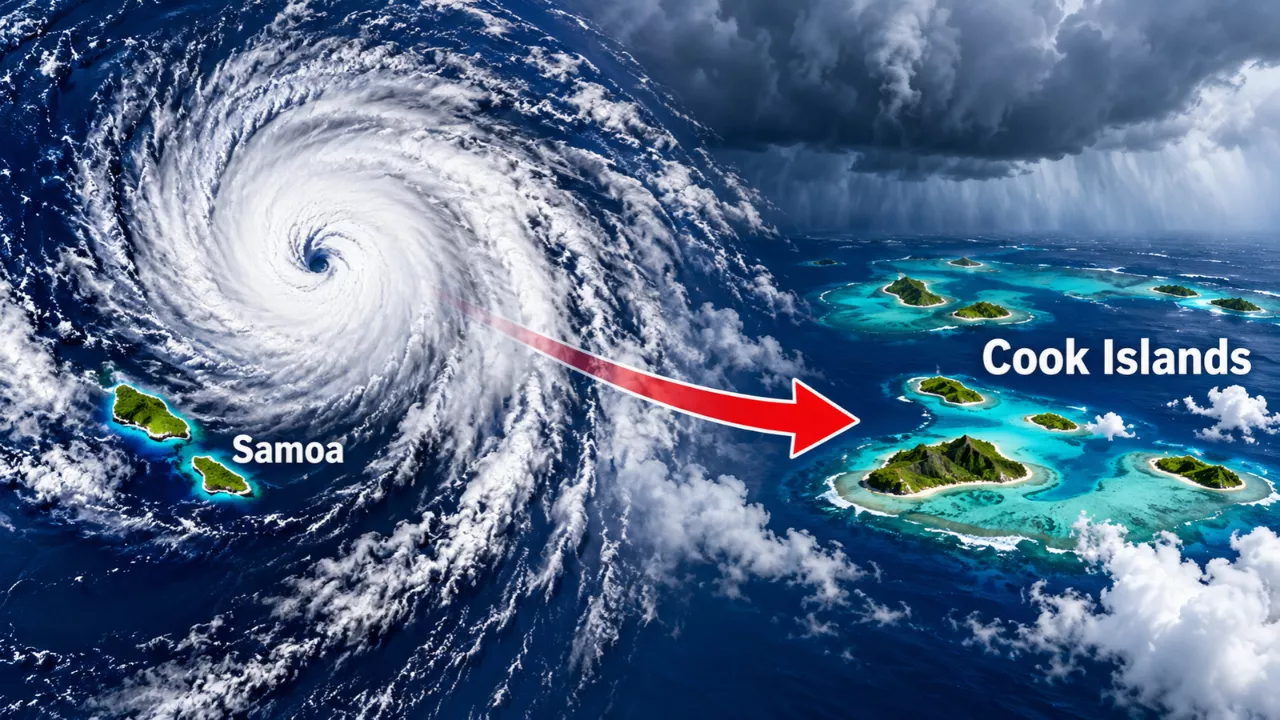
Cyclone Wati arrived in the Cook Islands about two weeks before the South Pacific cyclone season officially opens. It developed east of Samoa, strengthened to a Category 2 system and moved south-east through the Cook Islands. That unusual timing has caught the attention of island families, travellers and anyone who follows Pacific weather. This article explains what happened, why it matters, and what the storm tells us about the months ahead.
How Cyclone Wati Formed Near Samoa
Wati began as a tropical depression and was named a Category 1 tropical cyclone on Saturday morning, roughly 970 kilometres east of Apia. Samoa’s weather service said the system was already moving away from the country, so the chance of a direct hit was low. Strong south-easterly trade winds and very rough coastal seas were the main effects Samoa felt.
The South Pacific cyclone season normally runs from 1 November to 30 April, which makes an October cyclone a notable early arrival. Forecasters pointed to the current El Niño phase as one factor behind the early development. It was early, but it was not unprecedented.
Cyclone Wati’s Path Through the Cook Islands
After forming, Wati tracked south to south-east between the Northern and Southern Cook Islands. It strengthened to Category 2, with sustained winds near 100 km/h at its centre and gusts up to about 140 km/h. It was expected to briefly reach Category 3 strength at one point. Suwarrow in the north, and Aitutaki and Mauke in the south, were among the places reported to be facing destructive winds, heavy rain and dangerous swells.
Here is a snapshot of the key details:
| Detail | What we know |
|---|---|
| Name | Tropical Cyclone Wati |
| Where it formed | East of Samoa, about 970 km from Apia |
| Peak intensity reported | Category 2, with a brief Category 3 possible |
| Sustained winds / gusts | About 100 km/h / up to 140 km/h |
| Main islands affected | Suwarrow, Aitutaki, Mauke and Mangaia |
| Hazards | Damaging winds, heavy rain, large swells, coastal inundation risk |
| Threat to Samoa, Fiji or New Zealand | Low or none, according to regional forecasters |
| Official season start | 1 November |
What Residents on Aitutaki Experienced
The early reports from Aitutaki were encouraging. The island’s mayor said it fared relatively well. A few homes lost power when debris hit overhead lines, a coconut tree fell onto one roof, and seven people were moved out of stilted properties after the lagoon surged. No major damage was reported. Most of the island’s power lines run underground, which helped limit outages, and crews patrolled the roads to keep them clear for emergencies. Rarotonga, the main island, stayed on the outer edge of the system and recorded far lighter winds.
Conditions can change quickly in a cyclone, so these are early accounts rather than a full damage assessment. Cook Islands authorities will confirm the final picture.
What Happens Next
Forecasters expect Wati to keep moving south-east, away from the Southern Cooks and towards French Polynesia, and to weaken as it meets stronger wind shear and cooler seas. It may be reclassified as it loses its tropical character. Strong winds and large waves were expected to ease from late Monday in the Cook Islands.
Regional outlooks for the 2026/27 season point to normal to above-normal cyclone activity in parts of the Pacific. A single early storm does not predict a whole season, but it is a useful prompt to check preparations now.
Simple Ways to Prepare for Early-Season Cyclones
If you live in or are visiting the Pacific islands, a few habits make a real difference:
- Follow your national meteorological service for warnings, and treat social media as a secondary source.
- Keep a charged phone, torch, batteries, drinking water and basic first aid ready.
- Secure loose items outside, such as furniture, tools and boat gear.
- Stay out of lagoons, reef edges and the sea during large swells.
- Know your nearest shelter and avoid unnecessary travel once warnings are active.
- If you are travelling, check airline and accommodation updates before heading out.
Frequently Asked Questions
Is Cyclone Wati a threat to Samoa?
No. Samoa’s weather service said Wati was moving further away from the country, and the chance of a direct impact was low.
How strong is Cyclone Wati?
It was reported as a Category 2 system with sustained winds of about 100 km/h and gusts up to roughly 140 km/h.
Why did a cyclone form before the official season?
Forecasters linked the early formation to the current El Niño phase. Early storms do occur, even though the official season starts on 1 November.
Will Cyclone Wati affect New Zealand or Fiji?
Forecasters said it poses no threat to either. It is expected to track south-east towards French Polynesia and weaken.
1 thought on “Cyclone Wati and the Cook Islands: What an Early Pacific Storm Means for Aitutaki and Beyond!”
Comments are closed.