
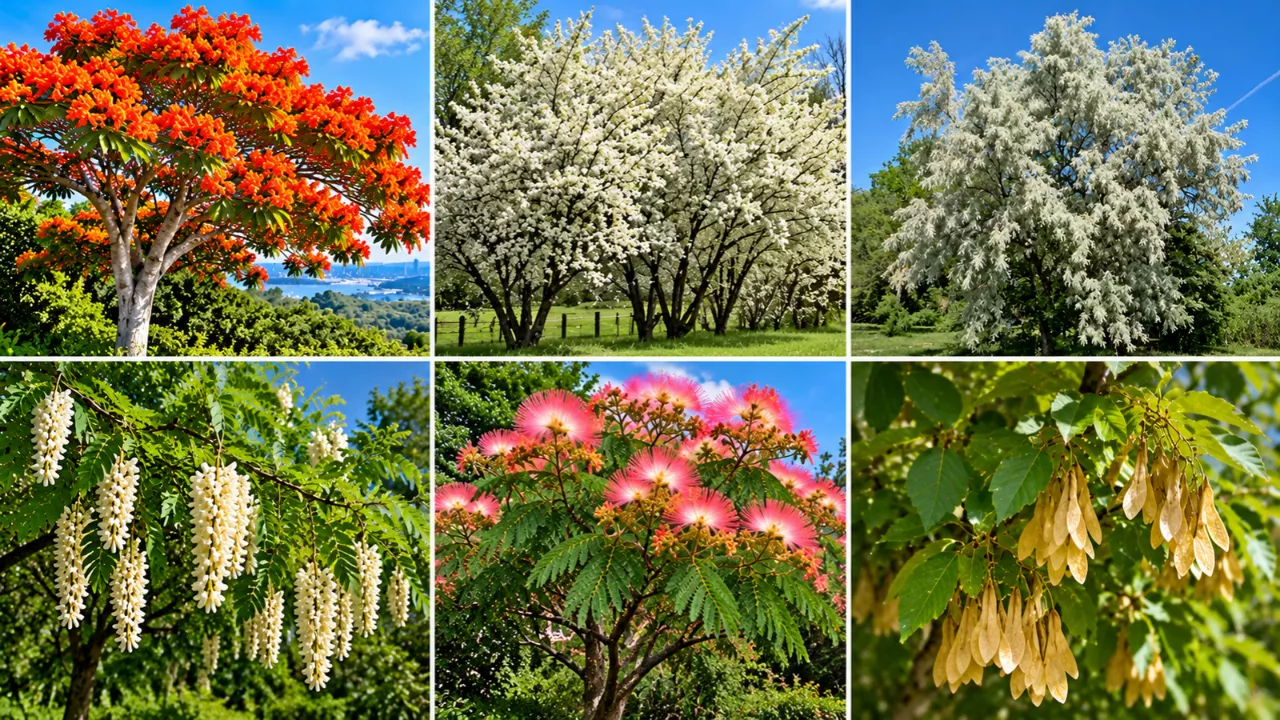
Most invasive trees don’t look like a threat at the garden centre. They arrive in tidy pots with glossy leaves, spring blossoms or bright autumn colour, and a promise of fast shade. The trouble starts a few years later, when seedlings pop up along fences, in neighbouring lots and at the edge of the nearest woodland. Knowing which invasive trees you should never plant is one of the simplest ways to protect your own yard and the wider landscape, and this guide covers six of the most common offenders, the warning signs to watch for, and better trees to choose.
Why Invasive Trees Cause Bigger Problems Than They Seem
An invasive tree is more than a vigorous grower. It is a non-native species that spreads beyond where it was planted, outcompetes local vegetation and changes the habitat around it. Because these trees often arrive without the insects, diseases and browsing animals that kept them in check at home, they can dominate quickly. Birds eat the fruit and carry the seeds far beyond your property line, so one tree in one yard can become a regional problem.
The damage is rarely limited to looks. Invasive trees can:
- Crowd out native seedlings and wildflowers that wildlife depends on
- Shade out the forest understory so young native trees never get established
- Change soil conditions in ways that favour more invasive growth
- Cost homeowners and councils significant time and money to remove
- Offer little food value to native insects, which in turn affects birds
The 6 Invasive Trees You Should Never Plant
The table below summarises six frequent offenders. Their status varies by region, so always confirm with your local extension service or environmental agency before you buy.
| Tree | Why it’s a problem | Where it causes the most trouble | Main warning sign |
|---|---|---|---|
| Callery pear (Bradford pear) | Cultivars cross-pollinate and produce fruit that birds spread; weak branches split in storms | Eastern and Midwestern US | Wild thickets of thorny pear seedlings along roadsides |
| Tree of heaven (Ailanthus altissima) | Resprouts from root fragments, releases growth-inhibiting compounds and hosts spotted lanternfly | Cities and disturbed ground across much of the US | Suckers popping up far from the parent tree |
| Norway maple | Dense shade and shallow roots suppress native maples and the plants beneath | Northeastern and Midwestern forests | Seedlings carpeting the ground under mature trees |
| Chinese privet (Ligustrum sinense) | Forms dense thickets and spreads through bird-dispersed seed | Southeastern US woodlands and stream banks | Hedge escapes appearing in nearby woods |
| Autumn olive | Produces huge fruit crops, fixes nitrogen and resprouts vigorously when cut | Eastern and Midwestern fields and forest edges | Silvery-leaved shrubs spreading across open land |
| Chinese tallow (Triadica sebifera) | Fast, prolific seeder that takes over wetlands and prairies | Gulf Coast and parts of the Southeast and California | Bright red autumn leaves among native plantings |
What makes these six tricky is that several are still sold, and some have real selling points: the Callery pear’s spring bloom, the privet’s hedging convenience, the tallow’s autumn colour. Those same traits (fast growth, abundant fruit, toughness) are what let them escape. Some US states and local governments have restricted sales or offer swap programmes for the worst offenders, so rules are worth checking where you live.
Warning Signs a Tree May Be Invasive
You don’t need to be a botanist to spot risk before you plant. Be cautious if a tree:
- Is described as “adaptable,” “thrives anywhere” or “grows in almost any soil” in its sales blurb
- Grows very fast and sets heavy crops of berries or seed
- Sends up suckers or resprouts aggressively after cutting
- Is already seen seeding itself into roadsides, vacant lots or forest edges nearby
- Appears on a state, provincial or national invasive plant list
A quick search of your region’s invasive species list, or a call to the local cooperative extension office, takes minutes and can save years of removal work.
Better Native Trees to Plant Instead
Choosing native trees doesn’t mean giving up beauty. Native species support far more local insects and birds, and they are adapted to regional soil and climate, so they usually need less intervention once established. Good swaps for common invasives include serviceberry or flowering dogwood in place of Callery pear for spring blossom, sugar or red maple instead of Norway maple for shade, and native shrubs such as inkberry or wax myrtle in place of privet for hedging. Which natives work best depends heavily on your region, so a local native plant society or nursery that specialises in regional species is the best guide.
How to Remove an Invasive Tree Safely
Removal needs a plan, because many invasive trees return from stumps and roots. Small seedlings can often be pulled when the soil is moist, making sure to get the root. Larger trees may need cutting followed by a stump treatment, and some species, like tree of heaven, can respond to careless cutting by sending up even more suckers. Herbicide use carries safety and legal considerations, so follow label directions and your local extension service’s advice. For large or hard-to-reach trees, a certified arborist is the safer option. Replace what you remove with a native species promptly, so invasive seedlings don’t fill the gap.
FAQs
What makes a tree invasive?
A tree is considered invasive when it is non-native and spreads aggressively into natural areas, displacing local plants and harming ecosystems.
Are all non-native trees invasive?
No. Many non-native trees stay where they are planted without causing harm. The concern is with species that reproduce readily and escape cultivation, and that status can differ from one region to another.
Is it illegal to plant invasive trees?
In some places, yes. Several US states and local authorities restrict the sale or planting of certain species. Check your local regulations before buying.
How can I find out if a tree is invasive in my area?
Search your state or regional invasive plant list, or contact your local cooperative extension office or native plant society. They can confirm what is a problem locally.
Australia planted African tulip trees- Why This Beautiful Garden Tree Is Harming Native Bees!
1 thought on “6 Invasive Trees You Should Never Plant-According to an Arborist and Horticulturist!”
Comments are closed.