
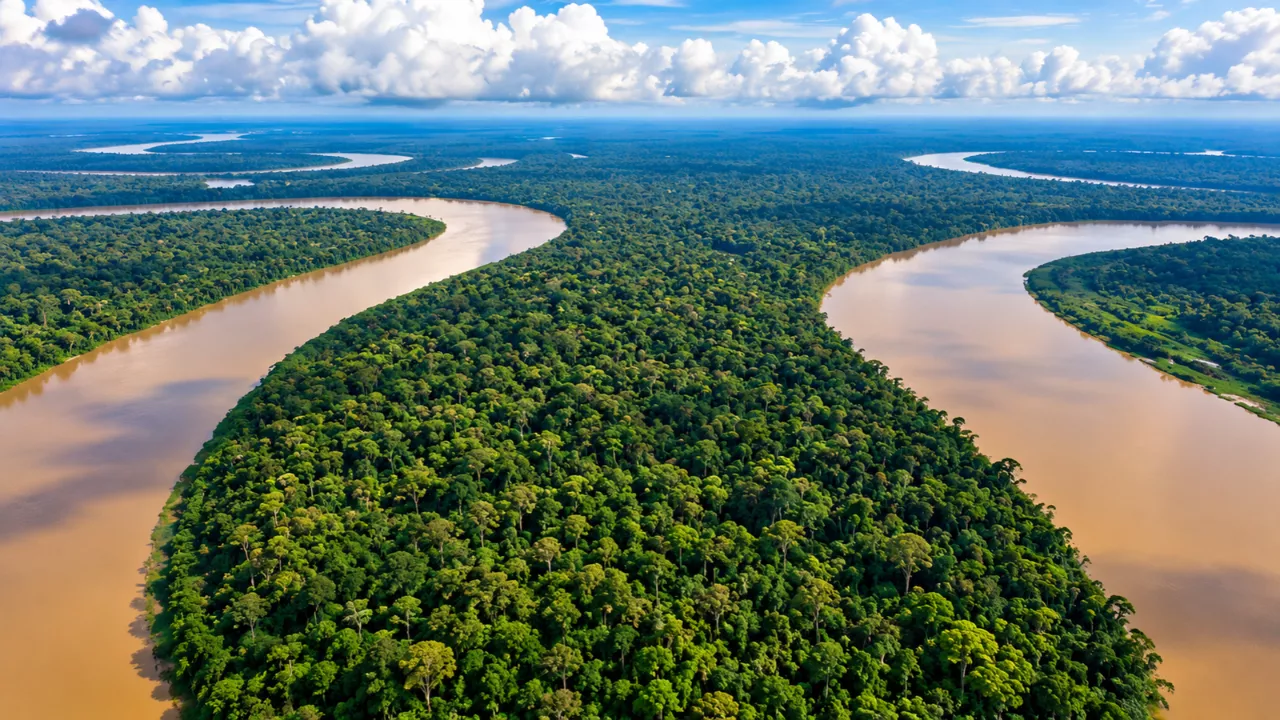
Protected areas by 2030 is one of the most closely watched promises in global conservation. In 2022, countries agreed to safeguard at least 30% of the world’s land and inland waters, and 30% of coastal and marine areas, by the end of this decade. With the UN Biodiversity Conference (COP17) taking place in Yerevan, Armenia, from 19 to 30 October 2026, governments are about to review their first collective progress. Madhu Rao, chair of the IUCN World Commission on Protected Areas, has a clear message ahead of that review: the number of hectares on a map is not the same as nature actually being protected.
Why “30 by 30” Is More Than a Percentage
The headline target is easy to repeat, but Rao stresses that the percentage is only one part of it. The agreement also asks countries to protect ecosystems that represent the full range of nature, keep them connected, manage them effectively and govern them fairly. In her view, these qualitative elements are the hardest to deliver, and many of them still lack agreed indicators, which makes success difficult to measure.
A well-designed protected area, in practice, tends to have several things in common:
- A national law or policy that gives the area legal recognition, whether as a park, another effective area-based measure or an Indigenous territory
- Enough rangers, vehicles and basic infrastructure to keep it safe
- Governance that includes local communities and respects Indigenous peoples as capable stewards of their own territories
- Monitoring that shows whether species, ecosystems and threats like deforestation are actually improving
The Pressures Behind the Promise
Research released ahead of COP17 shows how much pressure protected land is under. Analysis by Earth Insight, the IUCN World Commission on Protected Areas and partners found large overlaps between conservation land and extractive concessions in the tropical countries assessed. An overlap does not prove that drilling or mining is happening across every one of those hectares, but it does reveal a conflict between what governments have promised and what they have licensed.
| Issue | What the evidence shows | Why it matters |
|---|---|---|
| Oil and gas blocks | Nearly 62 million hectares of protected and conserved land overlap with them | Shows the tension between energy plans and conservation pledges |
| Mining concessions | About 43 million hectares overlap | Mining can open up fragile areas to roads, settlement and further clearing |
| Congo Basin Key Biodiversity Areas | 29% of identified terrestrial sites are still outside protected areas | Some of the most important habitats remain without formal protection |
| Wildlife populations | The Living Planet Report 2026 records a 73% average decline in monitored populations from 1970 to 2022 | This is an average across monitored populations, not a loss of 73% of all animals; roughly half the populations were stable or increasing |
Rao’s reading is pragmatic. Countries do need to develop their economies, she says, but some places are so important for biodiversity that they should be treated as no-go zones for extractive industry. She also points out that a protected area cannot be secure if another part of the same government is opening it up to mining or agriculture, and that environment ministries often have less influence than development ministries.
Rangers, Communities and the Implementation Gap
Much of the gap between commitment and results, Rao argues, comes down to implementation. Policies may exist on paper, but funding, attention and resources are not reaching the agencies and people doing the work. Rangers are the clearest example. They take real personal risk, and she says it is still unclear how much conservation money ends up supporting salaries, equipment, welfare, mental health and health insurance for them. She supports minimum employment protections and the broader professionalization of the ranger workforce, and points to Colombia’s recent regulation recognizing rangers as an example others could follow.
Communities are the other half of the picture. Rao says progress has been made on free, prior and informed consent and on grievance mechanisms, which were badly neglected in the past, but not enough. Every protected area agency, in her view, needs a working grievance process, and consent has to be put into practice rather than simply mentioned. She adds that the biggest changes for Indigenous peoples and local communities must happen at the national level, through policy and political will.

What Needs to Happen Before 2030
When asked what governments already know but have been slow to act on, Rao points to a short list of priorities:

- Protect critically threatened ecosystems, including peatlands, grasslands, seagrass meadows, freshwater systems and marine areas
- Set national policies that match the ambition of the global target and stay consistent across ministries
- Use inclusive spatial planning to decide where extraction might be acceptable and where it is not
- Raise national budgets for protected area systems, not only rely on international funding
- Measure outcomes, and make monitoring tools and skills more accessible to people on the ground, including through newer technologies such as AI
On the IUCN’s position, she notes that industrial activity should not take place inside protected areas. Some management categories allow sustainable resource use, but she is clear that this is not the same as industrial extraction. She also asks that enforcement be fair, with subsistence needs such as charcoal treated differently from large-scale commercial or industrial threats.
Is the 2030 Goal Still Within Reach?
Rao does not call the effort a failure, even if the target is only partly met. Protected areas are still being created and effectiveness is improving in places, though reporting systems are imperfect and some areas may not be counted properly. She admits that the political climate in many countries is shifting toward more development pressure and describes the disconnect as alarming. Even so, she has seen protected area agencies stay strong through political change, and she expects significant progress by 2030, leaving the world in a better position than it was in 2022. For readers following the story, the real test at COP17 will be whether governments talk about outcomes, money reaching the ground and community rights, not only about hectares.
Frequently Asked Questions
What is the 30 by 30 target?
It is a global commitment, agreed by countries in 2022, to conserve at least 30% of the world’s land and inland waters and 30% of coastal and marine areas by 2030. It is also known as Target 3 of the global biodiversity agreement.
Does a protected area guarantee that nature is safe?
No. Rao stresses that effectiveness depends on legal recognition, funding, trained rangers, fair governance and monitored results. Areas can also overlap with oil, gas or mining concessions, which can undermine their purpose.
Why do rangers matter so much to the 2030 goal?
Rangers are on the front line of protecting biodiversity, often at personal risk. Rao argues that funding must reach them in the form of pay, equipment, welfare and insurance, and that professional standards should be strengthened in more countries.
Where is the review of progress happening?
The first collective review under the agreement is taking place at COP17, the UN Biodiversity Conference, in Yerevan, Armenia, from 19 to 30 October 2026.