
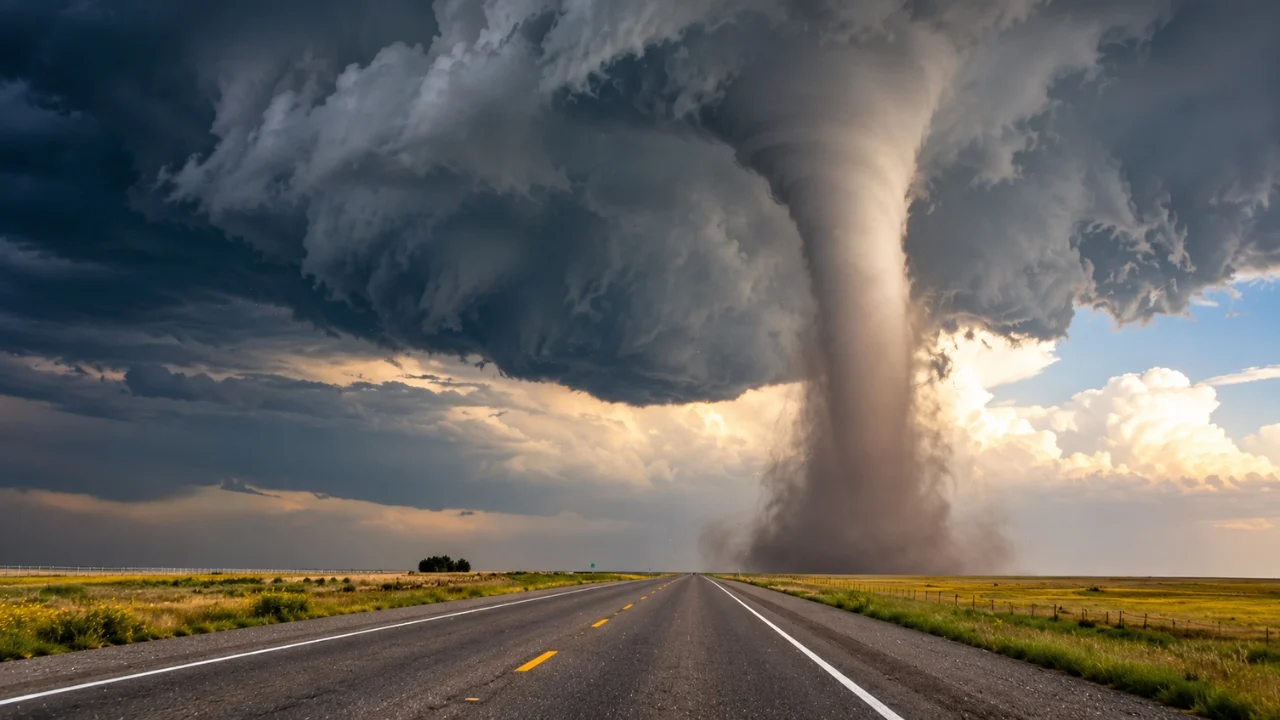
After a winter heatwave, a flash flood in a dry region, or a spring frost that arrives after an unusually warm March, the same question comes up: has the weather become impossible to predict? The honest answer is more reassuring and more unsettling than most headlines suggest. The disrupted climate is still predictable in many important ways, but the nature of that predictability has changed. Understanding the difference helps households, farmers, businesses and local governments plan better.
Weather vs. Climate: Why the Distinction Still Matters
Weather describes what happens on a given day or week. Climate describes the long-run pattern of weather over decades. A forecast for next Tuesday depends on the exact state of the atmosphere today, which is why accuracy fades after about ten days. Climate projections do not try to predict a specific Tuesday; they estimate how averages, extremes and risks shift over time.
This is why a disrupted climate can still be predictable at the large scale. Adding heat-trapping gases to the atmosphere raises the odds of hotter days and heavier downpours in a physically consistent way. A single storm remains hard to pin down, while the overall direction of change is not.
What Scientists Can Predict With High Confidence
Several trends rest on basic physics and decades of observation. Warmer air holds more water vapour, so intense rainfall events become more likely. Warmer oceans expand and ice melts, so sea levels keep rising. Hot extremes become more frequent and more intense on land.
- Long-term warming continues as long as greenhouse gas concentrations stay high.
- Heavier rainfall bursts become more likely in a warmer atmosphere.
- Sea-level rise continues for decades, even if emissions fall.
- Heatwaves grow more frequent, longer and hotter in most regions.
Attribution science has also matured. Researchers can now estimate how much climate change raised the likelihood or severity of a particular heatwave or flood, often within weeks of the event.
Where Uncertainty Remains
Predictability weakens in some areas, and it is important to be upfront about them. Regional rainfall patterns are harder to project than temperature, especially in places influenced by shifting circulation patterns. Natural cycles such as El Niño and La Niña still shape year-to-year swings and can temporarily amplify or mask the long-term trend. The behaviour of large systems such as ice sheets, ocean circulation and forests raises questions about thresholds, often called tipping points, where change could speed up. Scientists continue to debate when, and whether, some of those thresholds will be crossed.
The biggest uncertainty of all is human: future emissions depend on policy, technology and economic choices, not on physics alone.
How Predictable Is Each Part of the Climate System?
| Climate element | Predictability | Why |
|---|---|---|
| Global average temperature trend | High | Directly tied to greenhouse gas levels |
| Sea-level rise over decades | High | Driven by ocean warming and ice melt |
| Frequency of extreme heat | High | Shifts with the overall warming trend |
| Heavy rainfall intensity | Moderate to high | Linked to atmospheric moisture, though local detail varies |
| Regional rainfall and drought patterns | Moderate | Influenced by complex circulation changes |
| A specific storm weeks ahead | Low | Atmosphere is chaotic beyond roughly ten days |
| Timing of tipping points | Low | Thresholds in large systems are poorly constrained |
| Future emissions | Uncertain | Depends on human decisions |
Planning in a Climate That Keeps Shifting
Because predictability now means probabilities and ranges rather than fixed dates, the smartest approach is to plan for variability instead of waiting for certainty. Planners increasingly design for the worst plausible conditions, not the historical average. Practical steps look different depending on who you are.
- Households: check local flood and heat risk maps, improve insulation and shading, and keep an emergency plan ready.
- Farmers and gardeners: diversify crops, watch seasonal outlooks, and prepare for late frosts after warm spells.
- Businesses: stress-test supply chains against heat, drought and flooding rather than assuming past patterns hold.
- Local authorities: build drainage, green space and cooling capacity for conditions that are likely, not just possible.
Trust forecasts from national meteorological agencies and peer-reviewed climate assessments, and treat single viral weather claims with caution.
Frequently Asked Questions
Is the disrupted climate still predictable?
Yes, in the long run and in broad terms. Trends like warming, sea-level rise and more intense extremes are well understood. What remains difficult is predicting exactly where and when individual events will strike.
Why do weather forecasts sometimes seem less reliable now?
Forecasts are generally better than they were decades ago, but extreme events feel more surprising because they fall outside what people have experienced locally. The atmosphere itself still limits detailed forecasts beyond about ten days.
Can one extreme event be blamed on climate change?
Not as the sole cause, but attribution studies can estimate how much climate change made an event more likely or more severe. That is a probability statement, not a simple yes or no.
What is the best way to prepare for an unpredictable climate?
Plan for ranges, not averages. Understand your local risks, build resilience into homes, farms and infrastructure, and rely on official forecasts and recognised scientific assessments for decisions.
The disrupted climate has not become random. It has become more volatile, with shifting odds and wider swings around a clear upward trend. We can forecast the direction with confidence while accepting real uncertainty about local detail and timing. Treating predictability as a question of probability, rather than certainty, is the most practical way to prepare for what comes next.
The start of the cyclone season: Why a Tropical Storm Next Week Is a Cue to Get Ready…
2 thoughts on “Is the Disrupted Climate Still Predictable? What We Know, What We Don’t, and Why It Matters!”
Comments are closed.