
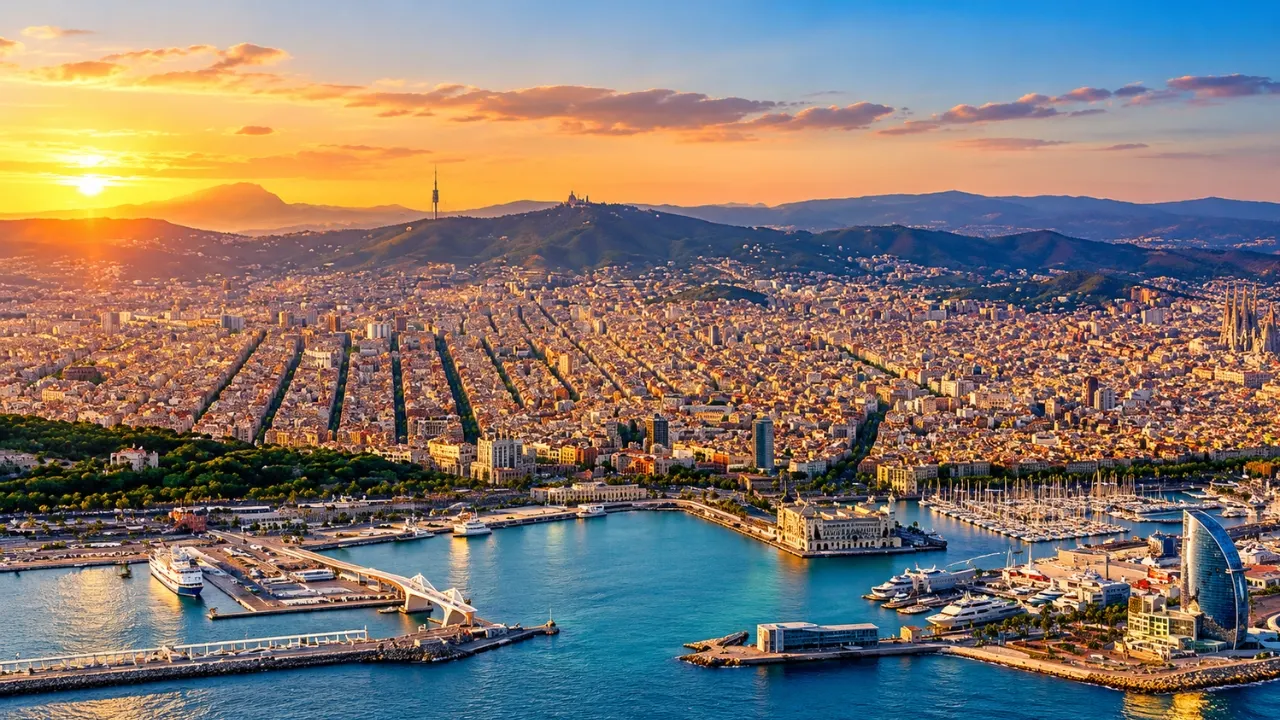
Walk along Barcelona’s beachfront today and it feels timeless: pale sand, palm trees, a broad promenade and cafés humming into the evening. It is easy to assume the city always faced the sea this way. It did not. The story of Barcelona’s waterfront renewal involves buried railway lines, cleared neighbourhoods and a constant effort to keep the coastline in place. Understanding it shows what any coastal city gains, and what it owes, when it reclaims its edge from industry.
A Shoreline That Was Once Closed Off
Until the 1980s, the coast worked as a barrier rather than a destination. A railway line separated the industrial districts from the water, factories crowded the shore, and informal settlements clung to beaches such as Somorrostro. Wastewater flowed straight into the Mediterranean. People lived beside the sea without being able to reach it, swim in it or enjoy it.
From Plan to Promenade: 1987 to 1992
The turning point came in 1987 with plans for Port Vell and the Moll de la Fusta, which aimed to replace port and storage uses with leisure, hotels and commerce. The 1992 Olympic Games then supplied the deadline and the momentum. The railway was buried, wastewater treatment began, new beaches were created and stabilised, and a marina and the Olympic Village rose on former industrial land in Poblenou.
| Before the 1980s | After the Olympic-era works |
|---|---|
| Railway separating city and sea | Rail buried, open access to the coast |
| Untreated wastewater entering the sea | Wastewater treatment introduced |
| Factories and storage yards | Marina, hotels and leisure spaces |
| Informal housing on the shore | Cleared shoreline with new promenades |
| Limited public beach space | Created and stabilised urban beaches |
The Hidden Cost: Who Was Displaced?
The waterfront was never truly empty. Researchers note that by the mid-twentieth century the area housed around 15,000 people, many of them in shanty towns. Opening the city to the sea meant clearing those homes, a detail that rarely appears in postcards. That raises a fair question for any regeneration project: does it integrate the city, or simply repackage land for visitors? Critics argue that after the Games, Barcelona used its new spaces to polish its global image, tilting the benefits toward tourism.
Who Governs the Waterfront Today?
The shore is now shaped by two institutions with different priorities: the city council and the port authority. Cruise tourism carries real economic weight, yet it strains mobility and the urban environment. A recent agreement between both sides points toward a more orderly model:
- Demolishing three ageing cruise terminals
- Building one modern terminal in their place
- Introducing new technology into port operations
- Managing cruise activity to respect the city’s urban and environmental setting
In practice, the waterfront’s future depends as much on negotiation as on design.
The Sand Problem and What Other Cities Can Learn
Many of Barcelona’s beaches are fully or partly man-made, so they need constant care. City figures suggest the beaches lose roughly 30,000 cubic metres of sand each year, while stronger storms and rising seas add pressure. Authorities keep topping up the shoreline, sometimes with sand recovered from nearby construction sites and sometimes with material from elsewhere in Spain or abroad. The beach built to reconnect residents with the sea now depends on supplies from somewhere else.
Other coastal cities can take away a few practical lessons:
- Budget for long-term maintenance, not just construction
- Plan for existing residents, not only new visitors
- Align city and port authorities early
- Design for storms and sea-level rise
Reclaiming a waterfront is a decades-long commitment. The solutions of one era become the maintenance bill of the next, and the water’s edge deserves the same planning, funding and care as roads and housing.
FAQs
When did Barcelona’s waterfront transformation begin?
Concrete work started in 1987 with plans for Port Vell and the Moll de la Fusta, then accelerated ahead of the 1992 Olympics.
Did Barcelona fill in the sea to gain land?
No. It took space back from industry and the port, then built beaches using imported sand.
Why do Barcelona’s beaches need new sand?
They are largely man-made and lose around 30,000 cubic metres a year, a loss worsened by storms and rising seas.
Is the waterfront equally open to residents and tourists?
It is public space, but debate continues over whether it serves locals or visitors more.
When Architects Become Partners: Inside the Moving Windmills Innovation Center in Malawi!