
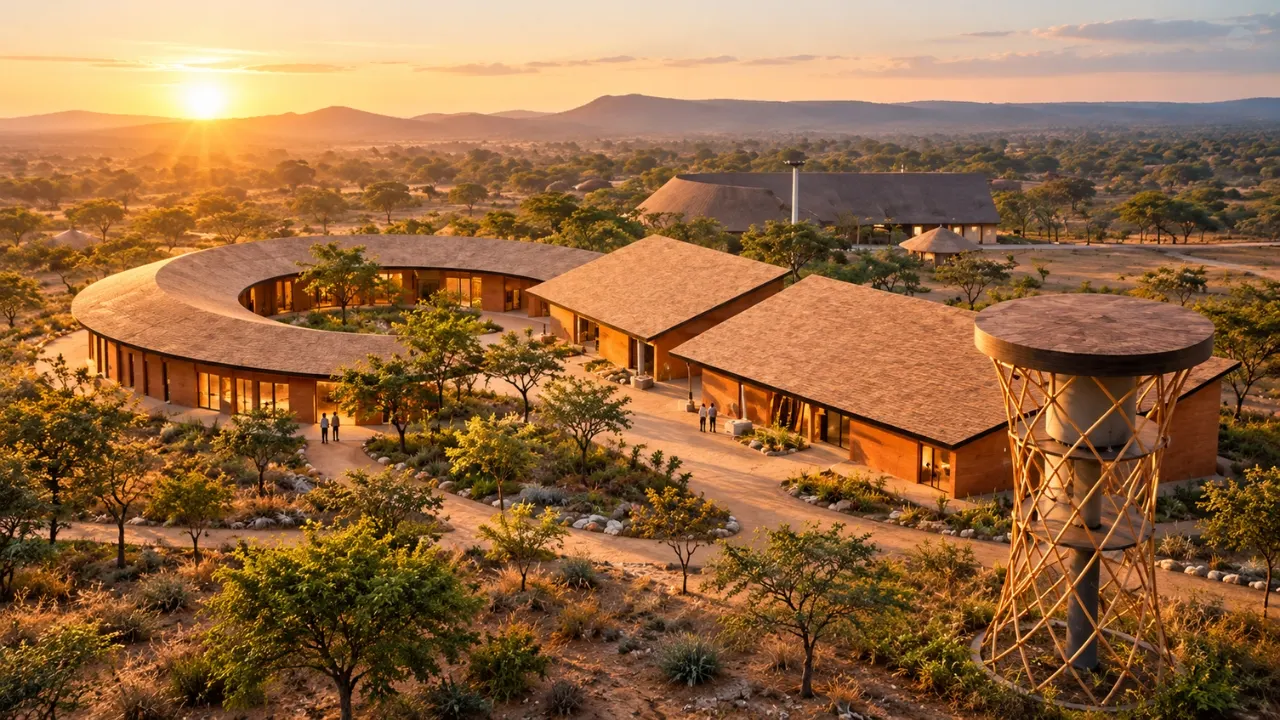
Ask most people what an architect does and they will say “designs buildings.” The Moving Windmills Innovation Center suggests that answer is getting too small. Planned in Kasungu, Malawi, by the non-profit design organization MASS together with the Moving Windmills initiative, it is a campus where the architect helps shape the mission, the research and even the funding, not just the walls. It is a useful case study for anyone who wants to see where the profession may be heading.
How the Architect’s Role Has Changed Over Time
The job has never been fixed. In medieval Europe, master masons controlled both drawing and building on Gothic cathedrals. The split began in Renaissance Florence, where Filippo Brunelleschi, designer of the city’s great Duomo, is widely seen as the first person to oversee construction without taking part in the building itself. Later came professional bodies and entry requirements, introduced to curb the fraud that followed the speculative building booms of the 1800s. Post-war reconstruction then tied architecture to housing, schools and healthcare, before the profession slipped back toward being a service provider.
| Period | Role of the architect | Main focus |
|---|---|---|
| Ancient Egypt to medieval Europe | Planner and builder in one (master mason) | Craft and construction |
| Italian Renaissance | Designer separated from the act of building | Intellectual and aesthetic decisions |
| 1800s industrial era | Regulated professional | Trust and standards after widespread fraud |
| Post-war reconstruction | Part of the welfare state | Housing, education, healthcare |
| Today | Partner, collaborator, sometimes co-commissioner | Social and environmental impact |
The Story Behind Moving Windmills
The initiative grows out of a story many people know. As a 14-year-old in Kasungu, William Kamkwamba faced a drought-driven famine in his village. Using books from his school library and materials found locally, he built a windmill to pump water for irrigating the fields. His story reached a global audience through a 2009 TED Talk, then a 2019 film and a stage musical in 2026. He has since founded Moving Windmills to support young inventors and problem-solvers in rural Kasungu with workshops, parts stores and links to experts.
What the Moving Windmills Innovation Center Will Look Like
The center is designed as a living laboratory where the buildings themselves teach. Young people are treated as innovation makers rather than beneficiaries, learning to read both global and local systems and to build their own solutions. The machine shop will be built first, at the heart of four quadrants that include a field space and market, a community and events space, and student housing. Staff housing, a football pitch, a nursery, a solar array and regenerative agriculture follow.
A few features stand out:
- Local materials and craftsmanship: the campus is built with the community, not just for it.
- Compressed stabilized earth blocks: MASS recommended an on-site block machine, which it has also used on the Rwanda Institute for Conservation Agriculture.
- Iterative testing: wall systems are already being tested before full construction.
- Ecology as curriculum: water treatment and biodiversity are part of what students learn.
Why MASS Is Not a Typical Architecture Firm
MASS, based in Kigali, Rwanda, and Boston, Massachusetts, operates as a non-profit with a multidisciplinary team. It raises more than five million dollars a year from donors, which funds research, catalyst projects and systems change. That independence is what allows it to contribute to the center’s planned activities, community engagement and fundraising rather than simply answering a client’s brief. It is a different relationship between designer and commissioner.
What This Means for the Future of the Profession
Signals of change are appearing elsewhere too. In 2025, the OBEL Award went to a movement rather than a single office or project, and in 2026 the AIA Architecture Firm Award went to Duvall Decker of Mississippi, recognized for working closely with communities through multidisciplinary teams. Whether this becomes the new normal is still open, but the direction is clear: architecture is being asked to deliver social value again, not only well-made buildings.
2 thoughts on “When Architects Become Partners: Inside the Moving Windmills Innovation Center in Malawi!”
Comments are closed.