
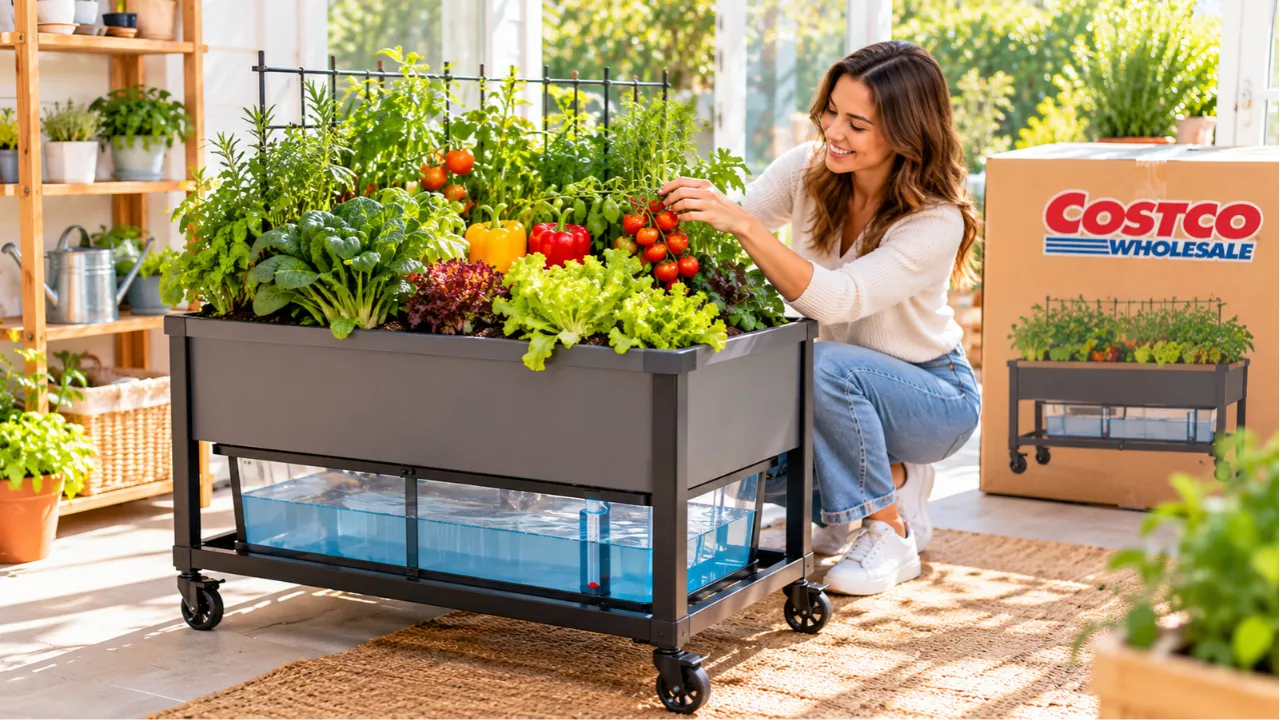
If you’ve ever stood in a small apartment looking at a sunny corner and wondered how to fit tomatoes, herbs and peppers into it, you’re not alone. Space is the biggest hurdle for most indoor growers, and watering is a close second. The Costco self-watering rolling garden bed tackles both. It’s a compact raised planter on wheels with a built-in water reservoir, so you can park it in the sun during the day and roll it out of the way when you need the room.
Why Space Is the Real Problem With Growing Vegetables Indoors
Most people give up on indoor vegetable growing for practical reasons, not because they lack skill. Pots multiply, windowsills fill up, and a plant that needs six hours of sun rarely sits where the sun actually is. A fixed raised bed solves nothing if you rent, live on a balcony, or have only one bright spot that moves with the seasons.
That’s why a mobile planter makes sense. Light changes through the year, and a bed that moves lets you follow it. You can put it on a balcony or patio in summer, then bring it inside when temperatures drop, a real advantage with tender plants that can’t stay out in cold weather.
What the Costco Self-Watering Rolling Garden Bed Offers
The planter is listed at Costco under the Permasteel name and is priced at $129.99 at the time of writing. Check the current price, since retail listings change. Here is what the listing and shopper feedback point to:
| Feature | Details | Why it matters |
|---|---|---|
| Price | $129.99 | Cheaper than a comparable rolling raised bed that lists for $269.95 on Amazon |
| Soil capacity | 2 cu. ft. | Enough for herbs, a tomato or pepper plant, strawberries or mixed planting |
| Material | Non-toxic, powder-coated steel | Suitable for indoor and outdoor use |
| Watering | Built-in reservoir with a water level indicator | Roots draw moisture as needed, and you can see when to refill |
| Mobility | Swivel wheels, with locking wheels reported by reviewers | Easy to move between rooms or onto a balcony |
| Colors | Ivory or blue | A neutral finish that blends into most interiors |
| Customer rating | 4.4 stars | Generally positive, with assembly as the main complaint |
How the Self-Watering System Helps, and Where It Doesn’t
Overwatering and underwatering cause many of the failures I see with container plants. A reservoir-fed bed reduces both. Roots take up water as they need it instead of sitting in soggy soil, and the level indicator shows when it’s time to top up. Shoppers also mention that it helps when they travel.
It isn’t completely hands-off, though. Soil in a cold, low-light room dries out more slowly in fall and winter than it does in summer. A cheap soil moisture meter is a sensible backup so you aren’t relying on the indicator alone. Wet soil is also heavy, so choose a spot where you won’t need to move it often, and put a mat underneath if you’re placing it on wood flooring.
What Shoppers Say: Praise and the Assembly Catch
Reviewers like how sturdy the bed feels once it’s built. Common compliments include:
- Strong, comfortable handles that make it easier to maneuver
- Wheels and brakes that work well
- A good-looking design that suits a patio or a living room
- Healthy herbs, strawberries, tomatoes and blackberries growing in it
The one clear downside is assembly. Several reviewers say it took hours, that the included tools were awkward and that the instructions were thin. Plan on having a second person and your own tools. Most buyers say the finished product justifies the effort.
What to Grow in It, and Is It Worth the Money?
At 2 cubic feet, the bed suits compact crops. Good choices include:
- Herbs such as basil, parsley, chives and mint (mint is best kept on its own because it spreads)
- Cherry tomatoes and peppers, if you can give them bright light
- Strawberries and salad greens
- Tender perennials you want to overwinter indoors
- A mixed foliage planter if you’d rather decorate than harvest
Light is the biggest factor for fruiting vegetables indoors. Tomatoes and peppers generally need strong, direct light for much of the day, so a south-facing window or a supplemental grow light may be needed. Leafy greens and herbs are more forgiving.
For $129.99, it’s a fair investment if you want one flexible, good-looking planter that works both indoors and outdoors. It won’t replace a full vegetable plot, but for balconies, patios and small homes it fits the job well. If you hate assembling furniture, factor that time in.
Frequently Asked Questions
Can the Costco self-watering rolling garden bed be used indoors?
Yes. It’s made from non-toxic, powder-coated steel and is designed for both indoor and outdoor use.
How much soil does it hold?
It has a 2 cu. ft. capacity, enough for several herbs or one or two larger plants.
Is it difficult to assemble?
Many reviewers say yes. Expect it to take a while, possibly with a second person, and keep your own tools handy.
Do I still need to monitor the soil?
Yes. The reservoir and level indicator make watering easier, but a moisture meter helps you check the soil, especially in cooler months when it dries slowly.
6 Invasive Trees You Should Never Plant-According to an Arborist and Horticulturist!