
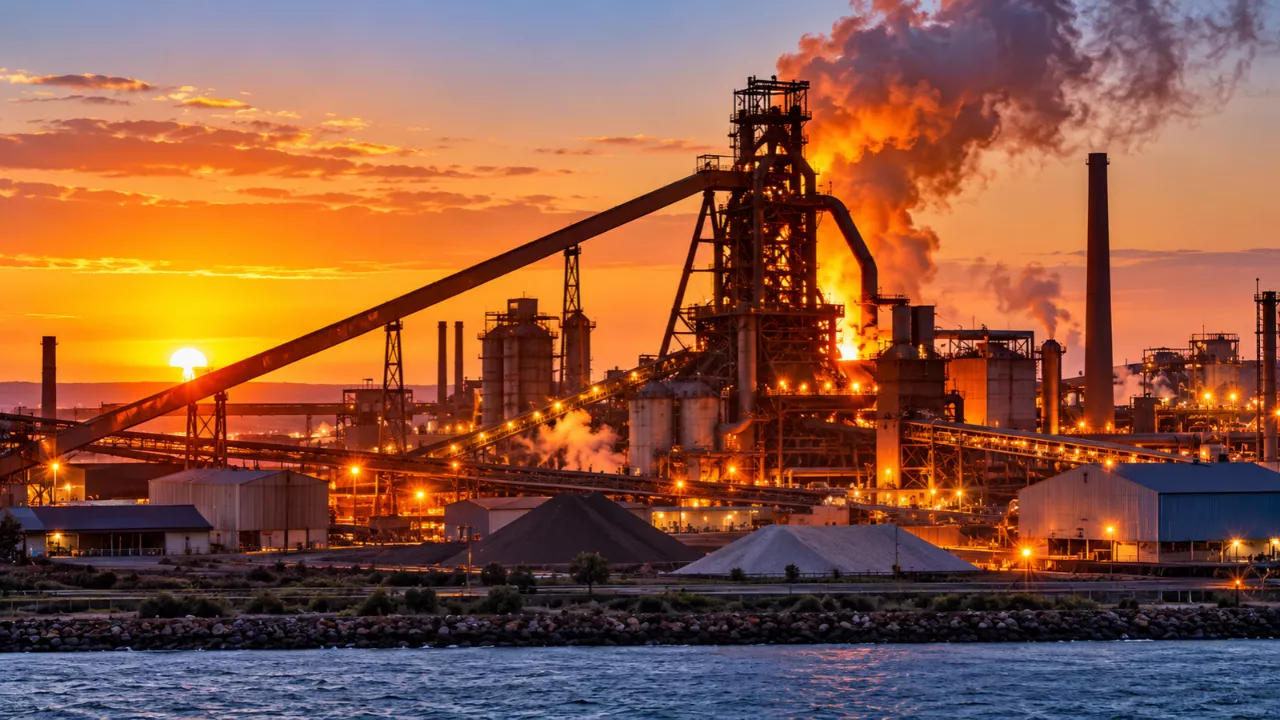
The Whyalla blast furnace closure is more than a local industrial setback. The furnace at the South Australian steelworks has been permanently shut after sitting idle since April, and unions now warn that Australia could be without domestic structural and rail steelmaking for as long as five years. That figure is a union estimate, not an official forecast. It is still a sobering one for a country that builds airports, stadiums and railways with steel from this one site.
Why the Whyalla blast furnace closure happened
The furnace is more than 60 years old and has had repeated shutdowns and unplanned repairs in recent years. After the latest recovery attempts failed, the administrators, KordaMentha, concluded that keeping it going was unsustainable. Their view was that the furnace had effectively made the decision itself.
The cause is disputed. A union organiser argues that earlier cost-cutting, including running the furnace well below capacity, shortened its life. Former owner GFG Alliance rejects the blame. It says the furnace did not fail on its watch and that Whyalla’s decline spans many owners, governments and policy settings. Administrators have said they inherited a plant marked by long underinvestment, which is part of why the state stepped in during 2025.
What Australia stands to lose
Whyalla supplies roughly three-quarters of the nation’s structural steel. It is also the country’s only maker of rail steel. Only two primary steelworks operate in Australia, so losing a blast furnace at one of them matters.
In the short term the plant will keep running its rolling and finishing operations using stockpiles and imported semi-finished steel. The raw steelmaking step itself is gone, however. Industry groups warn that the longer it stays gone, the more skills and capability drain away, and the more imports fill the gap.
| Key fact | Detail |
|---|---|
| Furnace status | Permanently closed; offline since April 2026 |
| Furnace age | More than 60 years old |
| Jobs affected | About 500 employees, plus about 100 contractors |
| Voluntary packages | About 250 expected, with forced redundancies also likely |
| Share of national structural steel | About 75% |
| Rail steel | Whyalla is Australia’s only domestic producer |
| Government support pledged | Almost $2 billion (state and federal) toward a lower-emissions electric arc furnace |
| Shortlisted bidders | Jindal Steel and M Resources, with BlueScope holding a right of last offer |
| Sale timeline | Targeted for completion by the end of 2026 |
The people behind the numbers
Whyalla is a city where the steelworks shapes everything. Workers describe the strain of losing income while bills and prices keep climbing. The effects reach well beyond the plant gates. One local football club expects to lose a large share of its senior players and coaches, and some members are already talking about a possible merger. Job losses in a regional city ripple through local businesses, sporting clubs and families far faster than in a capital.
What happens next
Both governments say they want steelmaking resumed as fast as possible and have not ruled out more funding. The plan centres on a new electric arc furnace, which is cleaner than a coal-fired blast furnace, with the sale process choosing who builds it. State leaders argue that losing the old furnace does not reduce the site’s value, since buyers did not want the technology anyway. The opposition has called the closure a serious blow to national sovereign capability.
Several questions remain open, including how long construction would take, how much extra funding will be needed, and what a buyer commits to. Administrators are also examining past transactions between GFG companies, and regulators have said investigations are underway. GFG denies wrongdoing.
What to watch
- Who wins the sale process, and what investment and timeline they commit to
- Whether governments add funding beyond the almost $2 billion pledged
- How many skilled workers are retained or redeployed
- How reliant Australian construction and rail projects become on imported steel
FAQs
Has the Whyalla blast furnace permanently closed?
Yes. Administrators confirmed the closure after repeated attempts to restart the furnace, which had been offline since April, failed.
Does Whyalla still make steel?
Not from raw materials. The plant keeps finishing products using stockpiled and imported semi-finished steel, but it cannot make steel from scratch without a blast furnace or a replacement such as an electric arc furnace.
How long could Australia be without domestic structural and rail steelmaking?
A union leader has estimated up to about five years. This is a prediction, and the real timeline depends on the new owner, funding and construction.
Who might buy the Whyalla steelworks?
Jindal Steel and M Resources are the two shortlisted bidders, and BlueScope holds a right of last offer. The sale is targeted to finish by the end of 2026.
Coal Country Battery Project Faces New Hurdle as It Seeks Federal Environmental Approval…
1 thought on “Whyalla Blast Furnace Closure: Could Australia Go Years Without Homegrown Structural Steel?”
Comments are closed.