
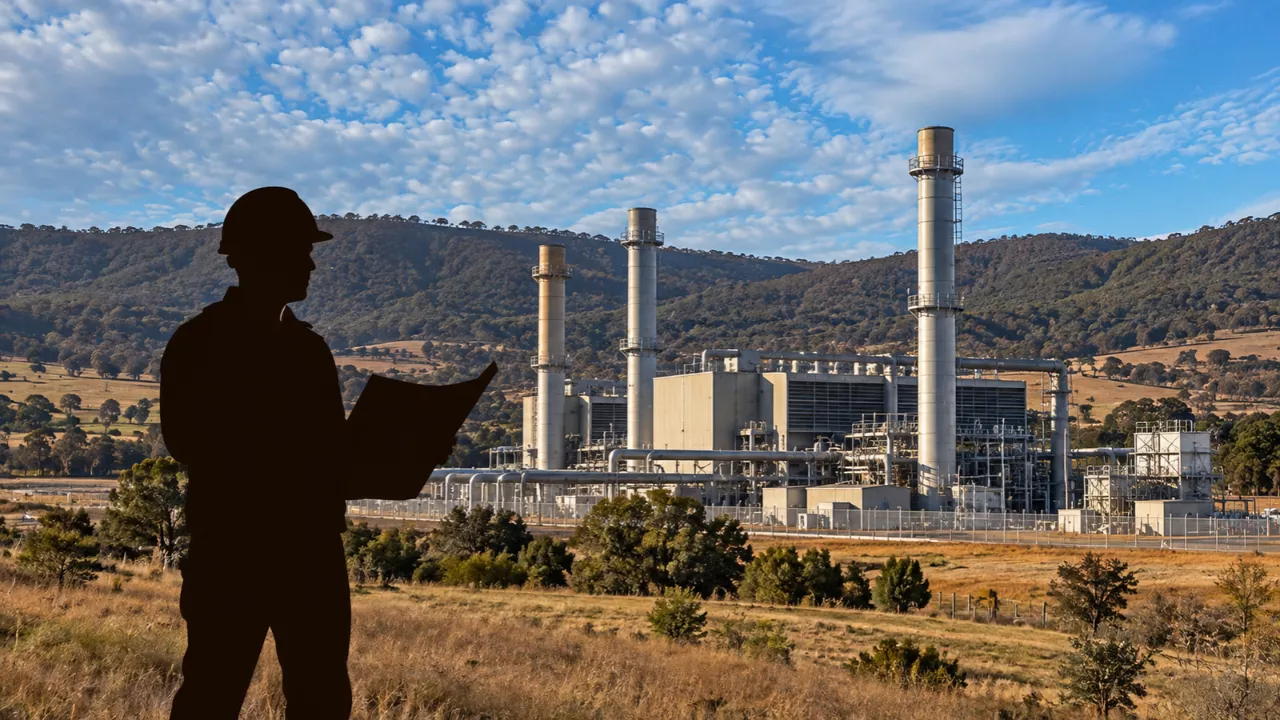
The proposed Moss Vale data centre gas power plant has moved from council chambers to the courtroom. This week, the NSW Land and Environment Court heard that the gas-fired station planned for the Southern Highlands could be mothballed once the electricity grid can meet the demands of an onsite data centre. Developer Nakar Property is appealing after Wingecarribee Shire Council refused its application for a 16-megawatt power station and battery energy storage system. The case sits at the crossroads of two live issues: the electricity appetite of data centres and the question of how to power them while the grid is still catching up.
What the Moss Vale Data Centre Gas Power Plant Proposal Involves
The $23 million project would combine a 16-megawatt gas-fired power station with a battery energy storage system. It is one of three power stations planned to supply a data centre campus proposed by Sydney company Cloud Carrier. The court travelled to the site for an inspection on Tuesday, and formal hearings before Commissioner Nicola Targett followed. Cross-examination of expert witnesses was set to continue into a third day on Thursday.
| Key detail | What the court heard |
|---|---|
| Project cost | About $23 million |
| Power station size | 16 megawatts, plus battery storage |
| Developer | Nakar Property (appellant) |
| Data centre operator | Cloud Carrier |
| Consent authority | Wingecarribee Shire Council (refused the application) |
| Estimated annual saving from grid connection | About $14 million per year |
| Emissions claim | Lower than grid power until roughly 2029, per expert reports |
| Firm grid supply timeline | Council says about two years, pending a substation upgrade |
Why Developers Say Firm Power Is Non-Negotiable
Barrister James Smith, acting for Nakar Property, argued that data centres live and die by reliability. He told the court Cloud Carrier’s investment in computing equipment is around $1 billion, and that the fundamental requirement is “firm supply”. He compared the situation to enrolling a child in school with no teachers: without dependable power, the operator has nothing to sell. That is the heart of the developer’s case. Servers cannot tolerate patchy electricity, so a backup or bridging source is presented as a commercial necessity rather than a preference.

Could the Gas Plant Really Be Mothballed?
This is the part that makes the case unusual. Mr Smith said the developers would stop using gas as soon as a reliable grid supply could be secured, pointing to a clear financial incentive. Connecting to the grid is expected to save about $14 million a year, so running a gas plant longer than necessary would cost the company money. He also referred to expert reports projecting that the plant would emit less greenhouse gas than grid power until around 2029. The honest caveat is that the key phrase is “when that power becomes available”. As Mr Smith himself acknowledged, the issue is that there is not yet sufficient supply.
The Council’s Challenge: Is the Grid Plan Proven?
Wingecarribee Shire Council’s barrister, Michael Staunton, challenged the idea that the grid is a ready answer. He said it had been described as a “panacea” but had not been investigated thoroughly, and that the documents would show the work had not been done. During cross-examination, he argued the project would have no firm supply for two years, until an upgrade to a nearby Endeavour Energy substation is completed. His suggestion was that the time could instead be used negotiating with Endeavour Energy for a permanent connection. The council also tendered draft conditions of consent mid-hearing, including a requirement for canopy trees across roughly 40 per cent of the development site.

What This Case Means for Data Centres and Local Communities
The outcome is not yet known, and the commissioner’s decision will turn on the evidence. Still, the hearing highlights questions that will recur wherever large data centres are proposed:

- Timing gaps: What powers a facility between opening day and a permanent grid connection?
- Temporary versus lasting infrastructure: Can a gas plant realistically be shut down, and what conditions would make that binding?
- Local conditions: Council-requested measures such as tree canopy requirements show how planning conditions can shape a project’s footprint.
- Evidence quality: Both sides are leaning on expert reports, so the strength of that evidence matters.
Frequently Asked Questions
Where is the proposed gas power plant?
It is planned for Moss Vale in the NSW Southern Highlands, to support a data centre campus proposed by Cloud Carrier.

Who is appealing, and against what?
Nakar Property is appealing to the NSW Land and Environment Court after Wingecarribee Shire Council refused its development application.
Why do the developers say gas power is needed?
They argue the data centre needs constant, firm power, and that enough grid supply is not currently available. They say gas use would stop once reliable grid power can be secured.
Has the court made a decision?
Not as of the latest hearing reporting. Cross-examination of expert witnesses was continuing on a third day.
Sweden built a 150m wind turbine made of wood. It’s taller than steel towers, powers 400 homes…