
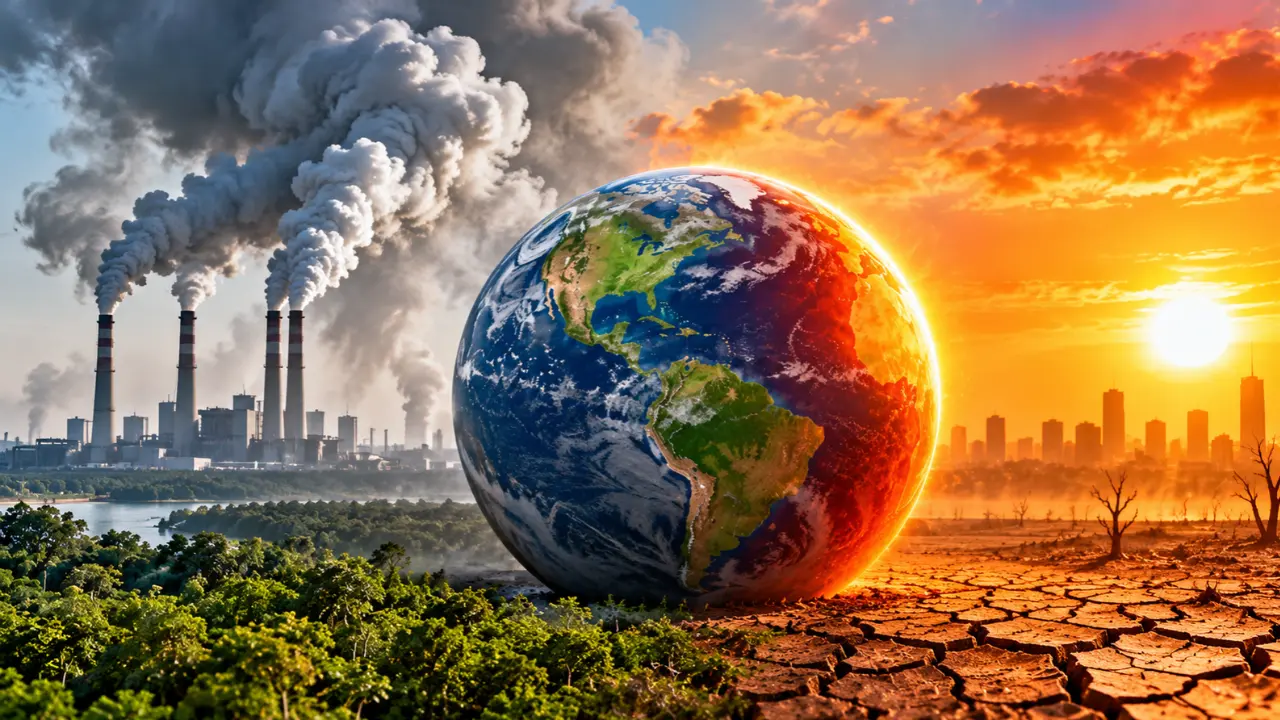
Another year, another record. The World Meteorological Organization (WMO) says levels of carbon dioxide, methane and nitrous oxide in the atmosphere all reached new highs in 2025. The finding comes from its latest Greenhouse Gas Bulletin, released this week ahead of the COP31 climate talks in Türkiye. Here’s what the numbers mean, why they matter, and how food and farming fit into the picture.
What the WMO Greenhouse Gas Bulletin Found
The bulletin, now in its 22nd year, tracks how much greenhouse gas builds up in the atmosphere. This year’s message is blunt: all three main long-lived gases linked to human activity hit record levels in 2025.
That matters because these gases stay in the air for a long time. Higher levels today lock in more warming for decades, and in some cases centuries.
The WMO also noted that the past 11 years have been the warmest on record.
Carbon Dioxide: The Biggest Driver of Warming
Carbon dioxide reached an average of 426.8 parts per million (ppm) in 2025. That’s 153% of the level before the industrial era began in 1750.
For context, when the bulletin was first published in 2004, the figure was 377.5 ppm.
CO₂ rose by 2.8 ppm between 2024 and 2025. That’s smaller than the record jump the year before, but still above the average of the past decade. The pace of growth has roughly tripled since the 1960s.
The WMO says the slightly slower rise reflects forests and land absorbing more carbon again, and fewer wildfire emissions, after the strong 2023–2024 El Niño. In other words, it’s not a sign the problem is easing.
Methane and Nitrous Oxide: Where Food and Farming Come In
Methane reached 1,948 parts per billion (ppb) in 2025, about 267% of pre-industrial levels. Nitrous oxide hit 339.1 ppb, around 126% of 1750 levels.
Both gases are closely tied to how the world produces food. Methane comes from sources such as livestock, rice paddies, landfills and fossil fuels, as well as wetlands. Nitrous oxide comes partly from fertiliser use and biomass burning, along with some industrial processes.
For anyone who cares about food, that’s a useful reminder. What happens on farms and in our bins plays a real part in the climate story.
2025 Greenhouse Gas Levels at a Glance
| Gas | 2025 Level | Compared With 1750 | Main Human Sources |
|---|---|---|---|
| Carbon dioxide (CO₂) | 426.8 ppm | 153% | Burning coal, oil and gas; land-use change |
| Methane (CH₄) | 1,948 ppb | 267% | Livestock, rice farming, landfills, fossil fuels |
| Nitrous oxide (N₂O) | 339.1 ppb | 126% | Fertiliser use, biomass burning, industry |
The Lesser-Known Gases Also Rising
The bulletin flagged sulphur hexafluoride (SF₆), a gas used in electricity equipment. It recorded its biggest yearly increase in 2025. SF₆ traps heat over 24,000 times more strongly than CO₂.
Hydrogen levels in the atmosphere also rose by 5.3% between 2010 and 2024. That’s worth watching as more countries look to hydrogen as a clean fuel.
Why Concentrations Matter More Than Yearly Emissions
It’s easy to confuse the two. Emissions are what we release each year. Concentrations are what has built up in the atmosphere over time.
The WMO bulletin measures concentrations. Even if emissions slow, concentrations keep rising as long as we release more than nature can absorb.
The warming effect of long-lived greenhouse gases rose by 56% between 1990 and 2025, with CO₂ responsible for about 81% of that increase. That’s why scientists stress cutting emissions sharply, not just slowing their growth.
Frequently Asked Questions
What is the WMO Greenhouse Gas Bulletin?
It’s an annual report from the World Meteorological Organization that tracks how much carbon dioxide, methane, nitrous oxide and other greenhouse gases have built up in the atmosphere.
Why did CO₂ rise more slowly in 2025?
The WMO links it to land absorbing more carbon and fewer wildfire emissions after the 2023–2024 El Niño. Levels still reached a record high.
How is food connected to greenhouse gases?
Livestock, rice farming and food waste in landfills release methane, while fertiliser use releases nitrous oxide. Both are major greenhouse gases.
What can individuals do?
Cutting food waste, choosing seasonal and local produce where practical, and reducing energy use at home all help lower your share of emissions.
Source
Conclusion
The 2025 figures send a clear message: greenhouse gases are still building up, and the warming they cause will last well beyond our lifetimes. Bigger decisions rest with governments at talks like COP31, but everyday choices still count. In the kitchen, that can start with wasting less and thinking about where our food comes from.