
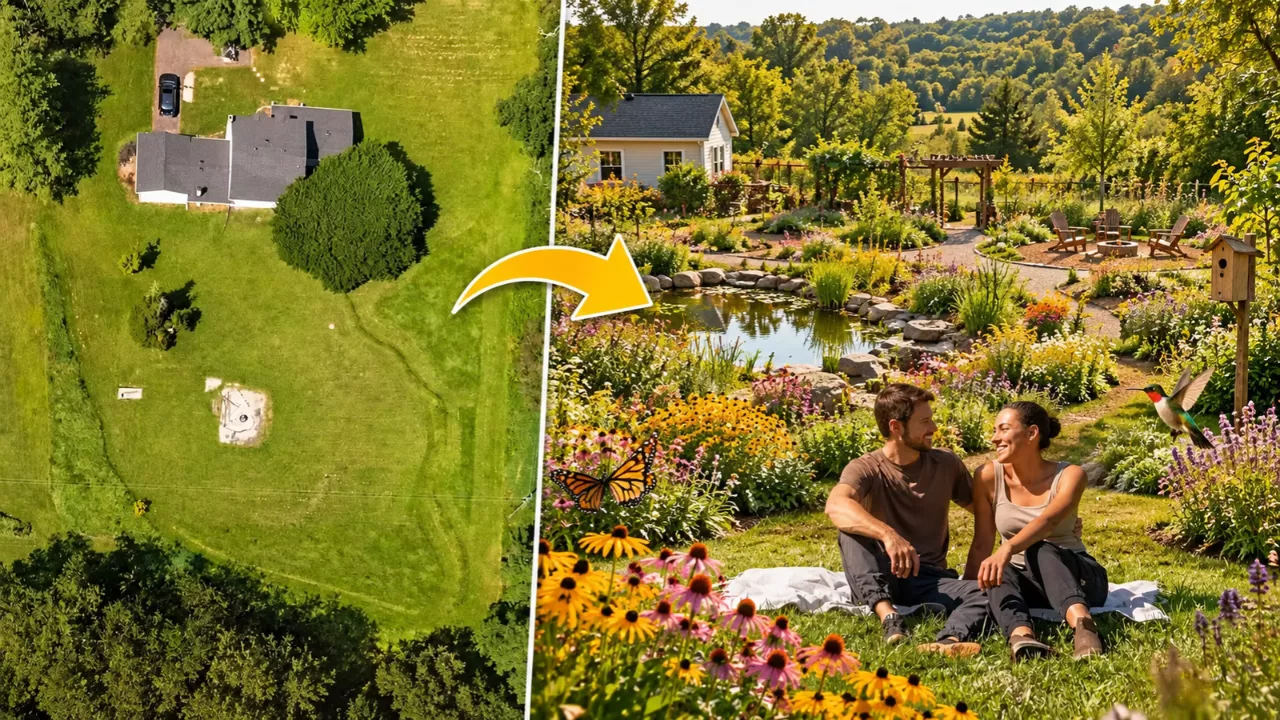
When Brittany Lafave and Ryan Webb moved into their first home in Virginia, the one-acre backyard was mostly grass, and a lot of it was overgrown. Many new homeowners would have booked a landscaper or rented a mower. They saw a different opportunity instead. Over about six months and roughly $900, they turned the space into a wildlife-friendly budget-friendly backyard makeover that now draws butterflies, hummingbirds, bees and even chipmunks. If you have a patch of lawn you’ve never loved, their approach is worth a closer look.
Why Their Backyard Makeover Worked
The couple did not try to force the whole acre into a tidy, uniform lawn. They kept taller growth in place and cut winding paths through it, then added meadow-style sections and native blooms in stages. Lafave describes the work as a series of “micro projects,” and most of those projects cost under $150 each. Because the work was spread out, there was no huge upfront bill and no pressure to finish everything at once. The yard improved a little each month, and the wildlife started arriving well before the last project was done.
What Makes a Yard Attractive to Butterflies and Hummingbirds
Wildlife shows up when a yard offers food, shelter and safety. Nectar-rich flowers feed adult butterflies, bees and hummingbirds. Host plants give butterflies a place to lay eggs, and caterpillars need those plants to eat. Tall grass and layered growth give small animals somewhere to hide. Native perennials such as milkweed, asters and bee balm are widely used in public butterfly and hummingbird gardens, because they serve several stages of an insect’s life cycle. Sunny spots help too, since butterflies like warmth. Avoiding pesticides matters just as much, because the same sprays that remove garden pests can also harm butterflies and their larvae.

A Simple Plan You Can Copy, Whatever Your Yard Size
You don’t need an acre to borrow this idea. A corner of a suburban lawn, a strip along a fence or even a few large containers can work as a starting point. The table below breaks the approach into small steps you can take one at a time.
| Step | What to Do | Why It Helps Wildlife | Effort Level |
|---|---|---|---|
| Let one area grow | Stop mowing a corner or border | Gives shelter and natural food sources | Very low |
| Cut walking paths | Mow narrow trails through taller growth | Keeps the yard usable while leaving habitat intact | Low |
| Add native flowers | Plant a few native perennials in a sunny spot | Provides nectar across several seasons | Low to medium |
| Create a meadow patch | Seed a small section with wildflowers | Covers bare or problem areas and attracts pollinators | Medium |
| Skip chemicals | Avoid pesticides and heavy fertilizers | Protects butterflies, bees and caterpillars | Very low |
| Add water | Set out a shallow dish with stones | Gives insects and birds a safe place to drink | Very low |
Costs depend on your region, plant choices and whether you start with seeds or nursery plants, so it helps to set a small budget for each step rather than for the whole project.

Tips for Starting Your Own Wildlife-Friendly Garden
- Start small. One flower bed or one unmown corner is enough to begin and teaches you what thrives in your soil.
- Choose native plants. Local garden centers and county extension offices can tell you which species suit your area.
- Plant in groups. Clusters of the same flower are easier for pollinators to spot than single plants scattered around.
- Aim for blooms across the seasons. Early, mid and late-season flowers keep food available for longer.
- Be patient. The first year often looks untidy, and wildlife numbers usually build gradually.
- Check local rules. Some towns and homeowner associations have height limits on grass or weeds, so confirm before letting an area grow wild.
The Bigger Lesson: A Messy Yard Isn’t an Empty Yard
Lafave has said she hopes the project changes how people see spaces labeled “overgrown.” Once you walk the trails, hear the bees and watch butterflies move between flowers, you start to notice how much life can share a small space. That may be the real takeaway from this story. A beautiful backyard does not have to be perfectly trimmed, and it does not have to cost a fortune. It can be a place you enjoy every morning, one small, inexpensive project at a time.
Frequently Asked Questions
How much did the Virginia couple spend on their backyard transformation?
Reports put the total at roughly $900 over about six months, with most individual projects costing less than $150.
Do I need a large yard to attract butterflies and hummingbirds?
No. Even a small flower bed, a sunny strip or a few containers with nectar-rich flowers can bring in pollinators.
What are the best plants for a wildlife-friendly garden?
Native perennials are a reliable choice. Milkweed, asters and bee balm are commonly used in butterfly and hummingbird gardens. Ask a local nursery or extension office which natives suit your area.
Will a wilder yard cause problems with neighbors or local rules?
It can, if your area has grass or weed-height regulations. Check local ordinances or HOA guidelines first, and keep clear paths and edges so the space looks intentional.