
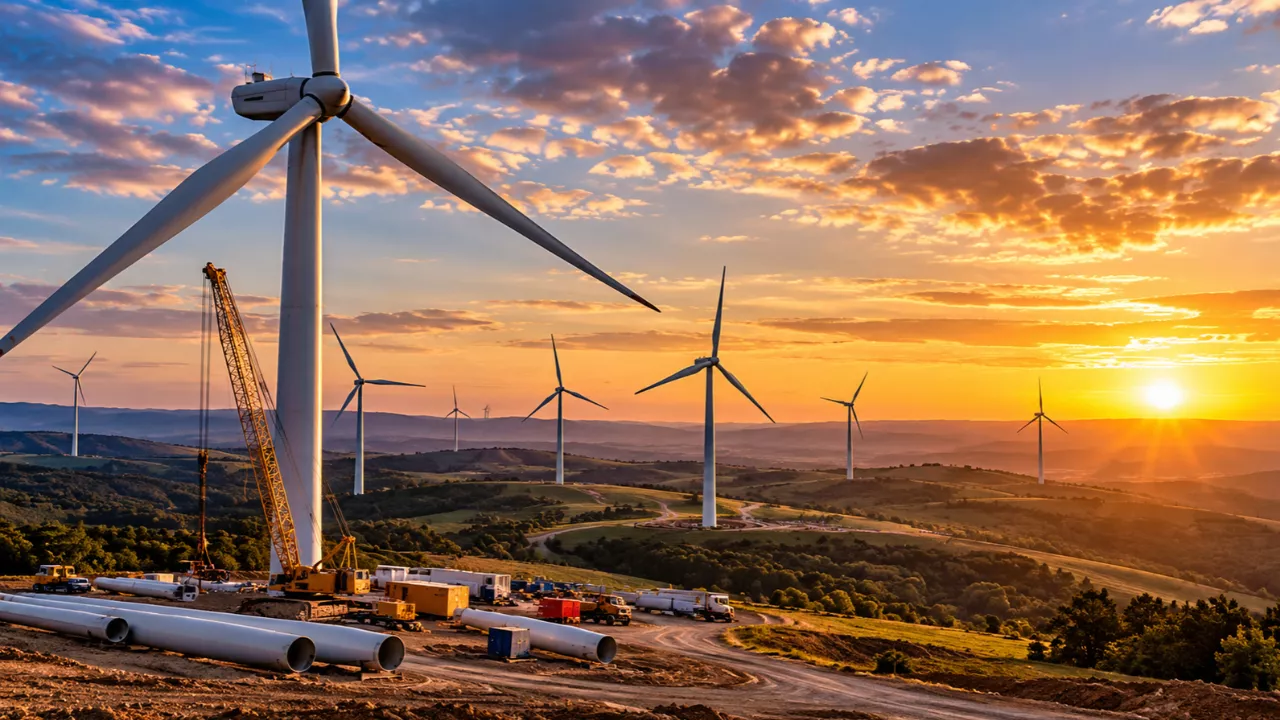
For most of the last decade, the hard part of building a large wind farm in Australia was getting permission: planning approvals, grid connection and transmission access. Many of the country’s largest proposals have now cleared those hurdles. The new bottleneck is money.
Several of the biggest developments hold contracts, approvals and equipment arrangements, yet are still looking for the billions in debt and equity that would let them reach financial close and start building. Without that milestone, a project with every permit remains a drawing. For a country chasing an ambitious renewable energy target, it is a frustrating place to be stuck.
The Projects Still Looking for Funding
Bungaban is a useful example. The 1.4 GW project in Queensland is owned by Squadron Energy, backed by Andrew Forrest, and Windlab, which is owned by Federation Asset Management. Its cost has risen to around $5 billion, and the owners are reportedly seeking at least $1.5 billion to fund it. A battery of about 350 MW is likely, and a solar addition is being considered. It also has a 25-year agreement with Rio Tinto covering 1.2 GW of its capacity, meant to supply aluminium operations in Gladstone.
Others face the same hurdle. Origin Energy has a policy of not owning its own renewable generation and is looking for buyers for the 1.45 GW Yanco Delta project in south-west New South Wales. The project has grid access rights for its full capacity. RWE, the German energy company, is chasing debt and equity for its 1.1 GW Theodore project in Queensland.
| Project | Size | Location | Backer / Owner | Where it stands |
|---|---|---|---|---|
| Bungaban | 1.4 GW | Queensland | Squadron Energy and Windlab | Seeking at least $1.5bn; about $5bn project; 25-year Rio Tinto deal for 1.2 GW |
| Yanco Delta | 1.45 GW | South-west NSW | Origin Energy | Origin is seeking a buyer; grid access secured |
| Theodore | 1.1 GW | Queensland | RWE | Seeking debt and equity; approvals in hand |
| Marri | 550 MW | Western Australia | Alinta Energy (Sembcorp) | Federal approval granted; seeking an equity partner |
| Golden Plains | 1.33 GW | Victoria | TagEnergy | Nearly complete; financed without a firm offtake deal |
Why Equity Partners Are Getting Harder to Find
Theodore shows how fragile the financing picture can be. The project had approvals and what looked like a natural equity partner in Stanwell, Queensland’s state-owned energy company. Since the Liberal National Party won government in Queensland, state-owned utilities have stepped back from equity investments in new wind and solar projects, which left a gap in the funding plan.
Origin’s approach also has a history. When it invested in wind at Stockyard Hill in Victoria nearly a decade ago, it later sold the project and bought back the output. That price is likely about half of what an offtake deal would cost today. It is a reminder that who owns a wind farm, and when, can matter as much as who builds it.
The Bright Spots: Western Australia and Golden Plains
Not everything is stalled. Over the last 12 months, 10 wind farms reached financial close and moved to construction, and half of them are in Western Australia. The state is preparing to close its last state-owned coal generators on its main grid before the end of the decade, which creates real demand for new supply.
Most of those projects are relatively small, though. The largest to reach a financial decision in the past two and a half years is the 470 MW Parron Maam Marang project in Western Australia. Alinta Energy’s 550 MW Marri project is likely to overtake it. Marri has a long-term power purchase agreement with the state’s Water Corporation and received federal environmental approval last week, so financing is its remaining hurdle.
Golden Plains in Victoria shows another path. At 1.33 GW and nearly complete, it is Australia’s largest operating wind facility. Its owner, TagEnergy, went ahead without a firm long-term offtake deal, betting that customers would sign once construction was underway. That worked, and the project secured finance from a group led by CBA and the CEFC. Its CEO called the approach an unusual and more commercial investment model. No other large project has managed to follow it since.

Why This Matters for Australia’s 2030 Goals
The federal government is aiming for 82 per cent renewables by 2030, and reaching that will take larger projects, not just more small ones. A record amount of new wind and solar capacity reached financial close in the September quarter, but the biggest wind farms are still waiting.
New South Wales is under similar pressure. Origin’s Eraring coal plant is scheduled to close in 2029, and the state currently has only one wind farm under construction. Some Queensland projects with older power purchase agreements, such as Banana Range (signed in 2022), may no longer have contracts that are valid. Others, including Mt Hopeful and Tarong West, have uncertain futures, and Genex has cancelled its Kidston wind project because it could not make the economics work. Anyone watching Australia’s energy transition should track financial close announcements, because they show which projects are actually going to be built.
Frequently Asked Questions
What does “financial close” mean for a wind project?
It is the point when all debt and equity funding is committed and contracts are signed, so construction can begin. A project can have every approval and still not be built until it reaches this stage.
Which is Australia’s largest operating wind farm?
The Golden Plains wind farm in Victoria, at 1.33 GW, is the country’s biggest operating wind facility and is close to completion. It is owned by TagEnergy.
Why are some large wind projects struggling to raise money?
Projects of this size need billions in funding, and some planned equity partners have withdrawn. State-owned utilities in Queensland, for example, have backed out of new wind and solar investments. Costs have also risen on some projects, such as Bungaban, now around $5 billion.
Why does this matter for electricity supply?
Coal plants such as Eraring in New South Wales are scheduled to close, and large wind farms are needed to replace that capacity. Delays in financing can slow the pipeline of new generation.
1 thought on “Australia’s Biggest Wind Projects Are Stuck at the Final Hurdle: Billions in Debt and Equity Still to Raise!”
Comments are closed.