
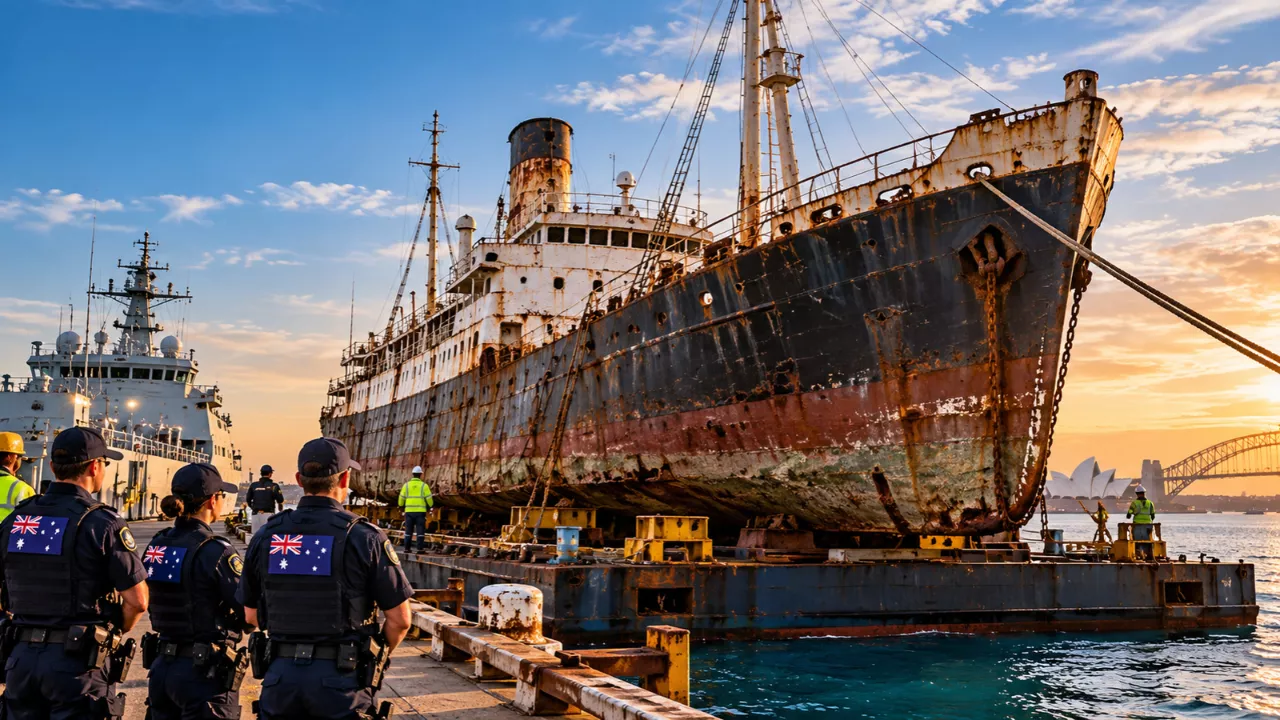
On Sunday, October 18, 2026, a historic ship seized in Australia became one of the most debated heritage stories in the country. The New South Wales state government took control of MV Cape Don, a 1960s lighthouse tender that has sat in Sydney Harbour for more than two decades, and ordered it disposed of immediately. Police reportedly searched the vessel to confirm nobody was aboard. State officials call the move a “last resort.” The ship’s owners and heritage supporters call it premature and say the facts have been misrepresented. Either way, the outcome will shape how Australia treats its aging maritime heritage.
What Happened to the Historic Ship Seized in Australia?
NSW Maritime, the state’s marine regulator, says it had watched the ship deteriorate for several years. By its account, it issued two unsafe vessel notices and met the ship’s owners, a non-profit called the Sea Heritage Foundation, nearly 50 times to push for urgent stabilizing repairs. The state also says the foundation did not carry out its orders for in-water repairs and eventual dry docking.
Its main concerns are severe corrosion along the waterline, no major repairs in more than 20 years, and an underwater hull condition that nobody can currently confirm. NSW Maritime warns that if the ship sank or capsized, salvage could cost around A$15 million (roughly US$10.5 million), and it points to the risk of pollution in a busy harbour. The state’s roads minister said the owners’ hope of restoring the vessel to its former glory had become “untenable.”
Why MV Cape Don Matters to Australian Maritime History
This is not an ordinary old hull. Cape Don is about 2,100 gross tons and 74 meters (244 feet) long. She was built in 1962 at the State Dockyard in Newcastle for the Commonwealth Lighthouse Service, which used her to build, supply and maintain lighthouses and navigation aids around the country. Two sister ships, Cape Moreton and Cape Pillar, did similar work, and the trio also took on surveying and recovery jobs.
Among her notable jobs was helping recover two anchors from HMS Investigator, the Royal Navy sloop that became the first ship to circumnavigate Australia between 1801 and 1803. She left lighthouse service in 1990, then spent roughly a decade carrying passengers and cargo in the Solomon Islands and wider South Pacific. Today she is described as Australia’s only remaining lighthouse service tender and appears on the national register of historic vessels, which is why her fate matters beyond Sydney.
The Two Sides of the Dispute
The disagreement is partly about the ship’s condition and partly about process. Here is how the positions compare:
| Issue | NSW Government position | Sea Heritage Foundation position |
|---|---|---|
| Ship’s condition | Severe waterline corrosion; unacceptable risk | Underwater hull is sound |
| Past repairs | No major repairs in 20+ years | Hull repairs by specialist contractors, fuel oil removed |
| Safety measures | Two unsafe vessel notices issued | Automatic pumps with 24/7 alarms and cameras installed |
| Dry docking | Ordered, but not carried out | Planning under way since December 2020 |
| Financial risk | Possible A$15 million salvage bill | Wants the basis for that figure published |
| Next step | Immediate disposal | Independent review before any decision |
The foundation admits the ship needs permanent repairs in dry dock. It says an independent assessment commissioned in August concluded she could be towed to Garden Island for dry docking, pending final approvals. It adds that the timing depends on Australian Defence Force scheduling at Captain Cook Dock. The foundation has also called some of the state’s statements “blatant untruths,” a claim the state has not been shown to concede.
What Happens Next, and What Would Settle It
Several outcomes are possible, and the facts will matter more than the headlines:


- An independent inspection. The foundation’s central demand is an impartial review before anything irreversible happens. A credible hull survey would resolve the biggest factual disagreement.
- Transparency on cost. The foundation wants the A$15 million salvage estimate explained, so the public can compare disposal costs with preservation costs.
- A dry-docking path. If defence scheduling and final approvals line up, the tow-and-repair plan could be tested against reality.
- Legal or political challenge. The foundation has said it will fight the decision, so expect pressure on the minister.
My read as an analyst: the two sides are less far apart on the ship’s needs than the rhetoric suggests, since both agree dry-dock repairs are required. The real gap is trust, and whether the underwater condition is known or assumed. Disposal cannot be undone, which is the strongest argument for verifying first. The state’s strongest argument is that a sinking in the harbour would also be irreversible and expensive.
Frequently Asked Questions
Which ship was seized in Australia?
MV Cape Don, a 74-meter former Commonwealth Lighthouse Service vessel built in 1962 and moored in Sydney Harbour’s Balls Head area.
Who seized the ship, and why?
NSW Maritime, acting for the New South Wales government. It says the ship’s worsening condition poses unacceptable safety and environmental risks, and that the owners did not complete ordered repairs.
Is the ship definitely being scrapped?
The state has ordered immediate disposal, but the owners are contesting it and demanding an independent review first. At the time of writing, the final outcome has not been settled.
Who owns MV Cape Don?
The Sea Heritage Foundation, a non-profit that has used the ship for tours and education.
New National City Architects Network Launched to Connect Local Government Designers!