
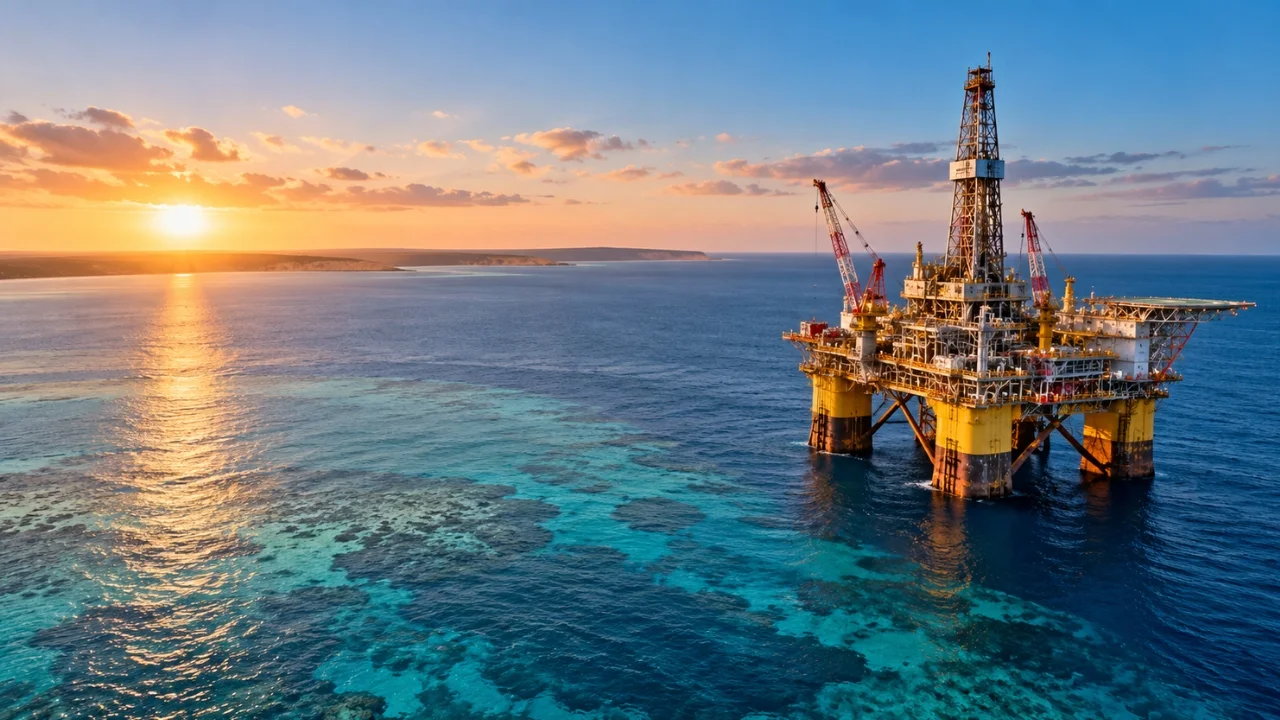
Australian Government designated the West Peron formation, a porous rock layer deep beneath the seabed off the country’s north coast, as the storage site for the Bonaparte carbon storage project. The project is proposed by Japan’s Inpex and is planned at 8 million metric tons of CO₂ per year. It is a regulatory milestone, not a start-up. Nothing is being injected yet, but the decision removes one of the biggest early uncertainties for a project that has been in assessment for several years.
What Has Actually Been Decided?
The government has formally identified West Peron as a suitable geological formation for permanent CO₂ storage. Inpex says this is the first declaration of its kind in Australia for an offshore saline aquifer. Inpex proposes to store up to 443 million tons of carbon dioxide in the formation over as long as 35 years. Resources Minister Madeleine King said the decision shows government support for technologies that cut emissions in hard-to-abate industries. Australia has a legislated target of net zero by 2050.
Bonaparte Carbon Storage Project at a Glance
| Detail | What is known |
|---|---|
| Storage formation | West Peron, Bonaparte Basin |
| Location | About 260 km offshore from Darwin, Northern Territory |
| Planned capacity | 8 million metric tons of CO₂ per year |
| Proposed total storage | Up to 443 million tons over up to 35 years |
| Storage type | Offshore saline aquifer (porous rock deep below the seabed) |
| Operator and stake | Inpex Browse E&P, 53% |
| Joint venture partners | TotalEnergies CCS Australia (26%), Woodside Energy (21%) |
| First CO₂ source | Inpex’s Ichthys LNG project |
| Inpex’s emissions claim | Could cut Ichthys LNG emissions by about 40% |
How Does Offshore Carbon Storage Work?
Carbon capture and storage separates CO₂ at an industrial source, compresses it and sends it by pipeline to a site where it is injected into rock far below the seabed. A saline aquifer is a layer of porous rock filled with salty water that can hold injected CO₂ in its pores. Impermeable rock above is meant to keep it in place. Before a site is declared, developers have to show the geology can hold the gas safely. For Bonaparte, the joint venture ran a large 3D seismic survey and drilled appraisal wells, which Inpex says showed the area is suitable for long-term storage.
Why Ichthys LNG Is the Anchor Customer
Ichthys is the project’s first and most important source of CO₂, which gives Bonaparte a committed user from day one. Inpex says storage could eventually serve other industrial facilities in northern Australia too. That is where the project’s wider value lies: a shared storage hub could give smaller emitters access to storage they could never build alone. Whether that happens depends on commercial terms, pipeline access and further approvals, none of which have been announced.
What Still Has to Happen, and What to Watch
The declaration is an important first step, but it is not the finish line. The project still needs further regulatory approvals and a final investment decision before it can inject any CO₂. CCS also draws a range of views. Supporters see it as a practical tool for sectors such as LNG, cement and steel where emissions are hard to eliminate. Critics argue it can prolong fossil fuel production and that projects should prove their real-world performance. Both views deserve attention as the project moves ahead.
Things worth watching:
- Further environmental and regulatory approvals
- Monitoring and long-term liability arrangements for the stored CO₂
- Whether other industrial emitters sign up to use the storage
- Any final investment decision by the joint venture
FAQs
What is the Bonaparte carbon storage project?
It is a proposed offshore carbon capture and storage project led by Inpex in the Bonaparte Basin, about 260 km from Darwin. It is planned to store 8 million metric tons of CO₂ per year.
What is West Peron?
West Peron is the porous rock formation deep beneath the seabed that the Australian Government has designated as the storage site. Inpex says it is the first offshore saline aquifer storage declaration in Australia.
How much CO₂ could be stored?
Inpex proposes to store up to 443 million tons of CO₂ over a period of up to 35 years.
Is CO₂ being stored there now?
No. The designation is a regulatory step. The project still needs further approvals and a final investment decision before injection can begin.
Coal Country Battery Project Faces New Hurdle as It Seeks Federal Environmental Approval…