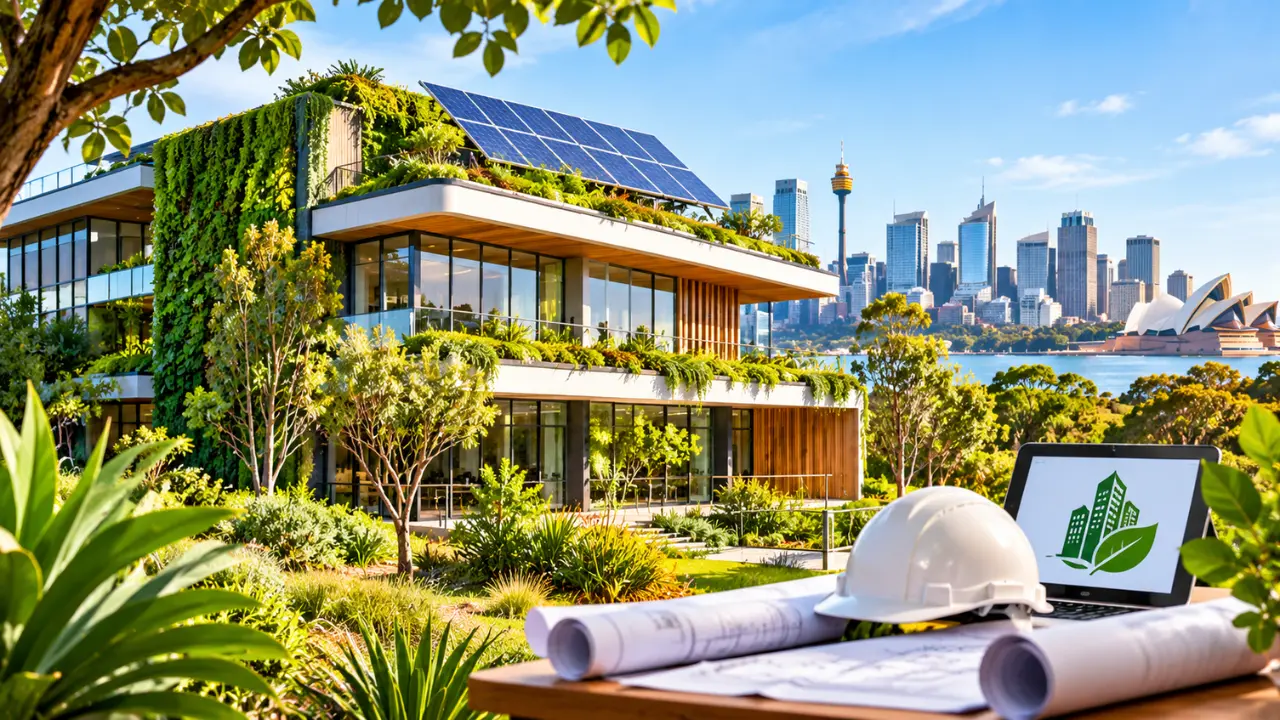
Australia’s buildings are about to face a much higher sustainability bar. The Green Building Council of Australia (GBCA) has released a new four-year strategy, 2030 and Beyond, setting out a bold vision for the country’s built environment by 2035. It covers everything from carbon and recycling to nature, health and climate resilience. Here’s what the strategy includes and what it could mean for homes, workplaces and communities.
What Is the GBCA’s New Strategy?
The GBCA is the industry body behind Green Star, Australia’s best-known sustainability rating system for buildings, homes and communities.
Released in late October 2026, the 2030 and Beyond strategy sets out the council’s priorities for the next four years, while laying the groundwork for the five years after that.

Its overall vision is for Australia’s built environment to be climate positive, circular, nature positive, healthy and resilient by 2035, guided by connection to Country.
It’s important to note this is an industry strategy, not a government law. But the GBCA works closely with governments and developers, so its targets often shape how buildings are designed and rated.

The Big 2035 Targets
The strategy includes three headline goals:
- Cut upfront carbon by 60%: This is the carbon released when building materials are made and construction takes place, before anyone even moves in.
- Triple Australia’s circularity rate to 15%: This means reusing and recycling far more materials instead of sending them to landfill.
- Achieve at least 10% biodiversity net gain: Developments should leave nature in a better state than before, not just limit the damage.
These targets show a shift in focus. It’s no longer just about how much energy a building uses once it’s running. It’s also about what the building is made from and how it affects the land around it.
Five Priorities Guiding the Strategy
The GBCA says five priorities will guide its work over the next four years:

- Being the national authority on sustainability in the built environment
- Shaping the industry’s response to climate action, resilience, circularity, nature and emerging trends
- Keeping Green Star as the benchmark for sustainability leadership
- Expanding into new sectors and opportunities
- Building a future-ready organisation
The council plans to grow its focus in areas already changing fast, including homes and apartments, data centres, healthcare, education, industrial and logistics buildings, and supply chains.
How Far Green Building Has Come
The strategy builds on 25 years of progress. As of mid-2026, the GBCA had issued more than 9,860 Green Star certifications across over 4,300 buildings, fitouts and communities.
Around 77 million square metres of building space is now Green Star certified. More than 1.1 million people will live or work in Green Star certified communities, and certified offices can accommodate about 10% of Australia’s workers each day.
GBCA chief executive Davina Rooney noted that highly sustainable buildings were once rare, but are now part of doing good business for many leading organisations. The aim now is to make sustainable places the norm everywhere, not just a few flagship projects.
How It Fits Australia’s Wider Climate Goals
The strategy arrives about a year after the federal government set its 2035 emissions target: a 62–70% cut below 2005 levels.
That announcement came with a Built Environment Sector Plan, focused on improving energy performance, electrifying buildings and making construction more sustainable.
The GBCA’s strategy complements those goals by giving industry clear, practical targets to work towards.
What It Means for Homeowners and Renters
For everyday Australians, the strategy points to homes that are cheaper to run, healthier to live in and better able to cope with heatwaves, storms and floods.
The GBCA has also launched a new Green Star Homes certification guide alongside the strategy, giving builders and buyers clearer guidance on sustainable homes.
The council stresses that sustainability and affordability shouldn’t be a trade-off. The goal is to deliver both: homes and buildings that perform better and cost less to run.
Frequently Asked Questions
What is the GBCA?
The Green Building Council of Australia is an industry body that promotes sustainable buildings and runs the Green Star rating system.
What is upfront carbon?
It’s the carbon emitted from making building materials and constructing a building, before it’s used.
Is the GBCA strategy a government law?
No. It’s an industry strategy, but it supports Australia’s national 2035 emissions target and wider climate policy.
How will this affect new homes?
It’s likely to encourage more energy-efficient, all-electric and climate-resilient homes built with lower-carbon materials.