
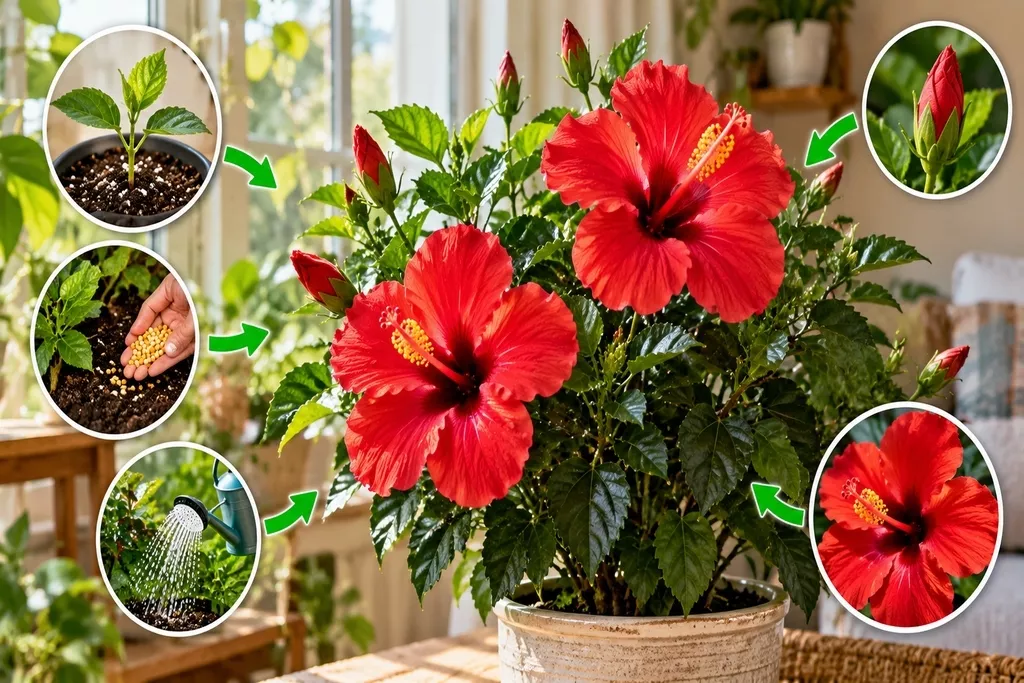
Can a hibiscus plant be grown indoors? Yes, it can, but only if you choose the right type and give it enough light. The plant most people picture, with its large trumpet flowers in red, coral, peach or yellow, is tropical hibiscus (Hibiscus rosa-sinensis). It adapts well to life in a pot, and many gardeners keep one for years on a bright balcony or sunny window. The real question is whether your space can supply what a tropical shrub expects: strong light, steady warmth and regular feeding.
Most indoor hibiscus failures come down to the same few mistakes. The plant sits in a dim corner, gets watered on a rigid schedule rather than when it actually needs it, or is moved around so often that it drops its buds in protest. Once you understand how it behaves, indoor hibiscus is far less temperamental than its reputation suggests. A healthy plant rewards you with a steady run of blooms, and each flower lasts only a day or two, so new buds opening is the sign you are doing things right.
Choosing the Right Hibiscus for Indoor Growing
Not every hibiscus belongs inside. Tropical hibiscus is the one to buy for indoor growing. Hardy types such as rose of Sharon (Hibiscus syriacus) and rose mallow (Hibiscus moscheutos) are garden plants that need a cold winter rest, so they sulk and decline when kept indoors long term. Roselle (Hibiscus sabdariffa), the plant behind hibiscus tea, is a short-lived annual that can be started indoors from seed but behaves very differently from a perennial houseplant.
When shopping, pick a compact, bushy plant with plenty of healthy leaves and no sticky residue or tiny insects on the undersides. Plants sold in full bloom are often grown in greenhouse conditions, so expect a few buds to drop while yours adjusts to the new spot. That is normal and usually passes within a couple of weeks.
Light, Temperature and Humidity: Where Indoor Hibiscus Succeeds or Fails
Light is the biggest factor in whether your hibiscus flowers. Aim for a south- or west-facing window (in the northern hemisphere) where the plant gets several hours of direct sun each day. Bright indirect light keeps the plant alive, but flowering usually drops off sharply. If your home is dim, a full-spectrum LED grow light placed above the plant can fill the gap, especially through winter.
Warmth matters too. Tropical hibiscus is comfortable in ordinary room temperatures and does not tolerate frost. Cold draughts from doors, leaky windows and air-conditioning vents are a common cause of sudden leaf and bud drop. Dry indoor air, particularly in heated rooms, can also lead to crisp leaf edges and spider mites, so a pebble tray, a small humidifier or grouping plants together can help.
| Factor | What Indoor Hibiscus Prefers | Warning Sign if Wrong |
|---|---|---|
| Light | Several hours of direct sun daily, or a grow light | Few flowers, leggy growth, bud drop |
| Temperature | Steady warmth, roughly 18–27°C (65–80°F) | Slowed growth, dropped leaves |
| Humidity | Moderate to high; avoid very dry air | Brown leaf edges, spider mites |
| Watering | Evenly moist, never soggy | Yellow leaves (too wet), wilting (too dry) |
| Feeding | Regular, potassium-rich fertiliser in the growing season | Pale leaves, weak flowering |
| Pot | Slightly snug, with good drainage holes | Root rot in oversized or poorly drained pots |
Watering, Soil and Feeding for Steady Flowering
Hibiscus likes consistently moist soil, but it does not like standing water. Push a finger about two to three centimetres into the soil and water when that layer feels dry, letting excess drain away completely. In summer this may be every few days; in winter, when growth slows, the gap grows noticeably longer. Using room-temperature water avoids shocking the roots.
Use a loose, well-draining potting mix, and add a little perlite if your mix feels heavy. Choose a pot only a size or so larger than the root ball, since an oversized pot holds excess moisture that can invite root problems. During spring and summer, hibiscus is a hungry plant, so feed it regularly with a fertiliser that is higher in potassium and not too heavy on nitrogen, which pushes leaves at the expense of flowers. Ease off feeding in the darker months.
Pruning, Pests and Seasonal Care
Hibiscus flowers on new growth, which makes pruning one of your best tools. In late winter or early spring, trim stems back by roughly a third to a half to encourage bushy, flower-bearing shoots. Through the growing season, pinching back long stem tips creates more branches, and removing faded blooms keeps the plant tidy.
Check the undersides of leaves weekly for pests. Common culprits include:
- Spider mites: fine webbing and pale, speckled leaves, especially in dry, warm rooms
- Aphids: clusters on soft new growth and flower buds
- Whitefly: tiny white insects that flutter up when the plant is disturbed
- Scale: small, waxy brown bumps on stems and leaves
Catching these early lets you manage them with a simple wipe-down, insecticidal soap or neem oil, repeated over a few weeks. In winter, move the plant back from cold window glass at night, water more sparingly, and watch for mites in heated rooms. Many growers also move the plant outdoors in summer once nights are reliably warm, then bring it back in before temperatures fall.
Frequently Asked Questions
Can a hibiscus plant be grown indoors all year?
Yes. Tropical hibiscus can live indoors year-round if it receives bright light, steady warmth and regular care. Hardy garden hibiscus types are not suited to permanent indoor life.
Why is my indoor hibiscus dropping buds?
The usual causes are too little light, cold draughts, sudden moves, or uneven watering. Check these first, keep the plant in one bright spot, and water consistently.
Does indoor hibiscus need direct sunlight?
For good flowering, yes. Several hours of direct sun from a bright window works best, and a grow light can substitute where natural light is limited.
How often should I fertilise an indoor hibiscus?
During the growing season, feed regularly with a potassium-rich fertiliser, following the label’s dilution advice. Reduce feeding in winter when growth slows.
Rooftop Park Apartments: Why a 7-Storey Building Is Giving Its Best Space to the City!
1 thought on “Can a Hibiscus Plant Be Grown Indoors? Your 2026 Home gardening Growing Guide!!”
Comments are closed.