
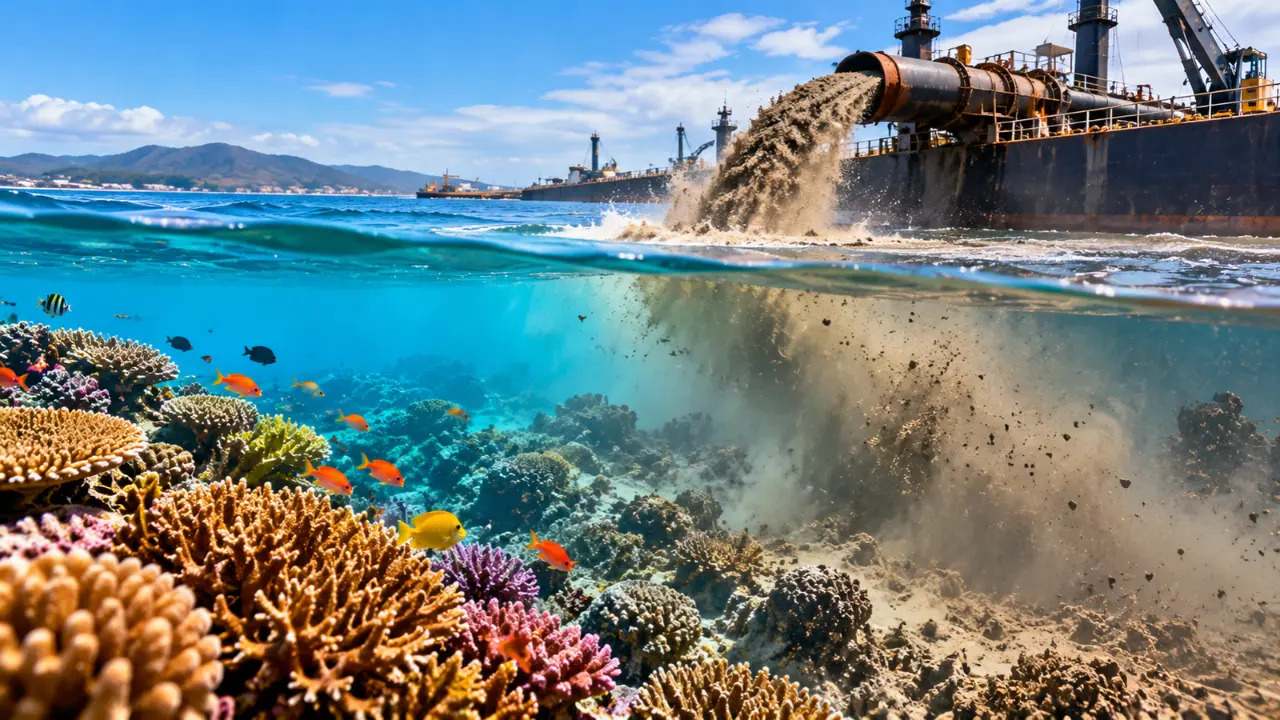
The Port of Townsville in north Queensland plans to dredge sediment from its shipping channels and dump it at sea in early November. The timing has alarmed residents of nearby Magnetic Island, because it falls just days after inshore corals are expected to spawn. Here’s what’s planned, why scientists are worried, and what happens next.
What the Port of Townsville Is Planning
The port says it will resume maintenance dredging on 4 November, running for about 10 days. The goal is to clear naturally built-up sediment so ships can move safely through the channels.
The dredged material will be placed at sea in a designated dumping zone about 6 kilometres off Magnetic Island’s Florence Bay. This site sits in Cleveland Bay, between Townsville and Magnetic Island.
That area is cut out of the Great Barrier Reef Marine Park and has been an approved disposal site for decades.
Why Coral Spawning Timing Matters
Coral spawning is one of the reef’s most important events. Corals release eggs and sperm at the same time, and the larvae that form can grow into new corals.
James Cook University coral ecologist Andrew Baird told the ABC that spawning is a key driver of reef recovery, especially after reefs are damaged.
The risk doesn’t end on spawning night. Australian Institute of Marine Science ecologist Katharina Fabricius said coral larvae can stay sensitive to poor water quality for two weeks or more while they search for clean surfaces to settle on. Silt and sediment can make that much harder.
Concerns From Magnetic Island Locals
People who live and work on the island say they’ve seen the effects before. Local dive instructor Chad Bertram said easterly winds and currents often push dredge spoil towards the island’s fringing reefs, sometimes cutting visibility so badly that dives have to be cancelled.

The Magnetic Island Nature Care Association has raised concerns about sea dumping for years. Its leader, Gethin Morgan, pointed out that October and November are both spawning months and often windy, which can spread sediment further.
What the Port Says
The port describes maintenance dredging as essential and routine, and part of its legal duty to keep shipping safe.

It says it voluntarily avoided dredging during the main October spawning window as a precaution. It also says the dredging happens several kilometres from sensitive reefs, and that environmental modelling doesn’t predict harm to them.
The port has done maintenance dredging and sea placement at this time of year before, most recently in 2024.
The Issue at a Glance
| Point | Detail |
|---|---|
| Who | Port of Townsville, north Queensland |
| What | Maintenance dredging and sea dumping of sediment |
| When | From 4 November, for about 10 days |
| Where | Placement area about 6 km off Florence Bay, Magnetic Island |
| Main concern | Sediment harming coral larvae after spawning |
| Port’s position | Routine, essential work; modelling predicts no reef impact |
| Regulator | National EPA assessing alleged non-compliance |
The Bigger Picture: Dredging and the Great Barrier Reef
Dumping dredge spoil near the reef has been controversial for years. In 2015, Queensland banned sea dumping of capital dredge spoil, the material from new port developments, in the Great Barrier Reef World Heritage Area.
But maintenance dredging, which clears existing channels, wasn’t covered by that ban. Its spoil can still be dumped at sea under permit.
Now the National Environment Protection Agency says it is assessing information about alleged non-compliance by the port. Under its sea dumping permit, the port must follow a long-term dredge management plan. That plan requires it to avoid the coral spawning period as far as practicable and to monitor water quality, turbidity, temperature and sediment contaminants.
Source: Concern Port of Townsville sea-dump could affect coral spawning – ABC News
Frequently Asked Questions
What is maintenance dredging?
It’s the routine removal of sediment that builds up in existing shipping channels, so vessels can pass safely.
Is sea dumping near the Great Barrier Reef allowed?
Dumping from new port projects is banned in the World Heritage Area, but maintenance dredge spoil can still be placed at sea under a permit.
Why is coral spawning season so sensitive?
Coral larvae need clean water and sediment-free surfaces to settle and grow. Sediment can reduce their chances for weeks after spawning.
What happens next?
The National EPA is assessing claims that the port hasn’t complied with its permit conditions. The port plans to start dredging on 4 November.