
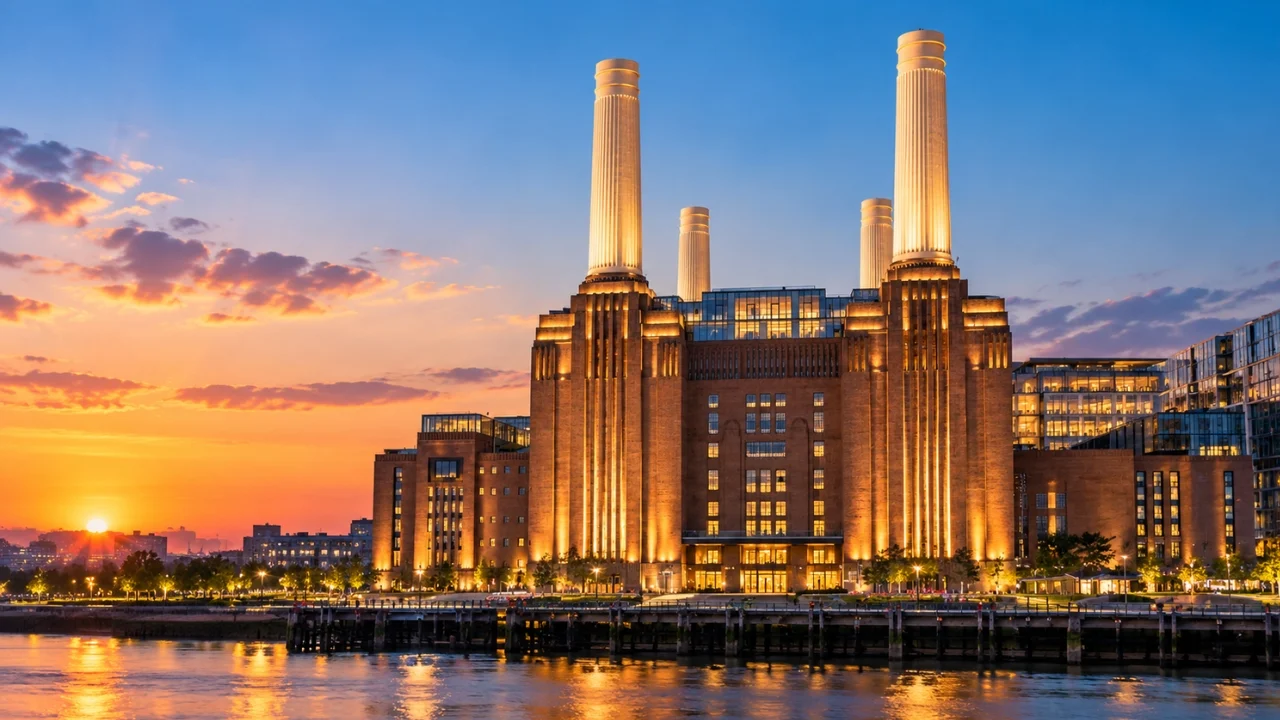
Walk into a former turbine hall and the first thing you notice is the height. The ceilings climb far above what any modern developer would build on purpose, and the structure feels made for something bigger than a normal office or flat. That is why converted power stations have become some of the most admired examples of adaptive reuse in architecture. Built to generate electricity, these buildings are now museums, sports clubs, headquarters, community halls and university campuses.
This guide looks at eight converted power stations across the UK, the USA, Singapore, China and the Netherlands. Each one shows a different answer to the same question: what do you do with a landmark that has outlived its original job?
Why Converted Power Stations Make Such Good Reuse Projects
Power stations were designed around heavy machinery, so their interiors are large, open and structurally tough. Tall ceilings and wide halls give architects room to insert new floors, atriums, galleries or courts without the result feeling cramped.
Their location helps too. Many sit in the middle of cities or on the edge of regenerating districts, and their silhouettes are often part of local identity. Keeping them standing preserves that familiarity, which is hard to replicate with a new building.
Eight Converted Power Stations at a Glance
| Project | Location | Original era | New use |
|---|---|---|---|
| Battersea Power Station | London, UK | 1930s | Shopping, offices and homes |
| Tate Modern (formerly Bankside Power Station) | London, UK | Designed by Giles Gilbert Scott | Art museum, opened 2000 |
| Dyson headquarters (St James Power Station) | Singapore | 1926 | Global company headquarters |
| Ballers (Delaware Power Station) | Philadelphia, USA | 1920s | Indoor sports club within The Battery complex |
| Powerhouse Arts | Brooklyn, USA | About 115 years old | Art production centre |
| Shajing Village Hall | Shenzhen, China | 1980s | Community hub beside a public wetland |
| Global Leadership Centre | Oxford, UK | 1890s | Learning space and accommodation for Saïd Business School |
| Innovation Powerhouse | Eindhoven, Netherlands | Former Philips plant | Innovation hub for around a dozen businesses |
Landmarks in London: Battersea and Tate Modern
Battersea Power Station stood decommissioned for 39 years before WilkinsonEyre’s transformation reopened it in 2022 as a mixed shopping, office and residential destination. The Grade II*-listed building now holds a shopping centre in its restored turbine halls, with glazed apartments added on the roof.
Tate Modern is the project that arguably started the global trend. It began life as Bankside Power Station, designed by Giles Gilbert Scott, who also designed Battersea. Herzog & de Meuron’s conversion opened in 2000 and gave the building a cathedral-like gallery space in the turbine hall. Its success encouraged other cities to look at disused power stations as hubs for art and culture.
Workplaces and Campuses: Dyson, Oxford and Eindhoven
Reuse is not limited to culture. Dyson made St James Power Station in Singapore its global headquarters. Local studios W Architects and Studio Lapis handled the transformation, with M Moser Associates on the interior fit-out. The 1926 turbine hall became a four-storey atrium framed by exposed black steelwork and a sculptural spiral staircase, with amphitheatre-style seating beside a cafe.
In Oxford, John McAslan + Partners turned the city’s first electrical power plant into the Global Leadership Centre for the Saïd Business School. They restored the 1890s brick facades, created a triple-height entrance in the turbine hall, and rebuilt and extended the metal-clad upper levels.
In Eindhoven, the former Philips power plant now works as an innovation hub. Offices line a communal, street-like passage, and the design team chose to keep the structure and the coal chutes visible as part of the story.
Sport, Art and Community: Philadelphia, Brooklyn and Shenzhen
Good City Studio and Hexagon Studio Architects converted the main turbine hall of Delaware Power Station in Philadelphia’s Fishtown into Ballers, a club with indoor pickleball, soccer and squash courts. It is one piece of The Battery, a plan for apartments, offices and a hotel.
In Brooklyn, Herzog & de Meuron worked with what remained of a power plant roughly 115 years old. The brick-clad turbine hall was the only part still standing, and it became an art production centre. The demolished Boiler House was rebuilt in red concrete, so old and new sit side by side.
In Shenzhen, ARCity Office restored and extended a 1980s power plant as part of a wider plan to turn an industrial site into a public wetland. Concrete remnants were left as found and now support new steel and glass volumes inspired by traditional ancestral halls.
What These Projects Teach Us About Reuse
Across all eight projects, a few lessons repeat:
- Keep what is distinctive. Turbine halls, brick facades, coal chutes and raw concrete became the main attractions rather than problems to hide.
- Mix old and new clearly. Red concrete, glass roofs and steel volumes make additions easy to read against the original fabric.
- Match the use to the space. Huge halls suit galleries, courts, atriums and shared circulation streets.
- Think beyond the building. Several schemes, such as Shenzhen’s wetland and The Battery in Philadelphia, are part of wider neighbourhood plans.
Frequently Asked Questions
Which power station conversion started the global trend?
Tate Modern in London, which opened in 2000 in the former Bankside Power Station, is widely credited with sparking the trend of converting disused power stations into art and culture hubs.
Why are power stations good for adaptive reuse?
They have expansive interiors and tall ceilings, which give architects plenty of flexibility to insert new uses without demolishing the original structure.
Can a converted power station be used for something other than culture?
Yes. These examples include a shopping and residential complex, a sports club, a global company headquarters, a business school campus and an innovation hub.
How long did Battersea Power Station stand empty?
It stood decommissioned for 39 years before reopening in 2022 after WilkinsonEyre’s transformation.
When Architects Become Partners: Inside the Moving Windmills Innovation Center in Malawi!