
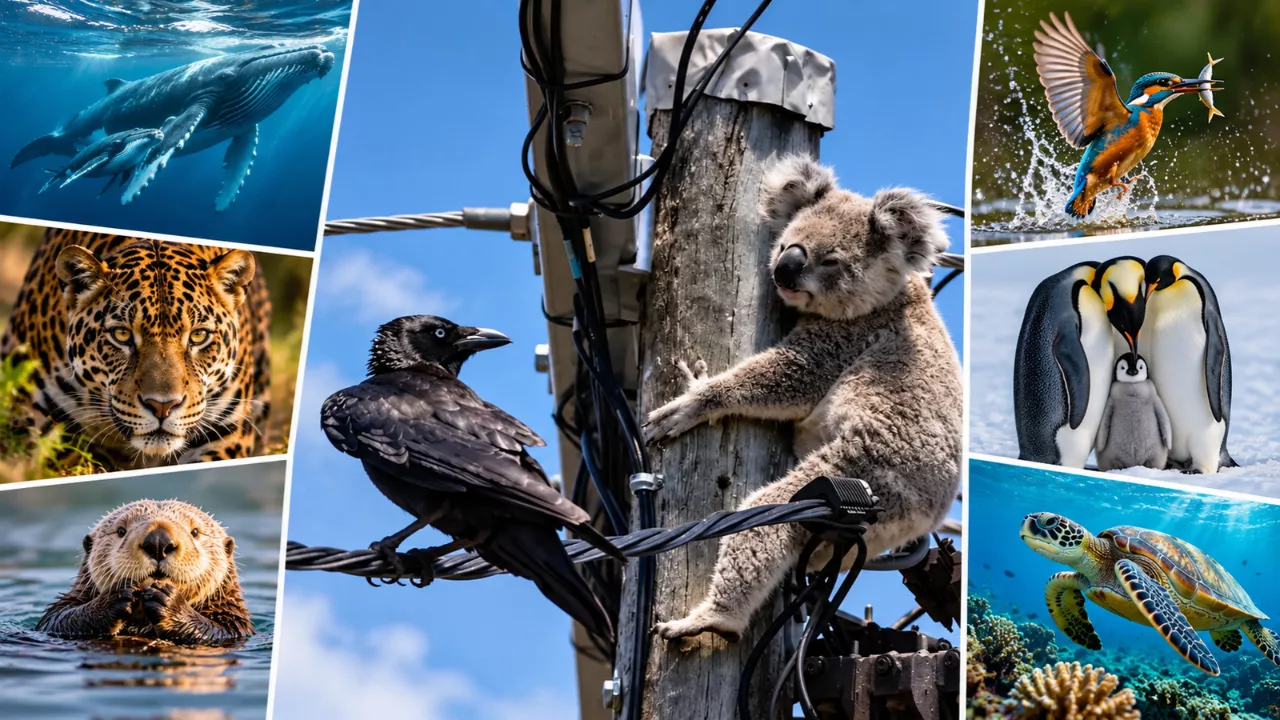
Every October, one competition reminds us why a single photograph can change how we see the natural world. Wildlife Photographer of the Year 2026, run by London’s Natural History Museum, drew a record 65,000 entries from 121 countries and territories. The winners were announced on 13 October. They cover grief, humour, danger and quiet wonder, and the results feel more emotional than ever.
Wildlife Photographer of the Year 2026: The Grand Title Winner
The overall winner is Italian photographer Federico Veronesi with The Aftermath. This black-and-white image shows a female elephant carrying a dead calf in Namibia’s Huab River Valley. Veronesi found her by following an unusual pattern of drag marks in a dry riverbed. He first assumed the calf was hers. Researchers later concluded that she had lost her own calf years earlier and had been picking up the dead calves of other females.
Jury chair Kathy Moran described the photograph as emotionally “a gut punch” and, intellectually, proof that animals have cognition. Veronesi, who has photographed animals for around 20 years, called it the most heart-wrenching and dramatic subject he has worked on. The image works because it asks questions rather than giving answers, and it makes viewers think about animal emotion.
Young Talent Shaping Wildlife Photography
British photographer Oscar Whitfield won Young Wildlife Photographer of the Year with Labour of Love, a dung beetle pushing its prized ball. He lay flat on the ground and let the beetle roll past his lens. Jury member Jasper Doest praised how intentional the image feels, given how small and constantly moving the subject is. A photograph of an insect doing something ordinary can beat far more dramatic subjects when the patience and craft are there.
Category Winners Worth Knowing
The jury picked winners across more than a dozen categories. These are some of the most talked-about:
| Category | Photographer | Image | What it shows |
|---|---|---|---|
| Behaviour: Mammals | Federico Veronesi (Italy) | The Aftermath | Elephant carrying a dead calf, Namibia |
| Animal Portraits | Aaron Sanders (UK) | A Watchful Eye | Common octopus peering through kelp off Cornwall |
| Animals in their Environment | James Lewin (UK) | The Meeting Place | Young bull elephant spraying zebras at a Kenyan waterhole |
| Photojournalism | Francisco Negroni (Chile) | Warning Sign | Dead puma displayed as a hunting trophy in Patagonia |
| Young Wildlife Photographer of the Year (11–14) | Oscar Whitfield (UK) | Labour of Love | Dung beetle rolling its prize |
Photography That Does More Than Look Beautiful
The winners show how the competition has changed. Some images are simply gorgeous, such as the octopus in the kelp. Others carry a warning. Negroni’s Warning Sign documents illegal hunting and the conflict between wildlife and livestock farmers in Argentine Patagonia. It is hard to look at, and that is the point.
Across the winning images you can find:
- Emotional storytelling: animals shown as thinking, feeling individuals.
- Humour and surprise: an elephant playfully spraying zebras at a waterhole.
- Close-up craft: tiny subjects photographed with deliberate composition.
- Conservation urgency: images that expose threats rather than hide them.
How to See the Photos and Learn From Them
The winning and highly commended images form an exhibition that opened on 16 October at the Natural History Museum in London. If you can’t visit, look through the winning gallery online. Look at the composition, the light and the story behind each frame. The photographers’ captions often explain the patience involved. Veronesi followed drag marks across a riverbed, and Whitfield lay in the dirt waiting for a beetle. Aspiring photographers can take away a simple lesson: research your subject, be patient, and keep the animal’s welfare first.
FAQs
Who won Wildlife Photographer of the Year 2026?
Federico Veronesi of Italy won the overall title with The Aftermath, showing an elephant carrying a dead calf in Namibia.
Who is the Young Wildlife Photographer of the Year 2026?
British photographer Oscar Whitfield won with Labour of Love, a close-up of a dung beetle pushing its prize.
How many entries did the 2026 competition receive?
A record 65,000 entries from 121 countries and territories.
Where can I see the winning photographs?
The photographs are in an exhibition at the Natural History Museum in London, which opened on 16 October. Many are also published online.